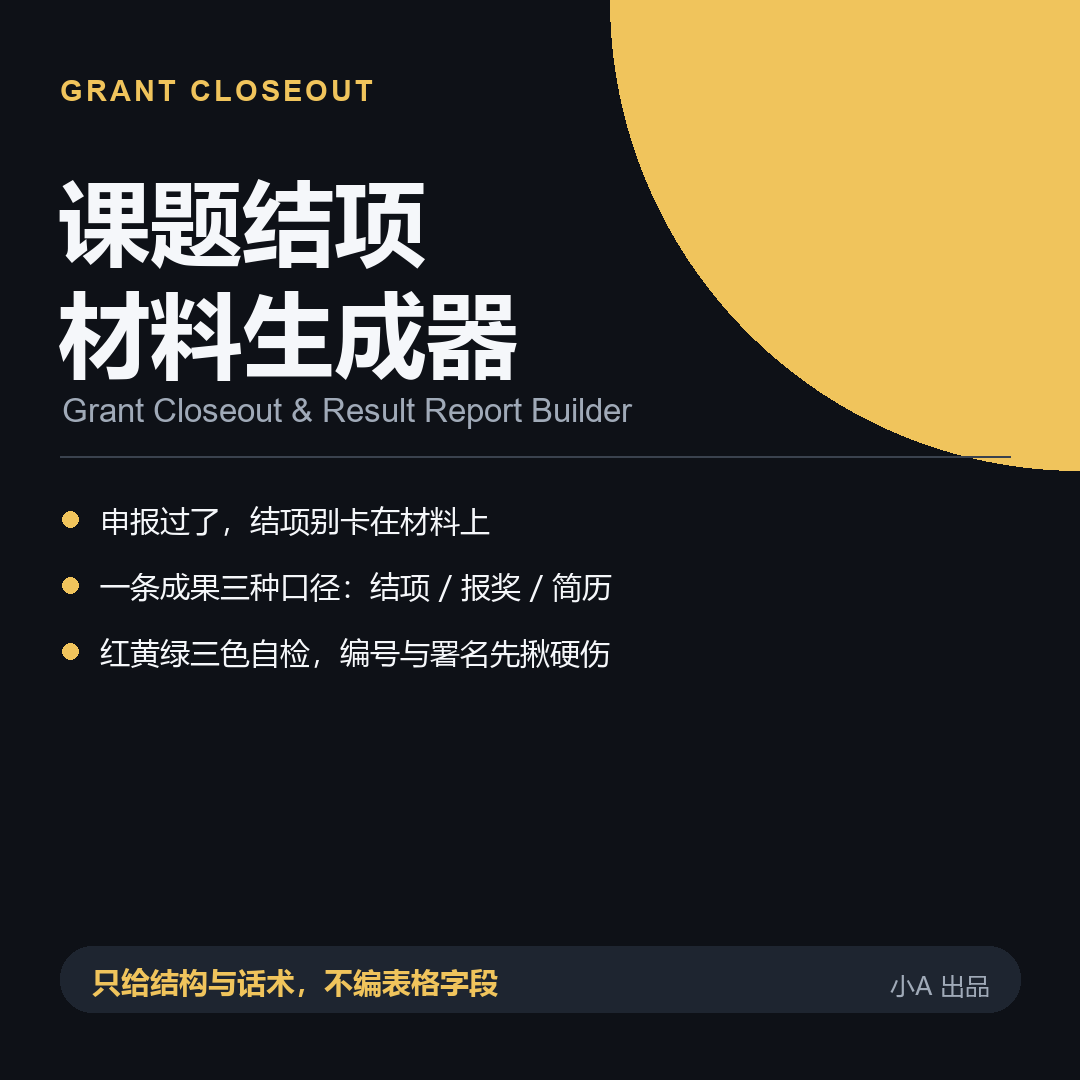
Project Completion Material Generator
Organize and self-check project completion materials
Project Completion Material Generator
Organize and self-check project completion materials
Showcase
Description
While the Social Science Fund Dual-Track Application Argumentation Generator handles applications, this skill handles completion. For university faculty, early-career researchers, and graduate students who have secured project approval, the most time-consuming part is often not the research itself, but the administrative paperwork: completion reports, achievement submissions, award materials, promotion forms, and CV entries. They have rigid formats, strict phrasing conventions, require the same achievement to be rewritten in three different ways, and are easily rejected over minor details like serial numbers, dates, or authorship. ## Quick Overview **Application approved? Don't let the paperwork block completion.** Turn your project approval info and achievement list into a completion report skeleton, three-angle achievement descriptions, scenario-based submission checklists, and a red-yellow-green self-check table. It provides structure and phrasing only, does not invent table fields or achievements, and does not guarantee review approval. ## What You Get 1. **Completion ID card and achievement inventory**: Align serial numbers, dates, members, and achievement counts at once, marking missing items as needs verification. 2. **One achievement, three angles**: Academic completion angle, award contribution angle, and CV/promotion entry angle, with traceable facts, phrasing, and evidence for each column. 3. **Six-section completion report skeleton**: Objective review, execution process, main conclusions, achievements and impact, funding and progress, and challenges and next steps, complete with writing points, customizable starting sentences, and common reasons for rejection. 4. **Scenario-based material checklist**: Common items for project completion, awards, promotions, CVs, and annual reviews, plus common format issues. 5. **Red-yellow-green self-check table**: Catch hard errors like inconsistent serial numbers, dates, or authorship first, with a printable version. 6. **Exaggerated phrasing replacement table**: Replace phrases like filling a gap or remarkable results with verifiable, review-friendly wording. ## Who It Is For - University faculty, early-career researchers, and project leaders: When projects are due for completion and you are worried about mismatched serial numbers, authorship, or achievements. - Graduate students and research assistants: Helping advisors organize achievement submissions, award applications, and annual review materials. - Previous users of the Social Science Fund Dual-Track Application Argumentation Generator: Moving naturally from application to completion.
Recommended by
Dancang
Why we love this skill
Built for project completion, award nominations, promotions, and resumes. Converts the same achievements into three standard formats and uses a red-yellow-green checklist to verify IDs, dates, authorship, and evidence.
Related Skills
View all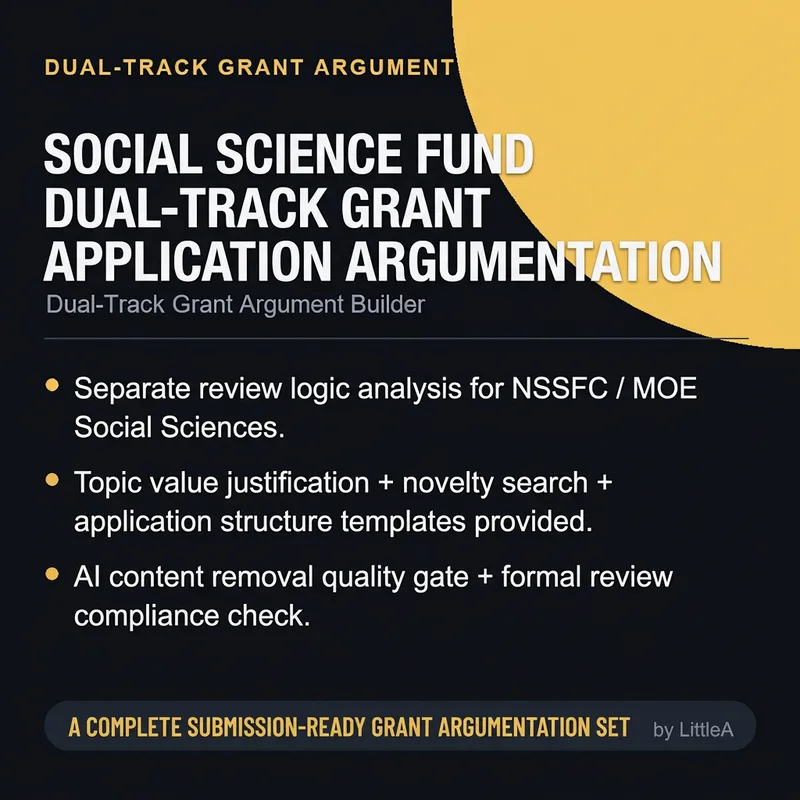 Write
Social Science Grant Proposal Generator
A combined grant proposal generator for the National Social Science Fund and the Ministry of Education Humanities and Social Sciences Research Projects, using the dual-track proposal method. Triggered when users ask about applying for national social science grants, writing Ministry of Education project proposals, simultaneous applications, word count allocation for blind review forms, feasibility sections, narrowing broad topics, drafting the background section, removing AI phrasing in proposals, literature searches, quota limits, youth project selection, anonymizing blind review forms, or project proposal generators. Using the dual-track proposal method (eligibility gate, topic argument, dual-track generation, AI phrasing removal, and formal review), it produces topic value arguments, literature search conclusions, the full proposal text (formatted for social science blind review forms or Ministry of Education Form B), an AI-phrasing-revised edition, and formal review red-line self-checks. Version 2.0.0. ## Overview A combined project proposal generator for the National Social Science Fund and Ministry of Education review tracks: clears prerequisite exclusion gates, helps narrow broad directions into specific genuine research questions, generates full proposal texts according to dual-track formats, and passes the AIGC < 10% quality gate and rejection-level formal reviews. Covers frequent pain points such as application procedures, simultaneous submissions, word count distribution, narrowing topics, removing AI tone, quota calculations, and blind review anonymization. ## What You Will Get 1. Topic value argument and literature search conclusions (3 targeted topic options, search comparison, and gap positioning) 2. Full proposal text (according to the selected track: 8 sections for social science blind review forms or 5 columns for Ministry of Education Form B) 3. AI-phrasing-revised edition (machine tone scan and natural phrasing comparison) 4. Formal review red-line self-check checklist (quotas, anonymity, word counts, and disciplines, rejection-level) ## Best For University humanities and social science faculty (lecturers and associate professors), early-career researchers, regional college teachers, postdoctoral researchers, and research administrators applying for national, ministry, or provincial social science planning grants.
 Write
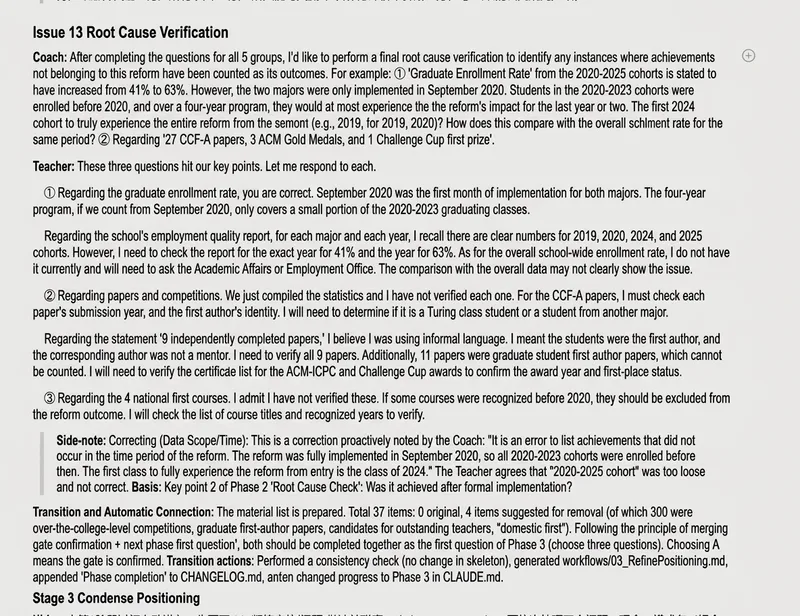
Teaching Award Assistant
Designed for teachers at universities and vocational colleges, this teaching award application assistant works like a submission consultant who has participated in final expert panel reviews. It guides you through the recommendation form in six steps: build a profile, organize materials, distill the positioning, develop the title and draft, align the evidence, and conduct an expert quality check. Ask one question at a time to help clarify the three teaching problems the achievement solves and where its innovations lie Draft according to the distinct writing approaches used by four types of institutions: academic undergraduate, applied undergraduate, vocational undergraduate, and higher vocational Built-in review experts score the application across six dimensions—pain points, logic, rigor, innovation, outcomes and demonstrative value, and compliance—and provide revision suggestions Automatically check common critical issues such as the practice validation period, attribution of outcomes, and the years used in key statements Never fabricate data. Clearly flag areas without supporting evidence and remind you to provide additional materials Suitable for school-level, provincial-level, and national teaching achievement awards, across the higher education (undergraduate) and vocational education tracks.
 Write
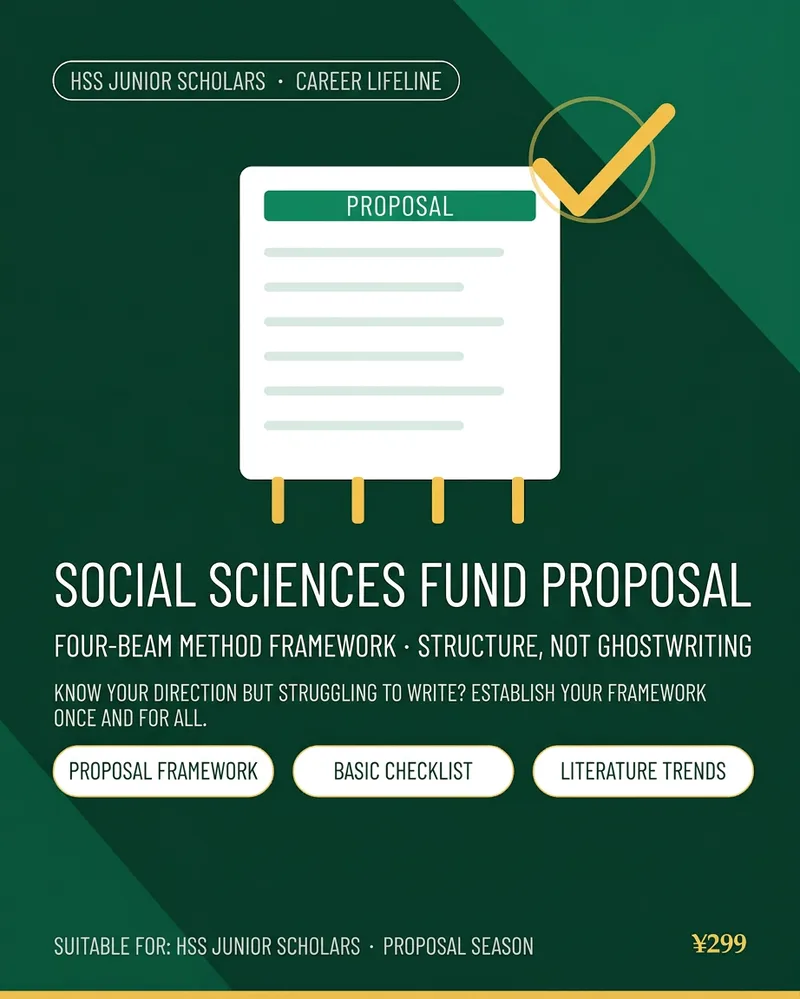
Social Science Grant Application Framework
Designed for young faculty in humanities and social sciences, this Skill uses the Four Pillars method to help build grant application frameworks and material checklists. It triggers when you need help with application strategies, literature reviews, research gaps, weak foundation handling, innovation points, blind review preparation, or restriction checks. By organizing your application into four solid pillars—foundation, content, background, and feasibility—plus restriction and anonymization checks, it turns a scattered draft into a robust proposal. Version 1.0.0. Your personal grant application framework generator: transforms weak literature reviews, unorganized content, thin preliminary records, vague innovation claims, and compliance risks into four sturdy pillars, ensuring your application stands strong. How to Use the Four Pillars Method: 1. Foundation Pillar: Ground your opening in top-level policies and build a four-part literature review to locate your research gap; 2. Content Pillar: Establish a clear objective-framework-difficulty logic chain where each section addresses your gap; 3. Background Pillar: Expand limited preliminary achievements honestly across four methods without falsification; 4. Feasibility Pillar: Select from four innovation angles and apply quantitative expected outcome templates; 5. Review Check: Self-check for grant restrictions and anonymization compliance. What You Receive: An application skeleton filled across the four pillars, a preliminary research checklist for limited backgrounds, and a literature dynamics table with gap identification and reference outlines, forming a three-piece toolkit for your proposal. Compliance Notice: This Skill does not write full proposals but generates frameworks and checklists. Falsification of preliminary results, unauthorized names, or fabricated data is strictly prohibited. AI usage should be noted, and all literature and preliminary results must be verified individually. Approval is not guaranteed. Prioritize compliance with your research office and mentor guidelines, and follow your institution's template.
Information
- Version
- v3
- Last updated
- Runtime credits
- Usage-based
- Models
- Auto
- Use cases
- Writing & contentResearch & analysis
- What you get
- ReportDocument
