
Research Review Assistant
Align files, audit evidence, and score twice
Research Review Assistant
Align files, audit evidence, and score twice
Showcase
Description
An expert assistant for university-level research project reviews. Provide the materials for N projects in a given category. Each project includes three types of files: a proposal, a form-check summary or interim review form, and supporting evidence. File names may be scrambled, mismatched, or changed, and files may be DOCX, XLSX, PDF, or image files. Supporting evidence may be bundled into one file or provided as multiple separate files. This Skill then completes the following steps: ① Content-anchor alignment—extracts the project or center name, principal investigator, affiliated school, and project period from within the documents; matches the three-part file set for each project; and flags items requiring review when file names do not match their contents. ② Evidence normalization—whether bundled or separate, breaks materials into “atomic evidence items” and creates a coded ledger for each item with one of four status labels: complete, needs verification, missing, or questionable. This avoids judging the strength of the evidence by file count. ③ Three-dimensional item-by-item audit—evaluates each piece of evidence for relevance, authenticity, and completeness, then reconciles it against the commitments in the proposal and the self-reported results in the interim review form. ④ Dual-track scoring and comparative ranking—uses the five weighted criteria in Appendix 2 as the reporting standard and the five dimensions of the interim review as a reference standard. The two systems remain independent and are not combined, and all projects are ranked and grouped into tiers. ⑤ Delivers a structured review draft with “score + review comments” that can be pasted directly into the official form, and can generate an interactive scoring webpage when needed. Huali’s current standards are used by default. Users can confirm or revise the criteria, weights, and reference materials before work begins, or upload replacements. There are two confirmation checkpoints: first for alignment and the evidence ledger, then for scoring and ranking. When materials cannot be identified, the user is prompted to confirm. For project completion reviews, two additional hard requirements apply: first, the correspondence between the proposal’s expected outcomes and the documented evidence must be verified. If the evidence does not include an expected outcome listed in the proposal, the project automatically fails. Second, template issues are distinguished between using the completely wrong template, which results in failure, and partial formatting inconsistencies, which result in only a small deduction.
Related Skills
View all
MOE Counselor Review v2.4.0
This Skill does not write your application for you; instead, it pre-screens the questions the review panel would ask: whether your identity is compliant, whether the project limit is violated, whether the research question withstands a one-sentence challenge, whether the research approach collapses by the second paragraph — each item turned into an actionable revision checklist. It incorporates the original text of the 2026 edition of 90 key research directions and 7 clusters of implicit weight tables, and is grounded in the risk map of previous years' special project reviews. Annual hard constraints such as document number, funding amount, research period, submission limit, etc., are verified by default against the current year's official notice — no hardcoding. ## What it does - Formal compliance hard check: identity as full-time counselor, submission limit, funding amount, research period, and other knockout gates (annual parameters based on the current year's official notice) - Sequential referencing diagnosis: for the 「(Reliant Direction N)」 at the end of the title, perform item-level compliance check — sequence validity + three-tier direction-title alignment (strong / moderate / weak) + cluster-level risk warning - Research question stress test: use 「So what?」 and 「What exactly is the difference from existing research?」 as two knives to pre-screen for the review panel - Research approach reverse deconstruction: mark paragraph by paragraph 「how this will be questioned」 rather than 「this is well written」 - Innovation authenticity diagnosis: which of 「first / systematic / breakthrough / fill a gap」 would be debunked by a literature search - Actionable revision checklist: prioritised next steps ## What it does not do - It does not choose your topic for you - It does not generate the application body - It does not 'polish' language - It does not tell you 'this topic is valuable' — no one on the review panel will compliment you like that ## How it differs from similar tools Other project review Skills on the platform assume you are applying for the National Social Science Fund or MOE general projects — the funding amounts, project limits, and identity requirements are all wrong. If you use them, your application will be revised against the wrong standards. This Skill is currently the only reverse review engine on the marketplace specifically for the 'MOE College Counselor Research Special Project', and it incorporates the original 2026 edition of 90 guidelines + 7 clusters of implicit weight tables; the 2025 edition is retained as a historical version, and cross-year applications can use 'sequential referencing diagnosis' for alignment. ## Who it is for - Full-time college counselors preparing to apply for the 2026/2027 MOE Counselor Research Special Project - Heads of student affairs departments (compliance gate before school-level preliminary review) - Applicants who have finished a draft and want the most critical eye to review it again ## Who it is not for - Those who want to generate an application with one click - Those applying for the National Social Science Fund or MOE general humanities and social science projects (please use the corresponding general Skill) - Those who haven't started writing yet — reverse review requires an object to review Version: v2.4.0 | Incorporated 2026 edition of 90 guidelines original text + 7 clusters classification + sequential referencing diagnosis | Annual hard constraint parameters subject to official notice ([Document Number Pending]) | Review engine has undergone multiple rounds of stress testing and retrospective upgrades
Research Proposal Assistant
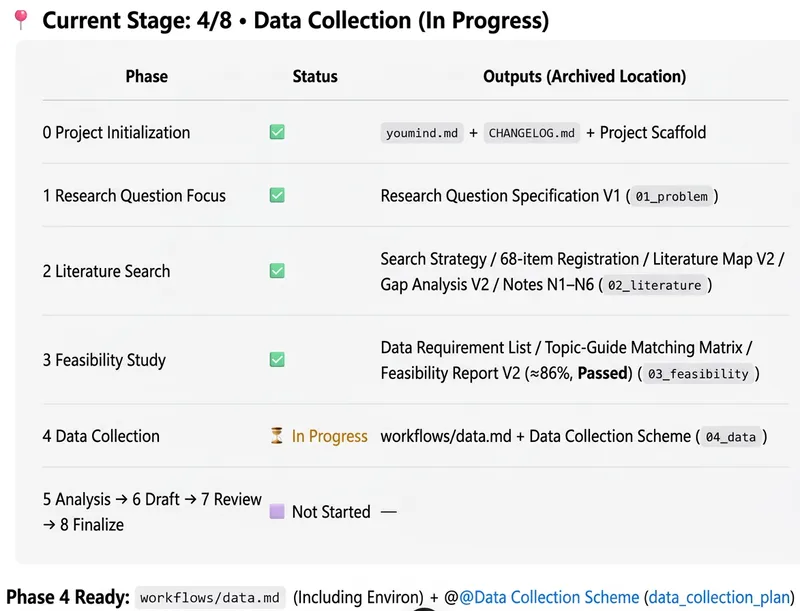
Designed for higher education faculty and researchers, this assistant turns an initial research idea into an executable, fundable research project plan. It covers national-level projects, provincial humanities and social sciences projects, education reform projects, and other research project types. Simply provide the project type and application guidelines or template, research area, existing成果, and personal and institutional information. The assistant helps clarify the topic, focus the research problem, and build a complete foundational framework around the research question, application requirements, and review logic. As the project progresses, the assistant can support academic searches, literature reviews, research gap analysis, feasibility assessments for data and methods, matching with similar projects, and adjustments to the research design. It helps ensure that literature, data, and project information are authentic and verifiable, while incorporating AI, contemporary relevance, and methodological innovation into the topic and innovation points. Once the research plan is mature, it can draft the initial proposal based on the application guidelines or blank template you provide, simulate different reviewer perspectives, and offer revision suggestions through to the final version. The project retains stage outputs, version records, and the basis for changes throughout the process. In the end, it can organize the proposal, technical roadmap, research framework, innovation logic diagram, progress Gantt chart, and other research visuals. For tasks that require an external environment, such as full-text PDF analysis, code execution, web scraping, or large-scale data processing, the assistant clearly identifies handoff tasks and supports returning results and resuming work, helping you move from project planning through to a properly formatted final proposal.
Grant Proposal Review PRO V2.0
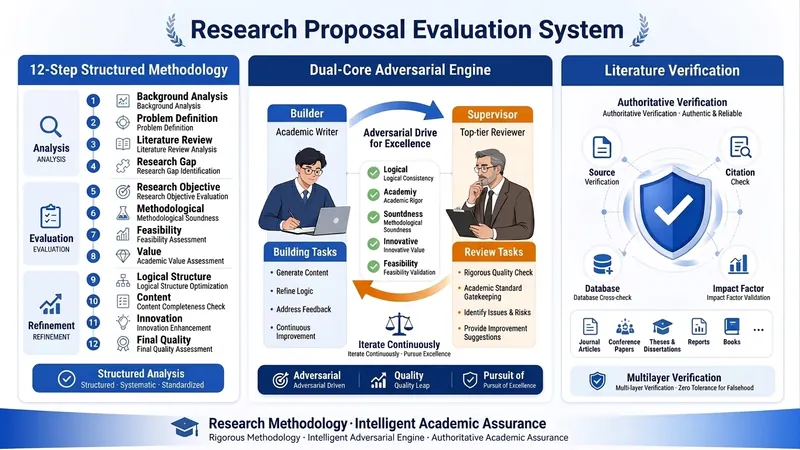
🎯 Core Functionality Overview This is an intelligent review and optimization system specially designed for national social science, education ministry, and provincial grant applications. It simulates the thinking mode of a senior review expert with 15 years of experience, ensuring academic rigor and competitiveness through three core mechanisms. 🔧 Three Core Mechanisms 1️⃣ 12-Step Structured Methodology Covers the full lifecycle of grant proposal review: Phase 1-3: Basic Diagnosis - In-depth analysis of announcement (funding priorities, review criteria, application requirements) - Cross-disciplinary type judgment (precise identification of 8 types) - Research GAP five-dimension identification (theory/methodology/empirical/policy/technology) Phase 4-7: Core Element Review - Research question TMAQ model analysis (theory/methodology/approach/question four dimensions) - Research objective SMART principle test - Research content framework completeness assessment - Research approach type matching (6 types) Phase 8-10: Deep Quality Enhancement - Precise extraction of key difficulties (distinguish criteria + breakthrough paths) - Innovation point seven-dimension mining - Feasibility seven-dimension argumentation Phase 11-12: Overall Optimization - Nine-dimension quality check (academic rigor, innovativeness, feasibility, etc.) - Comprehensive optimization suggestions and final report 2️⃣ Dual-Core Adversarial Mechanism (Builder vs Supervisor) Working Principle: - Builder (academic writer): Generates optimization plans based on user materials - Supervisor (top journal reviewer): Challenges Builder's plans with the strictest standards - Adversarial iteration: 3 rounds of confrontation to ensure plans are robust Application Scenarios: - Innovation point mining: Builder proposes innovation points → Supervisor questions novelty → iterative optimization - Feasibility argumentation: Builder designs plan → Supervisor challenges feasibility → supplementary argumentation - Literature citation: Builder cites literature → Supervisor verifies authenticity → ensure academic standards 3️⃣ Literature Authenticity Verification Mechanism Two working modes: Mode A: Placeholder Mode (Default) - Use markers like [Literature Placeholder-001] in place of specific references - Output a Literature Requirement List specifying search requirements for each placeholder - User searches and fills in real references Mode B: Real-Time Verification Mode - Call Google Scholar to verify literature authenticity in real time - Generate Literature Verification Report (authenticity/relevance/authority scores) - Ensure every citation is traceable Preventing AI Hallucination: - Prohibits fabricating authors, journals, DOIs - All references must be verified or marked as placeholders - Guarantees academic integrity bottom line 💡 Core Value and Applicable Scenarios ✅ Key Pain Points Addressed 1. Academic sloppiness: AI-generated content often includes fake references, logical gaps 2. Insufficient innovation: Difficulty uncovering true academic innovation points 3. Weak feasibility: Research plans lack systematic argumentation 4. Cross-disciplinary difficulty: Interdisciplinary topics often fall between two stools 🎓 Target Users - University faculty (social sciences, education, humanities) - Researchers (applying for national and provincial grants) - Academic teams (needing systematic review processes) 📋 Typical Workflow 1. Input: Upload announcement + proposal draft 2. Review: System executes 12-step structured analysis 3. Adversarial: Dual-core mechanism iteratively optimizes key sections 4. Verification: Literature authenticity check 5. Output: Complete review report + optimization suggestions + literature list 🔍 Differences from Traditional Review | Dimension | Traditional Human Review | Expert Review System | |-----------|------------------------|----------------------| | Review depth | Depends on personal experience | 12-step structured + 9D QC | | Academic rigor | Hard to fully audit | Literature verification + dual-core adversarial | | Innovation mining | Subjective judgment | 7-dimension systematic analysis | | Feasibility argumentation | Experience-driven | 7-dimension item-by-item argumentation | | Consistency | Varies by individual | Standardized process | | Efficiency | Days to weeks | 1-2 hours for initial review | The core advantage of this system is: it makes the tacit knowledge of a 15-year senior review expert explicit, structured, and replicable, enabling every user to receive top-level expert review services.
Information
- Version
- v15
- Last updated
- Runtime credits
- Usage-based
- Models
- Auto