Scholar Decade: One-Click-慢老师
Scholar Decade: One-Click-慢老师
Showcase
Description
Compress the task of 'tracking a scholar' — which originally required weeks of immersive reading — into a structured AI conversation. This enables every young researcher to see a scientific problem lineage worth investing ten years in, much earlier. Enter the name (and field) of a scholar you're interested in, and the AI will map out the scholar's research trajectory, core scientific questions, key paper milestones, and academic paradigm shifts. It helps you quickly grasp the 'hidden thread' within a scholar's decade-long research journey.
Recommended by
Nico@YouMind
Why we love this skill
This skill is like a senior academic detective, using meticulous paper analysis to reveal a scholar's thought evolution and academic mainline over a decade, providing users with unique research insights.
Related Skills
View all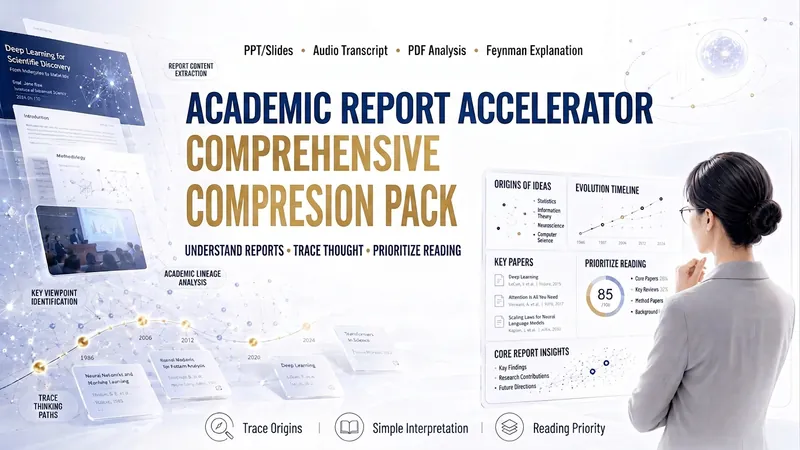 Research
Prof. Slow's Report Pack
Designed for conference attendees. Whether you have photos of slides, audio transcriptions, or PDF files, one click generates a comprehensive archaeological report of the scholar's ideas. It includes interpretations of origins, evolution, key papers, and a recommended reading order, making it easy to grasp core content.
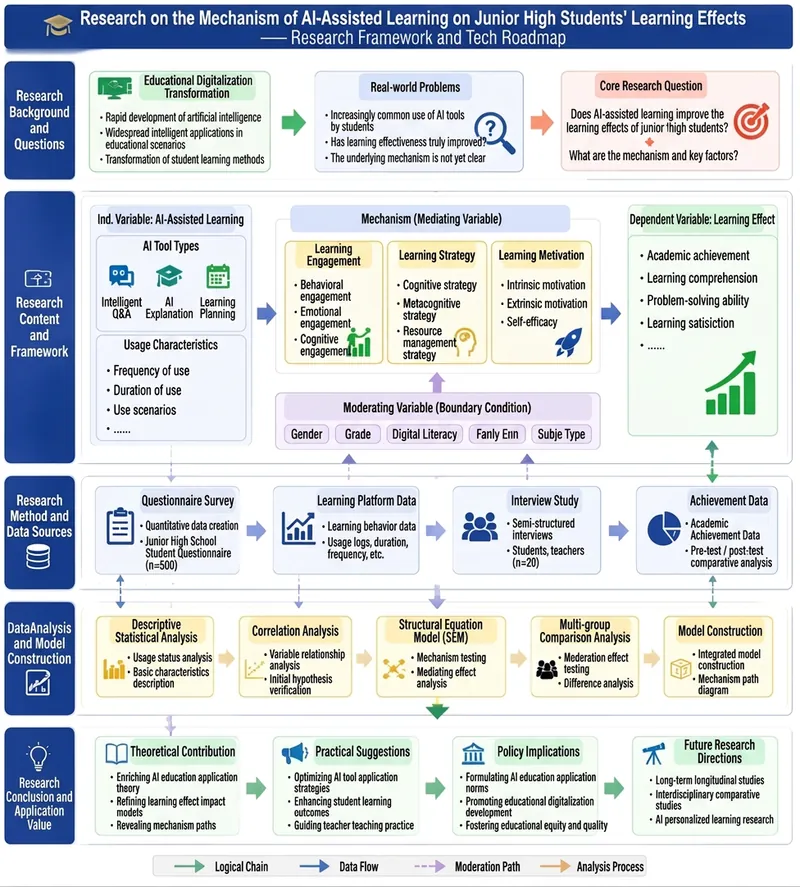
AI R&D Roadmap Designer Pro
Save up to 1 month of detours in literature and proposals, avoiding repeated rework of your topic. Enter your research topic to generate a scientific research roadmap that you can present and write papers from. Enter your research topic to automatically generate an opening-report-ready 'Research Framework Diagram + Technical Roadmap + Paper Storyline Diagram'. Suitable for master's students, PhD students, early-career researchers, scientific researchers, and grant applicants. You only need to provide your research direction, research object, research objectives, research methods, and current challenges. The system will organize the following for you: ① One-sentence research positioning ② Research question tree ③ Research framework diagram ④ Technical roadmap ⑤ Paper storyline diagram ⑥ Timeline ⑦ Minimal graduation closure plan ⑧ Prompt words ready for AI image generation Ideal for: Opening reports, mid-term checks, graduation theses, grant applications, SCI paper design, and project proposals. This is not about ghostwriting your paper; it's about organizing your chaotic research ideas into a technical roadmap that 'your advisor can understand and you can execute'.
 Research
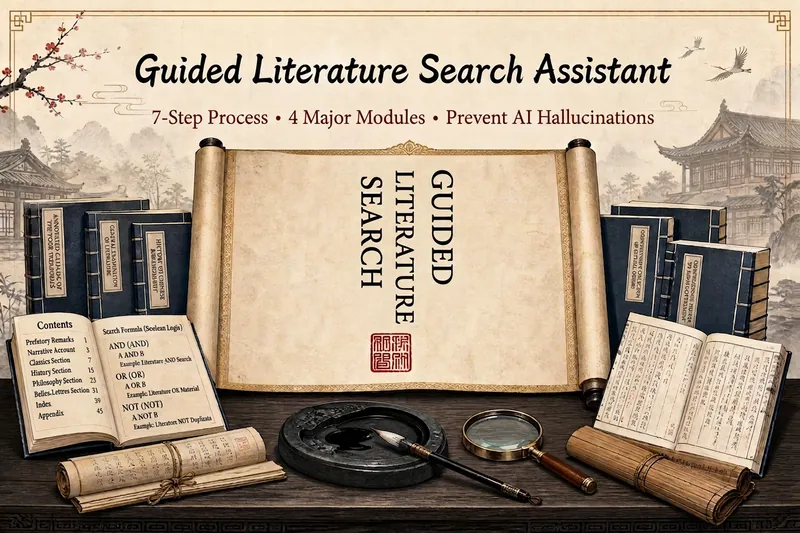
Guided Literature Search
Search literature differently: this Skill gives you a “map of the field” first. It offers five standout capabilities: ① Reviews first, core papers second (a strict rule)—find 3–5 review articles to map the field, then follow their references to locate core literature, so you are not overwhelmed by hundreds of papers from the start; ② Literature authenticity verification (to prevent AI hallucinations)—uses placeholder-pattern checks and real-time verification through CrossRef, DOI, CNKI, and Wanfang, checking each author, journal, DOI, and page number without fabricating a single reference; ③ Automated advanced CSSCI searches on CNKI—when you have VPN or institutional access, automatically extract CSSCI records and abstracts, up to 100 papers at a time, and save them directly to Excel; ④ Direct English OA downloads—download directly from arXiv, MDPI, Frontiers, and other sources at 100%; download approximately 50–70% of Springer and Elsevier OA papers directly; for paywalled papers, receive a DOI link and VPN download instructions; ⑤ Topic selection with the Three-Circle Focus Method—intersect policy trends, your prior experience, and your problem awareness to turn a vague idea into a genuinely worthwhile research topic. The seven-step core workflow is: research topic design → keyword refinement → find reviews first → find core literature → screen and verify → attempt downloads → produce a prioritized reading list. It also includes two enhanced modules: a structured 12-element breakdown in Excel and iterative reflection after reading. Clear boundaries: it does not promise to bypass CNKI’s anti-scraping protections to download Chinese full texts, log in to a VPN on your behalf, or write the main body of your paper. Designed for graduate students, university faculty, and academic researchers who need to conduct systematic literature searches.
Information
- Version
- v4
- Last updated
- Runtime credits
- Usage-based
- Models
- Auto