Vintage Object Archive
Turn an old object into a history card
Vintage Object Archive
Turn an old object into a history card
Showcase
Description
That sewing machine at home, the enamel mug, the pager—maybe you can’t name them, but seeing them brings back so many memories. 【Vintage Object Archive】 takes an old object and creates a finished archival image showing roughly when it was popular, how much it sold for at the time, who used it, how it was used, why it later disappeared, and whether people still collect it today. Ideal for launching nostalgic content, organizing family memories, and creating visuals for old-object short videos. Strict rule: only include approximate date ranges and widely accepted facts. Prices are labeled “about [amount] at the time.” Never invent specific manufacturers, exact prices, or discontinuation years.
Recommended by
Dancang
Why we love this skill
Turns an old object into a collectible 3:4 era archive card with a six-section layout for its use, setting, market value, and disappearance. Kraft paper, binding threads, and era stamps create a cohesive look without posing as an appraisal.
Best for
For users organizing family memories, creating nostalgic content, and documenting stories about old objects.
How to use this Skill
Provide your input
Enter the name of an old object. You can add memories of how it was used, the region, or other details.
Run the Skill
Organizes the object's historical context, era, uses, price range, reasons it disappeared, and current status into a nostalgic archive card.
Review your result
Generates a finished 3:4 portrait image styled like aged kraft paper and an archival card, ready to share or use in short videos.
Related Skills
View all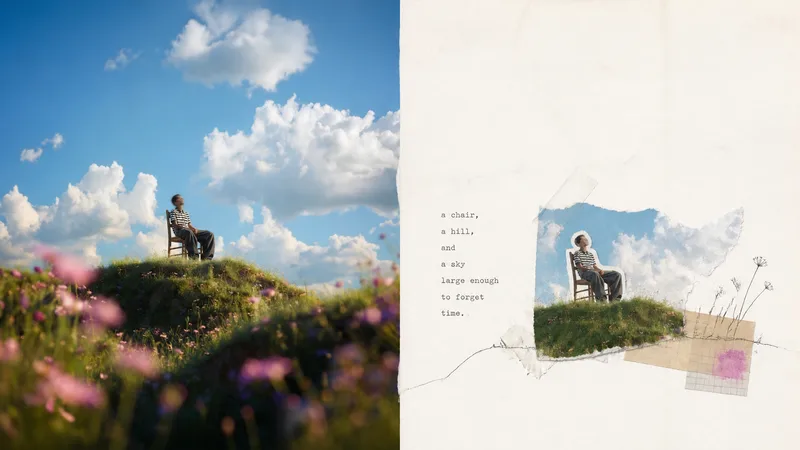 Image
ImageXiaoxiaodong x Collage P064
P064 is designed to recreate the archival feel of paper edges softened by time: It reassembles everyday snapshots with hand-torn paper pieces, lightly sketched pencil lines, and the texture of weathered old paper. ⚬ Split into two horizontal sections: the top preserves the original image’s sense of reality and film-like light, while the bottom becomes a weathered afterimage of memory. ⚬ Hand-torn edges: Irregular paper fringes, paper fibers, faint graphite lines, and the hesitation of handmade pauses all remain—never smooth, rigid vector stickers. ⚬ An extremely restrained palette: aged paper tones, light gray, and pale ink form the base. Only 1 to 2 of the most essential colors from the original image are picked out on the fragments, used sparingly. ⚬ Subtle vintage typewriter layout: A few short English typewritten phrases, with slight mechanical misalignment, are scattered along the page edges and across generous blank space—like a private scrapbook archive quietly discovered deep inside a library. Quiet, restrained, and enduring, it turns a fleeting moment into an old object worth exploring.
 Image
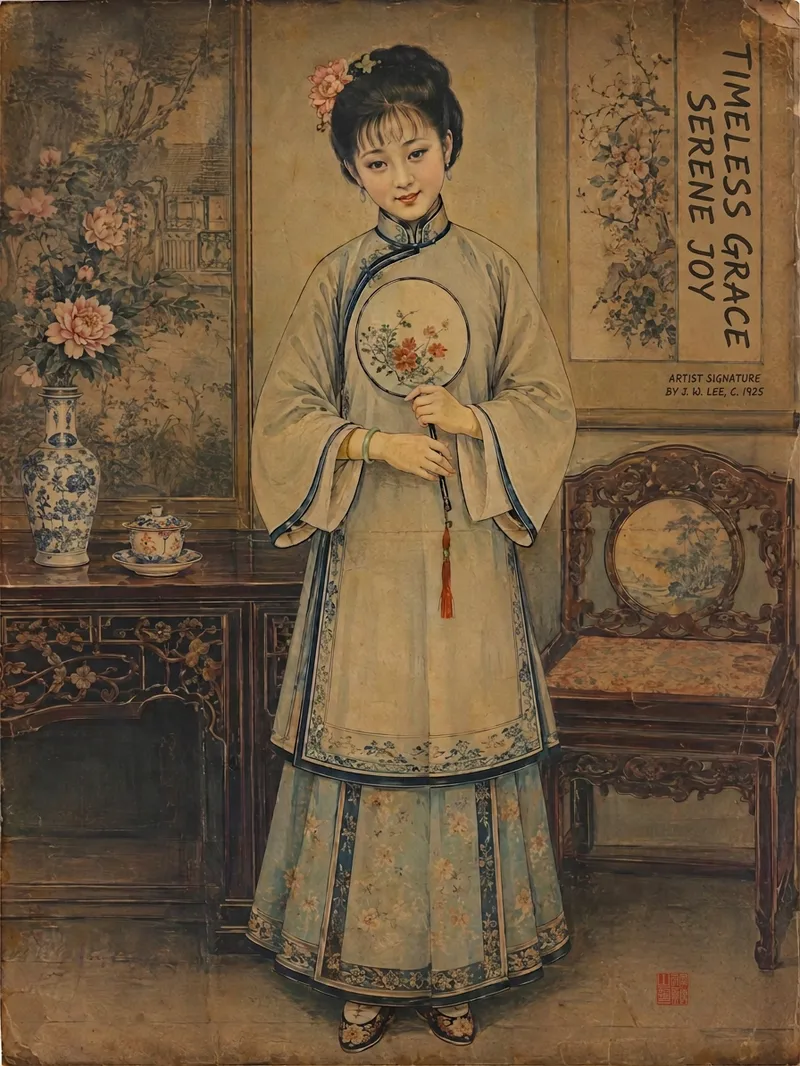
ImageRepublic-Era Image Restoration
Turn “Republic-era style” into visual materials grounded in the period, with credible textures and production details—instead of applying a generic retro filter. Whether you’re working with calendar posters, old photographs, studio portraits, <良友> pictorial covers, cigarette cards, newspaper ads, product packaging, or Shikumen interiors and New Year picture opera sheets, you’ll get image concepts that more closely reflect authentic historical aesthetics, based on the specific era, people’s identities, production techniques, and material qualities. Enter a theme, image, or modern photo to receive bilingual Chinese-English prompts for AI image generation, negative prompts, and aspect-ratio recommendations. Images can also be generated directly when needed. The process focuses on details such as qipao silhouettes, hairstyles, makeup, class-specific character, paper aging, halftone printing, hand coloring, and misregistered color layers—avoiding the “period drama Republic-era look” created by brand-new costumes, modern studio lighting, digital sharpening, and plastic-like textures. Each delivery also includes a concise material history explaining its period context, purpose, and visual features. For text-heavy ads, packaging, and opera sheets, compositions can be prepared for direct image generation or later typesetting. For real historical figures, fictional people with comparable identities are used instead, clearly labeled as AI-generated and styled as historical-material restorations.
 Image
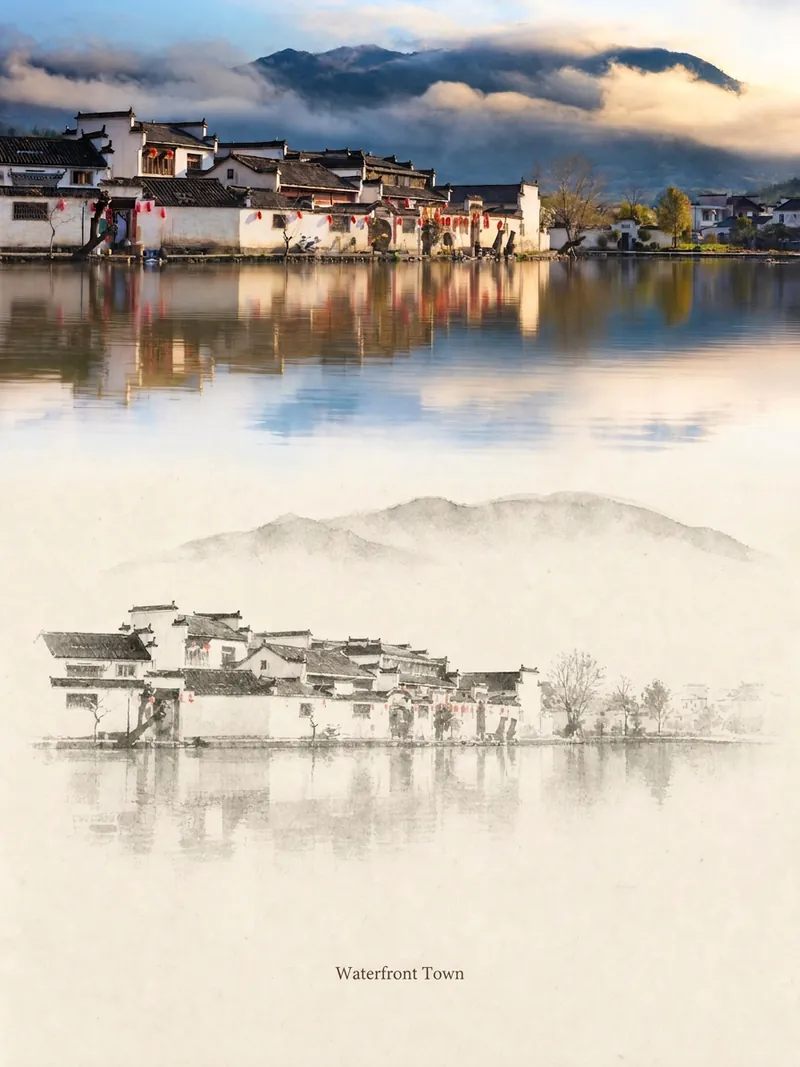
ImageRelic Art
Transform a real photo into a vertical "relic art" poster that blends documentary value with artistic expression: the upper part keeps the original photograph untouched, while the lower part uses warm paper or restrained light and shadow to compress a memory-derived graphic from the image. It's not a typical illustration or decorative poster; instead, it uses sparse ink blocks, softened edges, white-space cuts, and sparse lines to distill architectural, urban, water, road, human-scale, horizon, and light-shadow relationships, so the subject remains recognizable even in thumbnails. The overall feel is quiet, restrained, and like a modern print. Colors are taken from the source photo, primarily deep blue, ink black, gray-green, stone, or low-saturation warm tones, with a small warm accent added when fitting. The title is kept very small, poetic, and similar to an exhibition label, never overwhelming. This is suitable for minimalist art posters, photographic relic series, architectural and urban image posters, abstract editorial photography, gallery-style photo covers, and visual series for mobile platforms like Douyin. The final output preserves the authentic content of the original photo while adding a consistent "memory imprint" below, giving each photo its own mood and an expandable visual identity.
Information
- Version
- v2
- Last updated
- Runtime credits
- Usage-based
- Models
- Auto
- Use cases
- Writing & contentImages & designLifestyle & entertainment
- What you get
- Image
- Visual styles
- MinimalistRetroPaper art