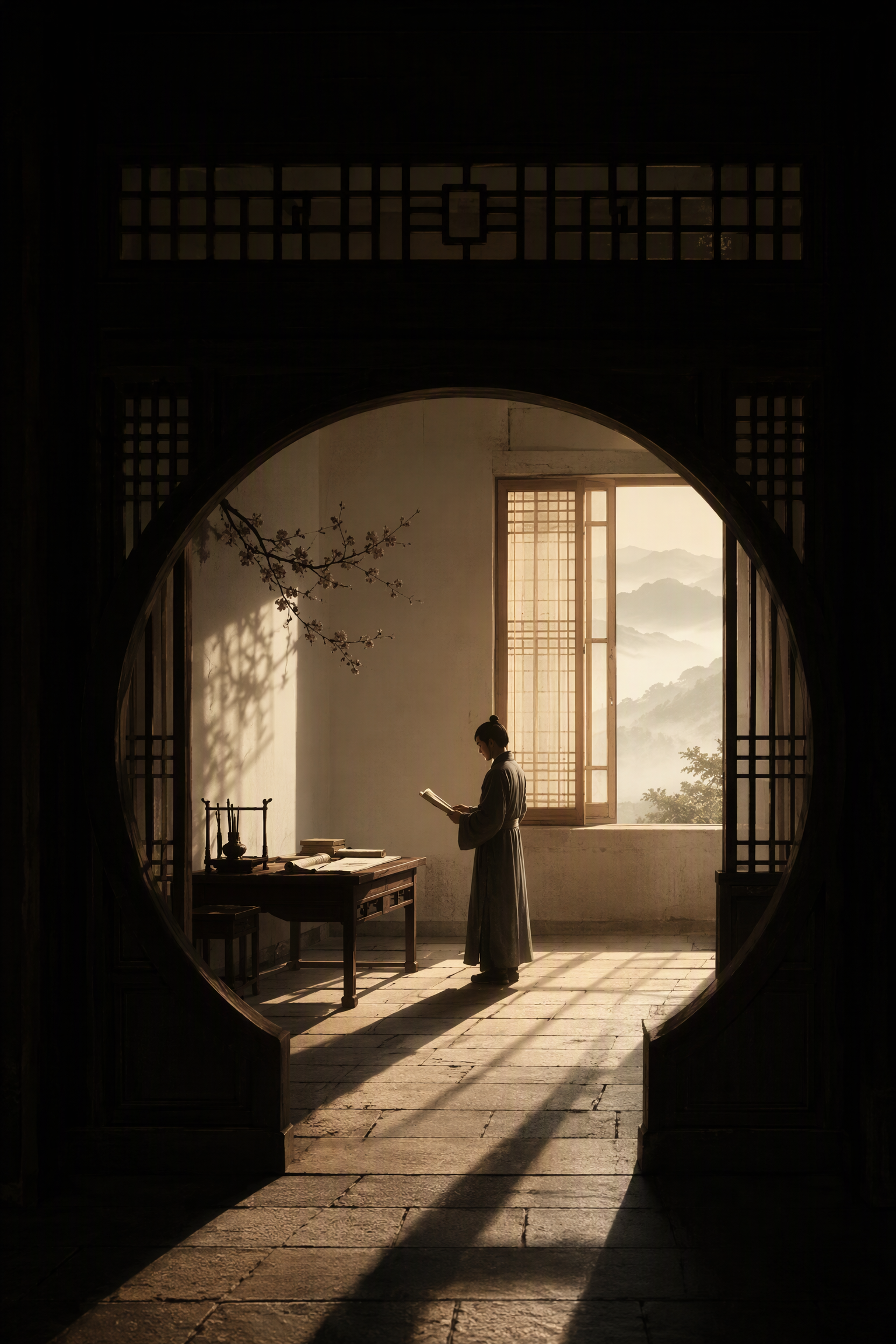
Light-and-Dark Zen Framing
Create high-contrast Zen scenes with dark frames
Light-and-Dark Zen Framing
Create high-contrast Zen scenes with dark frames
Showcase
斗笠长刀侠客禅意图
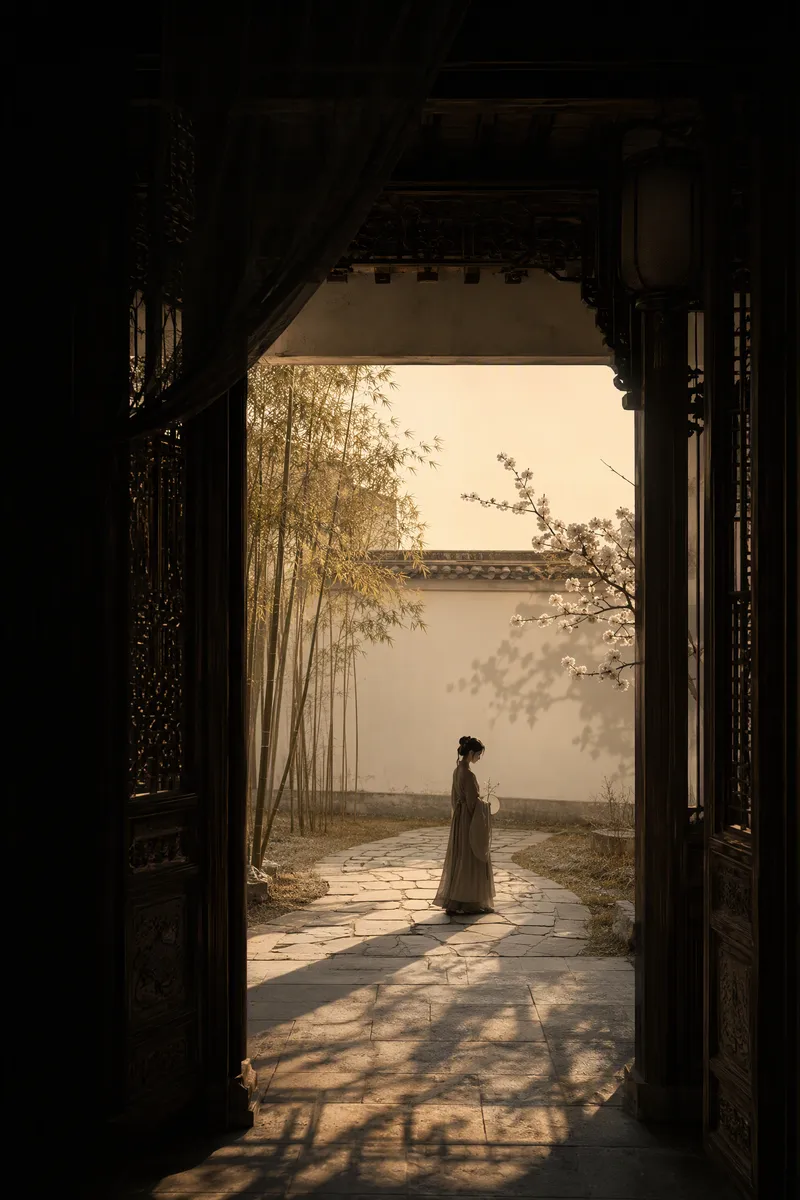
庭院妙龄女子 · 明暗框景
斗笠长刀侠客禅意图
庭院妙龄女子 · 明暗框景
Description
Turn your written concept or reference image into a “light-and-dark framed Zen” scene: dark architecture or structures form a natural frame in the foreground, leaving an open, bright space within. A person or subject stands in the light at a small scale, as a silhouette or in muted colors, while crisp, elongated geometric shadows reinforce a sense of order and solitude. The overall style emphasizes high-contrast lighting, near-black shadows, restrained colors, ample negative space, and a tranquil, minimalist visual experience. It is suited to creating a meditative, ceremonial, and East Asian Zen atmosphere, while also extending to modern urban or Western classical settings. During generation, the architectural context is naturally matched to the subject’s identity, era, and cultural character—for example, a monk in a Zen temple corridor, a scholar in an academy, a samurai in a Japanese garden, a historical figure in a classical courtyard, or an urban professional in a glass-curtain-wall space—while preserving any scene you explicitly specify. For uploaded images, the composition can be reconstructed around a dark frame, bright area, subject in light, and long shadows while preserving the subject’s identity and approximate pose as much as possible. If the original image lacks spatial structure suitable for reconstruction, the style will not be forced onto it. Suitable for text-to-image, image-to-image, and style transfer; not suitable for highly saturated color images, standard black-and-white filters, or photo-realistic commercial portraits.
Recommended by
淡苍
Why we love this skill
Distinctive Zen compositions pair dark frames, bright central spaces, small figures in light, and geometric shadows across classical, modern, and multicultural settings.
Related Skills
View all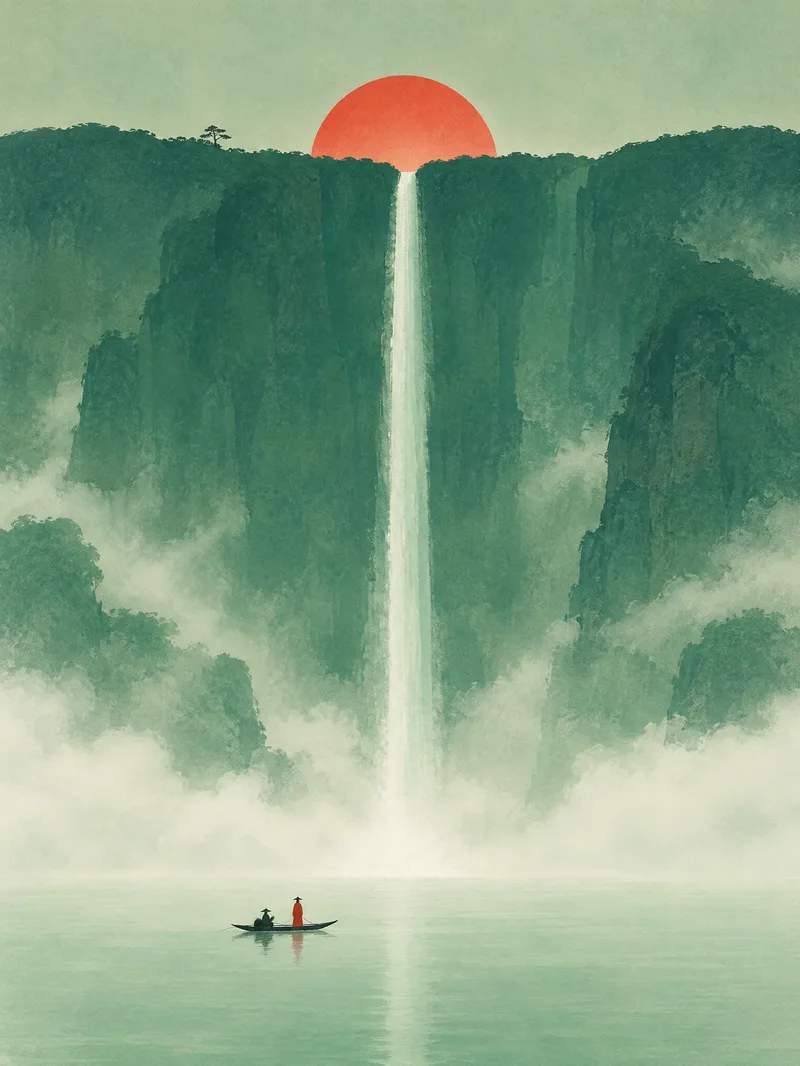 Image
ImageEastern Minimalist Scenes
Turn a theme, emotion, or simple idea into a minimalist atmospheric illustration shaped by the Eastern aesthetic of negative space. Whether it’s an ancient temple, lotus pond, waterfall, covered bridge, or an abstract feeling such as “tranquility” or “solitude,” the idea becomes a tangible meditative scene. Vertical compositions, expansive areas of sky or water, and small details at the bottom create a quiet, spacious image with a strong sense of narrative. The artwork combines Chinese ink-wash traditions with a modern minimalist illustration language. Jade green, mineral green, vermilion, and warm ochre create striking color contrasts, complemented by soft watercolor washes, flat color blocks, and natural brush textures. Monumental subjects such as mountains, giant trees, cliffs, and traditional architecture are contrasted with tiny figures, highlighting awe, solitude, and poetic atmosphere while keeping the image clean—without text, watermarks, or modern elements. You can also simply ask to “generate randomly” for a complete Eastern meditative scene inspired by themes such as ancient temples, cascading waterfalls, lotus ponds, arched gates, covered bridges, pine forests, seas of clouds, and bamboo paths. If you specify a landscape or square format, the composition will be adjusted while preserving its generous negative space and small-scene design.
 Image
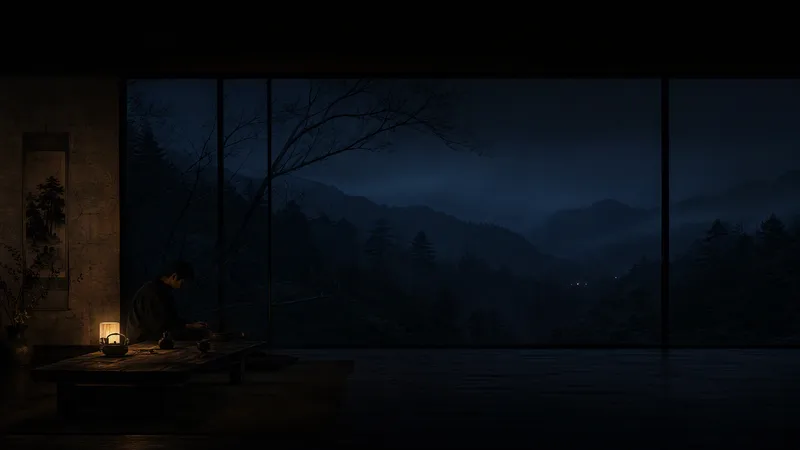
ImageMono no Aware, Wabi-Sabi & Yūgen
Turn themes, scenes, people, classical Chinese poetry, or photos into Japanese aesthetic images grounded in clear sources of thought and visual references—ideal for creators who need nuanced storytelling and art direction. The skill selects mono no aware, wabi-sabi, or yūgen as the primary direction based on the content: mono no aware expresses the beauty of what is fading, wabi-sabi reveals the marks left by materials and time, and yūgen creates understated depth through concealment, distance, negative space, and unseen areas. These aesthetics are combined only when the subject genuinely supports multiple aesthetic logics. You’ll receive a clear thematic assessment, primary aesthetic, relationship between combined styles, art-historical anchors, and core narrative. It then generates professional visual prompts covering the subject, setting, composition, spatial layers, materials, color, lighting, mood, and negative constraints—avoiding vague labels such as “Japanese,” “Zen-like,” or “sophisticated.” For portrait photos, it aims to preserve identity, facial structure, perceived age, body type, and key clothing features, transforming the aesthetic through environment, lighting, and narrative rather than automatically turning the person into someone wearing a kimono. After confirmation, the skill displays the complete prompt and generates an image, along with an aesthetic explanation to help you understand how the image expresses the beauty of transience, traces of time, or the unseen. It is suited to concept art, photography style transfer, classical Chinese poetry visualization, character-and-setting creation, spatial storytelling, and AI image generation with a Japanese aesthetic sensibility.
 Image
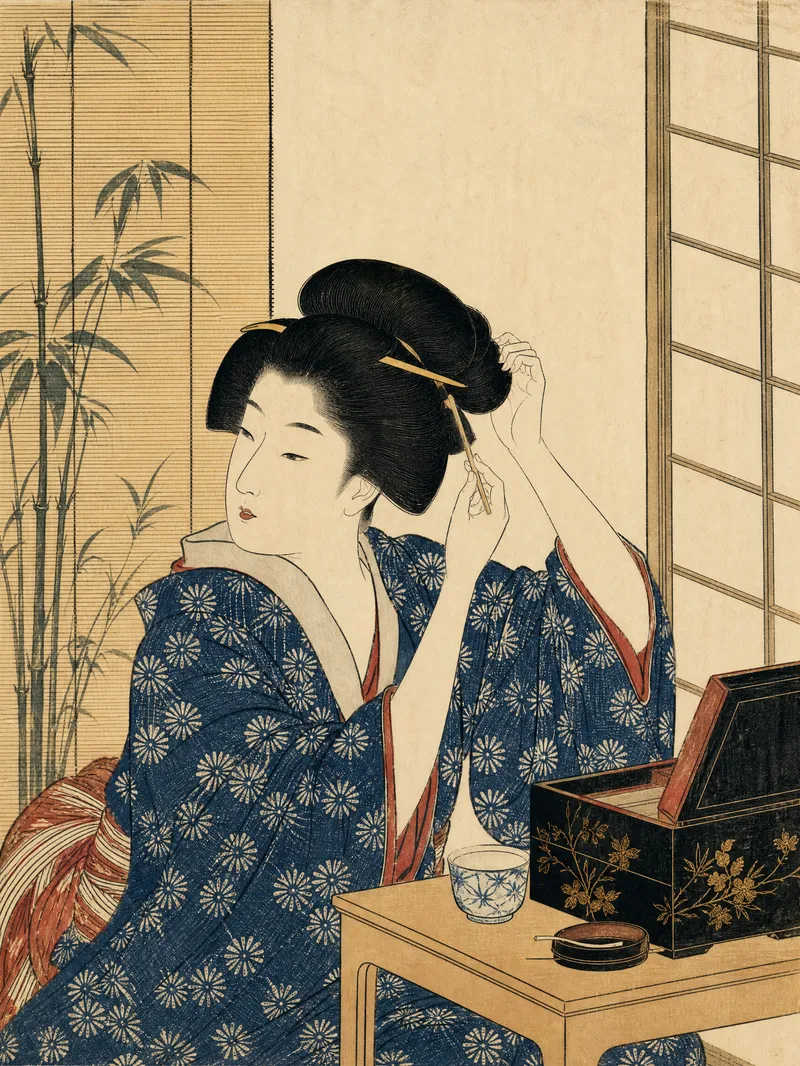
ImageJapanese Ukiyo-e Woodblock Art
Turn text descriptions or photos into images with the traditional character of Japanese ukiyo-e woodblock prints. Preserve a person’s core identity, posture, and relationship to the setting while translating poetry, stories, and the mood of nature into clear visual narratives. Whether you’re creating a portrait, landscape, seasonal scene, or vertical image for social media, the composition will use an appropriate aspect ratio and visual focus. The artwork emphasizes asymmetrical composition, layered foreground, middle ground, and background, generous negative space, diagonal visual guidance, and expressive moments of movement and emotion. Natural atmosphere—such as rain, snow, mist, wind and waves, moonlight, mountains and water, pine and bamboo, and cherry blossoms—is highlighted without meaninglessly piling on symbols like samurai, Mount Fuji, or shrines. Photo inputs receive a moderate simplification of realistic lighting while preserving recognizable facial features, age, body type, clothing, and posture. The final image features clear, flowing black outlines, flat color blocks, restrained traditional tones such as indigo and ochre, and the texture of paper fibers, woodblock impressions, and hand-printed registration. It avoids photorealism, modern anime, 3D rendering, cyberpunk, and heavy oil-paint effects. Unless explicitly requested, no text, titles, captions, or watermarks will be added.
Information
- Version
- v4
- Last updated
- Runtime credits
- Usage-based
- Models
- GPT Image 2.5 Flare