Análise completa de inglês
Descrição
Tradução adaptada inteligente e interpretação aprofundada de documentos em inglês de elevada especialização. Identifica automaticamente o tipo e o nível técnico do documento, selecionando com precisão um modo básico e eficiente ou um modo avançado e aprofundado. Inclui tradução integral, verificação rigorosa com pesquisa online, síntese estruturada, interpretação especializada e várias rondas de revisão final, procurando preservar a 100% o sentido original, manter uma terminologia coerente e reduzir erros e omissões, com o objetivo de alcançar um padrão profissional. **Aviso de risco:** Esta ferramenta utiliza IA para processar e gerar informação automaticamente. Embora seja orientada por regras rigorosas e processos de revisão, não é possível eliminar totalmente o risco de interpretações incorretas, omissões de informação ou «alucinações» do modelo. Todo o conteúdo produzido deve ser utilizado apenas como apoio. Em decisões de elevado risco relacionadas com questões jurídicas, conformidade, investimento e financiamento, medicina, entre outras, confirme sempre a informação com o documento original e recomenda-se uma revisão e validação final por um profissional devidamente qualificado.
Habilidades relacionadas
Ver tudo Escrever
Redação Académica Completa
“Redação Académica Completa” é uma ferramenta inteligente concebida para investigadores, com o objetivo de cobrir todas as fases da redação de um artigo académico, desde a conceção inicial até à versão final. Quer tenha apenas uma vaga direção de pesquisa, quer já tenha um rascunho que precisa de ser refinado, esta ferramenta oferece apoio sistemático para o ajudar a produzir um trabalho académico de alta qualidade de forma eficiente. Esta ferramenta guiá-lo-á por quatro fases principais. A primeira é o **planeamento do tema**, que o ajuda a transformar ideias preliminares em tópicos e questões de investigação viáveis, gerando um relatório abrangente de avaliação do tema, incluindo o quadro de investigação, correspondência de métodos, planeamento temporal e identificação de estrangulamentos de recursos. De seguida, entra-se na fase da **revisão da literatura**, que auxilia na construção de estratégias de pesquisa, seleção de literatura central e redação de um primeiro rascunho logicamente sólido da revisão da literatura, identificando lacunas de investigação. A terceira fase é a **escrita estruturada**, onde a ferramenta, com base no seu tema e revisão da literatura, elabora um esboço detalhado do artigo e escreve, capítulo a capítulo, a introdução, métodos, corpo do texto e conclusão, fornecendo também códigos para gráficos de investigação, garantindo uma estrutura completa e uma argumentação rigorosa. Finalmente, a fase de **revisão e refinamento** realiza uma verificação abrangente das normas académicas, um polimento linguístico em seis dimensões e uma revisão da coerência lógica, incorporando uma declaração de assistência por IA, assegurando que o seu documento final atinge um nível profissional publicável. Durante todo o processo de escrita, esta ferramenta segue rigorosamente as normas éticas académicas. Todas as citações são claramente assinaladas para verificação, sem qualquer invenção. Os resultados de cada fase são avançados apenas após a sua confirmação, garantindo que cada passo está alinhado com as suas intenções de investigação, permitindo-lhe concentrar-se na expressão das ideias enquanto a IA cuida das formalidades e normas complexas.
 Escrever
Redutor de Plágio AIGC v7.0
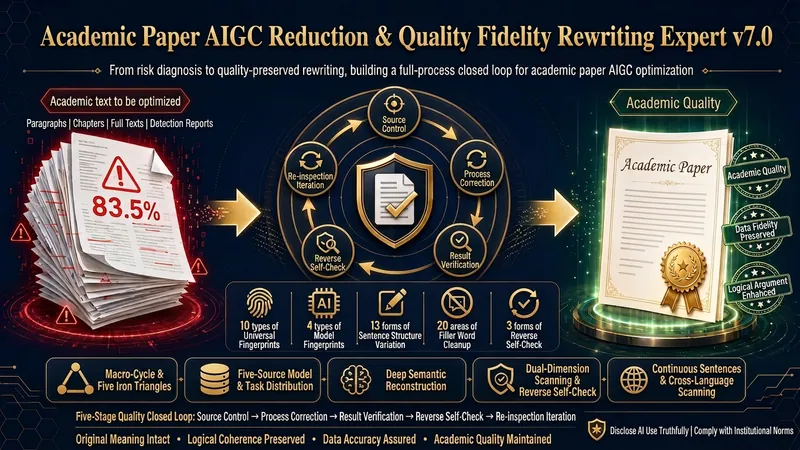
📚 Especialista em Redução de Plágio e Reescrita com Fidelidade de Qualidade para Artigos Académicos AIGC v7.0 Otimização de texto académico para estudantes de pós-graduação, investigadores e autores de artigos, com um ciclo fechado central de "controlo de fonte → correção de processo → verificação de resultado → auto-verificação reversa → iteração de re-verificação". Sob a premissa de proteger o significado original, terminologia especializada, dados e conclusões principais, diagnostica e otimiza sistematicamente problemas como expressões padronizadas, lógica mecânica, conteúdo vago, imprecisão terminológica e inconsistência de estilo em artigos. 🔍📝 🌟 Capacidades Principais 🔬 Diagnóstico de Risco Multicamada Cobre 10 tipos de impressões digitais textuais comuns e auxilia na identificação de padrões de expressão comuns de modelos como ChatGPT, Claude, DeepSeek, ERNIE Bot, etc. 🧠 Reestruturação Semântica Profunda Não se limita à substituição de sinónimos, mas parte da expressão proposicional, ordem da informação, ponto de partida da argumentação e organização das evidências para reconstruir uma argumentação académica mais natural e profunda. ✍️ Reescrita com Fidelidade de Qualidade Aplica 13 estratégias de transformação de frases e 20 métodos de limpeza de expressões modelo de alta frequência para melhorar frases mecânicas, conectivos repetitivos e estruturas excessivamente regulares. 📊 Diagnóstico de Estrutura Total Através de um grande ciclo e cinco triângulos de ferro, verifica se as questões de pesquisa, teoria, revisão, método, conclusão e inovação formam um ciclo fechado completo. 🧩 Adaptação Detalhada por Secção Para resumo, introdução, revisão de literatura, métodos de pesquisa, resultados, discussão e conclusão, desenvolve estratégias de diagnóstico e reescrita diferenciadas. 🌐 Varredura de Risco Multilíngue Auxilia na identificação de tradução artificial, acumulação de voz passiva, aninhamento de frases longas e anomalias de mistura chinês-inglês, tornando a expressão académica chinesa mais natural e precisa. 🔄 Ciclo de Auto-Verificação Reversa Após a reescrita, verifica novamente a partir da distribuição de técnicas, novas impressões digitais textuais e integridade da informação, evitando que o texto se torne "mais padronizado" ou que conteúdo crítico seja perdido. 🛡️ Proteção das Normas Académicas Não inventa literatura, dados, casos ou fundamentos políticos; marca separadamente as informações que o autor precisa verificar e lembra de divulgar honestamente o uso de IA. 🎯 Cenários de Aplicação ✅ Otimização de parágrafo único ou secção local ✅ Modificação direcionada de parágrafos marcados em relatórios de deteção ✅ Refinamento de resumo, introdução, revisão, discussão e conclusão ✅ Diagnóstico de características de risco AIGC em todo o texto ✅ Adaptação da linguagem e estrutura ao diário-alvo ✅ Revisão de qualidade e verificação de consistência antes da submissão 📦 Entregas Finais 📄 Texto reescrito com fidelidade de qualidade 🔎 Relatório de diagnóstico de riscos e problemas 🛠️ Explicação das estratégias e técnicas de reescrita ✅ Relatório de auto-verificação reversa e integridade da informação 💡 Itens para verificação do autor e sugestões de revisão subsequentes 🎓 Significado original preservado · Lógica não quebrada · Dados não inventados · Qualidade académica não reduzida ⚠️ Esta habilidade visa melhorar a qualidade da expressão académica e reduzir as características de risco no texto, não garantindo a aprovação em qualquer plataforma de deteção específica, nem a obtenção de um valor de deteção específico.
 Escrever
Análise e Melhoria de Acidentes
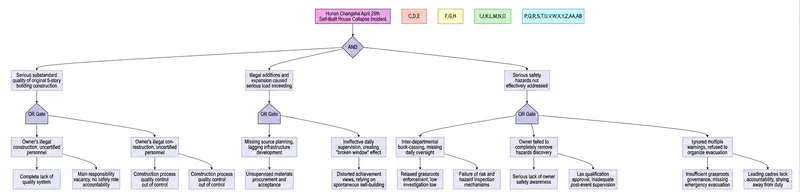
Também se debate repetidamente com estas questões na gestão da segurança? Cada relatório de análise de acidentes tem dezenas de páginas, mas as conclusões continuam a resumir-se a “operação indevida por parte do trabalhador” ou “falta de consciência de segurança”, sem nunca identificar o verdadeiro problema?\nSão definidas inúmeras medidas corretivas, mas no fim continuam a ser frases vagas como “reforçar a formação” ou “aperfeiçoar os procedimentos”, difíceis de executar, enquanto acidentes semelhantes voltam a acontecer?\nOs relatórios de investigação de acidentes contêm muitos detalhes, mas não sabe como organizá-los sistematicamente numa cadeia causal clara, que permita à gestão compreender de imediato a origem do problema?\nPerante uma inspeção das autoridades ou do grupo empresarial, precisa de uma análise aprofundada, lógica e progressiva, mas as ferramentas disponíveis são demasiado superficiais ou teóricas e não se adaptam à realidade?\nQuer usar casos de acidentes externos como alerta interno, mas receia que a divulgação do nome da empresa provoque riscos reputacionais desnecessários? A verdadeira gestão da segurança não consiste em “atribuir responsabilidades” depois do acontecimento, mas em “identificar as causas” antes que ele ocorra. Só ao revelar os problemas profundamente enraizados na organização será possível aplicar medidas corretivas eficazes. Esta competência funciona como um assistente inteligente que, à semelhança de um especialista experiente em segurança, lhe fornece uma análise aprofundada e sugestões de melhoria. O que é? Uma ferramenta profissional que, com base no texto original de um relatório de investigação de acidentes, analisa automaticamente as causas profundas e gera recomendações práticas. Não se limita a generalidades: baseia-se exclusivamente nos materiais originais fornecidos, extrai com precisão as informações essenciais, reconstitui a sequência do acidente e recua passo a passo, como um detetive, até identificar as falhas sistémicas mais profundas. Como utilizar? Três passos para chegar à origem do problema Forneça o relatório de investigação do acidente — Carregue ou cole o relatório completo, uma comunicação interna ou uma descrição detalhada do acidente; Análise aprofundada automática — A ferramenta extrai de forma inteligente informações essenciais do texto original, como a cronologia, o comportamento das pessoas envolvidas, o estado dos equipamentos e as descrições dos procedimentos de gestão. Reconstitui objetivamente os acontecimentos e garante que toda a análise permanece fiel aos materiais originais, sem conclusões especulativas; Obtenha um diagnóstico das causas por níveis e um plano de melhoria prático — Receberá um relatório de análise claro e pronto a aplicar. Porque é que o seu modelo de análise consegue “separar as camadas”? Ao contrário da análise tradicional de acidentes, esta ferramenta organiza claramente as causas em três níveis, para que os problemas possam ser vistos, identificados e corrigidos: Primeiro nível: causa direta — Identifica o comportamento ou estado concreto que levou ao acidente, como “um trabalhador não fechou a válvula de acordo com o procedimento” ou “o dispositivo de interbloqueio de segurança de um equipamento falhou”. Este é o fator que desencadeia diretamente o acidente e o facto mais fácil de observar. Segundo nível: causa indireta — Revela problemas sistémicos na gestão da empresa, como lacunas nos procedimentos, formação insuficiente, falta de supervisão ou manutenção inadequada. Por exemplo: “o procedimento operacional desse posto não especificava o processo de paragem de emergência” ou “o equipamento não tinha sido inspecionado periodicamente no último ano”. São o “terreno fértil” por trás das causas diretas. Terceiro nível: causa fundamental — Aprofunda a análise para identificar falhas na gestão da segurança ou na cultura de segurança da empresa, como “o investimento em segurança tem sido insuficiente durante muito tempo e os equipamentos envelhecidos não foram atualizados atempadamente”, “a gestão privilegia a produção em detrimento da segurança e os indicadores de desempenho não estão ligados ao desempenho de segurança” ou “a responsabilidade pela segurança vai-se diluindo a cada nível, fazendo com que os trabalhadores da linha da frente não se atrevam a comunicar riscos”. É aqui que é realmente necessário intervir. Toda a análise se concentra estritamente no interior da empresa e anonimiza os nomes das empresas, garantindo uma discussão segura e objetiva, adequada tanto à análise interna como à comunicação externa. Porque é que as recomendações de melhoria são “executáveis”? Para cada causa identificada, a ferramenta gera medidas de melhoria específicas, executáveis e aplicáveis, em vez de expressões vagas como “reforçar a gestão”. Por exemplo: Causa identificada Recomendação de melhoria (exemplo) Causa direta: a válvula não foi fechada conforme exigido Alterar o procedimento operacional do posto, acrescentando o passo “depois de fechar a válvula, é necessária a confirmação e assinatura de duas pessoas”; instalar um sensor de posição na válvula, ligado ao sistema de controlo central para emitir um alarme Causa indireta: o equipamento não foi inspecionado no último ano Definir um plano anual de inspeção para este tipo de equipamento, especificando a periodicidade e a pessoa responsável; integrar os resultados das inspeções no arquivo de gestão do equipamento e ativar automaticamente um lembrete quando uma inspeção estiver em atraso Causa fundamental: investimento insuficiente em segurança e equipamentos envelhecidos Criar uma verba específica para a atualização dos equipamentos de segurança no orçamento anual; incluir o estado de segurança dos equipamentos na avaliação mensal de desempenho do responsável da área, com um peso não inferior a 15% Cada recomendação especifica “quem faz, como faz e quando termina”, evitando formulações vagas e ajudando a empresa a prevenir eficazmente a repetição de acidentes semelhantes e a melhorar continuamente o desempenho da segurança no trabalho. Aplicações amplas e práticas Revisão de acidentes e reuniões de análise interna — Disponibiliza materiais de análise objetivos e aprofundados, orientando a discussão da “atribuição de responsabilidades” para a “melhoria”; Definição de planos de medidas corretivas — Gera diretamente, com base nas conclusões da análise, uma lista de tarefas corretivas com responsabilidades claras e medidas concretas; Apresentação de relatórios de análise de acidentes às autoridades ou ao grupo empresarial — Fornece um relatório profissional, lógico e claramente estruturado; Desenvolvimento de materiais de formação em segurança — Converte casos de acidentes da própria empresa ou de empresas do setor em materiais didáticos reais e persuasivos; Avaliação e atualização do sistema de gestão da segurança — Extrai problemas sistémicos de um único acidente e promove a otimização global do sistema de gestão. Não receberá apenas um relatório de análise No final, obterá um conjunto completo de resultados prontos a utilizar, incluindo: Resumo da reconstituição do acidente: síntese objetiva da cronologia com base no texto original; Tabela de análise das causas em três níveis: comparação clara entre causas diretas, indiretas e fundamentais; Lista de medidas de melhoria direcionadas: cada medida corresponde a uma causa específica e define a orientação da execução e os critérios de aceitação; Documento explicativo da análise: interpretação da lógica e do processo de raciocínio, para facilitar a apresentação e a implementação junto da equipa. Todos os conteúdos anonimizam os nomes das empresas, garantindo segurança e utilidade. Por isso, da próxima vez que tiver diante de si um relatório de acidente e não se quiser contentar com conclusões superficiais que se limitam ao caso, não dependa apenas da intuição ou de modelos genéricos. Dê-lhe um relatório real e receberá um plano sistemático de melhoria, aprofundado e aplicável. Só ao revelar a origem do problema poderá realmente limitar as perdas; para cada “porquê”, haverá uma resposta.
Análise completa de inglês
Descrição
Tradução adaptada inteligente e interpretação aprofundada de documentos em inglês de elevada especialização. Identifica automaticamente o tipo e o nível técnico do documento, selecionando com precisão um modo básico e eficiente ou um modo avançado e aprofundado. Inclui tradução integral, verificação rigorosa com pesquisa online, síntese estruturada, interpretação especializada e várias rondas de revisão final, procurando preservar a 100% o sentido original, manter uma terminologia coerente e reduzir erros e omissões, com o objetivo de alcançar um padrão profissional. **Aviso de risco:** Esta ferramenta utiliza IA para processar e gerar informação automaticamente. Embora seja orientada por regras rigorosas e processos de revisão, não é possível eliminar totalmente o risco de interpretações incorretas, omissões de informação ou «alucinações» do modelo. Todo o conteúdo produzido deve ser utilizado apenas como apoio. Em decisões de elevado risco relacionadas com questões jurídicas, conformidade, investimento e financiamento, medicina, entre outras, confirme sempre a informação com o documento original e recomenda-se uma revisão e validação final por um profissional devidamente qualificado.
Habilidades relacionadas
Ver tudoEscreverRedação Académica Completa
“Redação Académica Completa” é uma ferramenta inteligente concebida para investigadores, com o objetivo de cobrir todas as fases da redação de um artigo académico, desde a conceção inicial até à versão final. Quer tenha apenas uma vaga direção de pesquisa, quer já tenha um rascunho que precisa de ser refinado, esta ferramenta oferece apoio sistemático para o ajudar a produzir um trabalho académico de alta qualidade de forma eficiente. Esta ferramenta guiá-lo-á por quatro fases principais. A primeira é o **planeamento do tema**, que o ajuda a transformar ideias preliminares em tópicos e questões de investigação viáveis, gerando um relatório abrangente de avaliação do tema, incluindo o quadro de investigação, correspondência de métodos, planeamento temporal e identificação de estrangulamentos de recursos. De seguida, entra-se na fase da **revisão da literatura**, que auxilia na construção de estratégias de pesquisa, seleção de literatura central e redação de um primeiro rascunho logicamente sólido da revisão da literatura, identificando lacunas de investigação. A terceira fase é a **escrita estruturada**, onde a ferramenta, com base no seu tema e revisão da literatura, elabora um esboço detalhado do artigo e escreve, capítulo a capítulo, a introdução, métodos, corpo do texto e conclusão, fornecendo também códigos para gráficos de investigação, garantindo uma estrutura completa e uma argumentação rigorosa. Finalmente, a fase de **revisão e refinamento** realiza uma verificação abrangente das normas académicas, um polimento linguístico em seis dimensões e uma revisão da coerência lógica, incorporando uma declaração de assistência por IA, assegurando que o seu documento final atinge um nível profissional publicável. Durante todo o processo de escrita, esta ferramenta segue rigorosamente as normas éticas académicas. Todas as citações são claramente assinaladas para verificação, sem qualquer invenção. Os resultados de cada fase são avançados apenas após a sua confirmação, garantindo que cada passo está alinhado com as suas intenções de investigação, permitindo-lhe concentrar-se na expressão das ideias enquanto a IA cuida das formalidades e normas complexas.
EscreverRedutor de Plágio AIGC v7.0
📚 Especialista em Redução de Plágio e Reescrita com Fidelidade de Qualidade para Artigos Académicos AIGC v7.0 Otimização de texto académico para estudantes de pós-graduação, investigadores e autores de artigos, com um ciclo fechado central de "controlo de fonte → correção de processo → verificação de resultado → auto-verificação reversa → iteração de re-verificação". Sob a premissa de proteger o significado original, terminologia especializada, dados e conclusões principais, diagnostica e otimiza sistematicamente problemas como expressões padronizadas, lógica mecânica, conteúdo vago, imprecisão terminológica e inconsistência de estilo em artigos. 🔍📝 🌟 Capacidades Principais 🔬 Diagnóstico de Risco Multicamada Cobre 10 tipos de impressões digitais textuais comuns e auxilia na identificação de padrões de expressão comuns de modelos como ChatGPT, Claude, DeepSeek, ERNIE Bot, etc. 🧠 Reestruturação Semântica Profunda Não se limita à substituição de sinónimos, mas parte da expressão proposicional, ordem da informação, ponto de partida da argumentação e organização das evidências para reconstruir uma argumentação académica mais natural e profunda. ✍️ Reescrita com Fidelidade de Qualidade Aplica 13 estratégias de transformação de frases e 20 métodos de limpeza de expressões modelo de alta frequência para melhorar frases mecânicas, conectivos repetitivos e estruturas excessivamente regulares. 📊 Diagnóstico de Estrutura Total Através de um grande ciclo e cinco triângulos de ferro, verifica se as questões de pesquisa, teoria, revisão, método, conclusão e inovação formam um ciclo fechado completo. 🧩 Adaptação Detalhada por Secção Para resumo, introdução, revisão de literatura, métodos de pesquisa, resultados, discussão e conclusão, desenvolve estratégias de diagnóstico e reescrita diferenciadas. 🌐 Varredura de Risco Multilíngue Auxilia na identificação de tradução artificial, acumulação de voz passiva, aninhamento de frases longas e anomalias de mistura chinês-inglês, tornando a expressão académica chinesa mais natural e precisa. 🔄 Ciclo de Auto-Verificação Reversa Após a reescrita, verifica novamente a partir da distribuição de técnicas, novas impressões digitais textuais e integridade da informação, evitando que o texto se torne "mais padronizado" ou que conteúdo crítico seja perdido. 🛡️ Proteção das Normas Académicas Não inventa literatura, dados, casos ou fundamentos políticos; marca separadamente as informações que o autor precisa verificar e lembra de divulgar honestamente o uso de IA. 🎯 Cenários de Aplicação ✅ Otimização de parágrafo único ou secção local ✅ Modificação direcionada de parágrafos marcados em relatórios de deteção ✅ Refinamento de resumo, introdução, revisão, discussão e conclusão ✅ Diagnóstico de características de risco AIGC em todo o texto ✅ Adaptação da linguagem e estrutura ao diário-alvo ✅ Revisão de qualidade e verificação de consistência antes da submissão 📦 Entregas Finais 📄 Texto reescrito com fidelidade de qualidade 🔎 Relatório de diagnóstico de riscos e problemas 🛠️ Explicação das estratégias e técnicas de reescrita ✅ Relatório de auto-verificação reversa e integridade da informação 💡 Itens para verificação do autor e sugestões de revisão subsequentes 🎓 Significado original preservado · Lógica não quebrada · Dados não inventados · Qualidade académica não reduzida ⚠️ Esta habilidade visa melhorar a qualidade da expressão académica e reduzir as características de risco no texto, não garantindo a aprovação em qualquer plataforma de deteção específica, nem a obtenção de um valor de deteção específico.
EscreverAnálise e Melhoria de Acidentes
Também se debate repetidamente com estas questões na gestão da segurança? Cada relatório de análise de acidentes tem dezenas de páginas, mas as conclusões continuam a resumir-se a “operação indevida por parte do trabalhador” ou “falta de consciência de segurança”, sem nunca identificar o verdadeiro problema?\nSão definidas inúmeras medidas corretivas, mas no fim continuam a ser frases vagas como “reforçar a formação” ou “aperfeiçoar os procedimentos”, difíceis de executar, enquanto acidentes semelhantes voltam a acontecer?\nOs relatórios de investigação de acidentes contêm muitos detalhes, mas não sabe como organizá-los sistematicamente numa cadeia causal clara, que permita à gestão compreender de imediato a origem do problema?\nPerante uma inspeção das autoridades ou do grupo empresarial, precisa de uma análise aprofundada, lógica e progressiva, mas as ferramentas disponíveis são demasiado superficiais ou teóricas e não se adaptam à realidade?\nQuer usar casos de acidentes externos como alerta interno, mas receia que a divulgação do nome da empresa provoque riscos reputacionais desnecessários? A verdadeira gestão da segurança não consiste em “atribuir responsabilidades” depois do acontecimento, mas em “identificar as causas” antes que ele ocorra. Só ao revelar os problemas profundamente enraizados na organização será possível aplicar medidas corretivas eficazes. Esta competência funciona como um assistente inteligente que, à semelhança de um especialista experiente em segurança, lhe fornece uma análise aprofundada e sugestões de melhoria. O que é? Uma ferramenta profissional que, com base no texto original de um relatório de investigação de acidentes, analisa automaticamente as causas profundas e gera recomendações práticas. Não se limita a generalidades: baseia-se exclusivamente nos materiais originais fornecidos, extrai com precisão as informações essenciais, reconstitui a sequência do acidente e recua passo a passo, como um detetive, até identificar as falhas sistémicas mais profundas. Como utilizar? Três passos para chegar à origem do problema Forneça o relatório de investigação do acidente — Carregue ou cole o relatório completo, uma comunicação interna ou uma descrição detalhada do acidente; Análise aprofundada automática — A ferramenta extrai de forma inteligente informações essenciais do texto original, como a cronologia, o comportamento das pessoas envolvidas, o estado dos equipamentos e as descrições dos procedimentos de gestão. Reconstitui objetivamente os acontecimentos e garante que toda a análise permanece fiel aos materiais originais, sem conclusões especulativas; Obtenha um diagnóstico das causas por níveis e um plano de melhoria prático — Receberá um relatório de análise claro e pronto a aplicar. Porque é que o seu modelo de análise consegue “separar as camadas”? Ao contrário da análise tradicional de acidentes, esta ferramenta organiza claramente as causas em três níveis, para que os problemas possam ser vistos, identificados e corrigidos: Primeiro nível: causa direta — Identifica o comportamento ou estado concreto que levou ao acidente, como “um trabalhador não fechou a válvula de acordo com o procedimento” ou “o dispositivo de interbloqueio de segurança de um equipamento falhou”. Este é o fator que desencadeia diretamente o acidente e o facto mais fácil de observar. Segundo nível: causa indireta — Revela problemas sistémicos na gestão da empresa, como lacunas nos procedimentos, formação insuficiente, falta de supervisão ou manutenção inadequada. Por exemplo: “o procedimento operacional desse posto não especificava o processo de paragem de emergência” ou “o equipamento não tinha sido inspecionado periodicamente no último ano”. São o “terreno fértil” por trás das causas diretas. Terceiro nível: causa fundamental — Aprofunda a análise para identificar falhas na gestão da segurança ou na cultura de segurança da empresa, como “o investimento em segurança tem sido insuficiente durante muito tempo e os equipamentos envelhecidos não foram atualizados atempadamente”, “a gestão privilegia a produção em detrimento da segurança e os indicadores de desempenho não estão ligados ao desempenho de segurança” ou “a responsabilidade pela segurança vai-se diluindo a cada nível, fazendo com que os trabalhadores da linha da frente não se atrevam a comunicar riscos”. É aqui que é realmente necessário intervir. Toda a análise se concentra estritamente no interior da empresa e anonimiza os nomes das empresas, garantindo uma discussão segura e objetiva, adequada tanto à análise interna como à comunicação externa. Porque é que as recomendações de melhoria são “executáveis”? Para cada causa identificada, a ferramenta gera medidas de melhoria específicas, executáveis e aplicáveis, em vez de expressões vagas como “reforçar a gestão”. Por exemplo: Causa identificada Recomendação de melhoria (exemplo) Causa direta: a válvula não foi fechada conforme exigido Alterar o procedimento operacional do posto, acrescentando o passo “depois de fechar a válvula, é necessária a confirmação e assinatura de duas pessoas”; instalar um sensor de posição na válvula, ligado ao sistema de controlo central para emitir um alarme Causa indireta: o equipamento não foi inspecionado no último ano Definir um plano anual de inspeção para este tipo de equipamento, especificando a periodicidade e a pessoa responsável; integrar os resultados das inspeções no arquivo de gestão do equipamento e ativar automaticamente um lembrete quando uma inspeção estiver em atraso Causa fundamental: investimento insuficiente em segurança e equipamentos envelhecidos Criar uma verba específica para a atualização dos equipamentos de segurança no orçamento anual; incluir o estado de segurança dos equipamentos na avaliação mensal de desempenho do responsável da área, com um peso não inferior a 15% Cada recomendação especifica “quem faz, como faz e quando termina”, evitando formulações vagas e ajudando a empresa a prevenir eficazmente a repetição de acidentes semelhantes e a melhorar continuamente o desempenho da segurança no trabalho. Aplicações amplas e práticas Revisão de acidentes e reuniões de análise interna — Disponibiliza materiais de análise objetivos e aprofundados, orientando a discussão da “atribuição de responsabilidades” para a “melhoria”; Definição de planos de medidas corretivas — Gera diretamente, com base nas conclusões da análise, uma lista de tarefas corretivas com responsabilidades claras e medidas concretas; Apresentação de relatórios de análise de acidentes às autoridades ou ao grupo empresarial — Fornece um relatório profissional, lógico e claramente estruturado; Desenvolvimento de materiais de formação em segurança — Converte casos de acidentes da própria empresa ou de empresas do setor em materiais didáticos reais e persuasivos; Avaliação e atualização do sistema de gestão da segurança — Extrai problemas sistémicos de um único acidente e promove a otimização global do sistema de gestão. Não receberá apenas um relatório de análise No final, obterá um conjunto completo de resultados prontos a utilizar, incluindo: Resumo da reconstituição do acidente: síntese objetiva da cronologia com base no texto original; Tabela de análise das causas em três níveis: comparação clara entre causas diretas, indiretas e fundamentais; Lista de medidas de melhoria direcionadas: cada medida corresponde a uma causa específica e define a orientação da execução e os critérios de aceitação; Documento explicativo da análise: interpretação da lógica e do processo de raciocínio, para facilitar a apresentação e a implementação junto da equipa. Todos os conteúdos anonimizam os nomes das empresas, garantindo segurança e utilidade. Por isso, da próxima vez que tiver diante de si um relatório de acidente e não se quiser contentar com conclusões superficiais que se limitam ao caso, não dependa apenas da intuição ou de modelos genéricos. Dê-lhe um relatório real e receberá um plano sistemático de melhoria, aprofundado e aplicável. Só ao revelar a origem do problema poderá realmente limitar as perdas; para cada “porquê”, haverá uma resposta.
Encontra a tua próxima habilidade favorita
Explora mais habilidades de IA selecionadas para pesquisa, criação e trabalho do dia a dia.