
STROBE/CONSORT Writer
Write to the right reporting standard
Description
Produces complete Methods + Results sections using the reporting standard appropriate for your study design (STROBE for observational studies and CONSORT for randomized controlled trials); then transparently checks which checklist items are missing or weakly reported and offers suggestions for completion. Who it’s for: researchers seeking robust reporting before journal submission and graduate students writing theses.
Related Skills
View all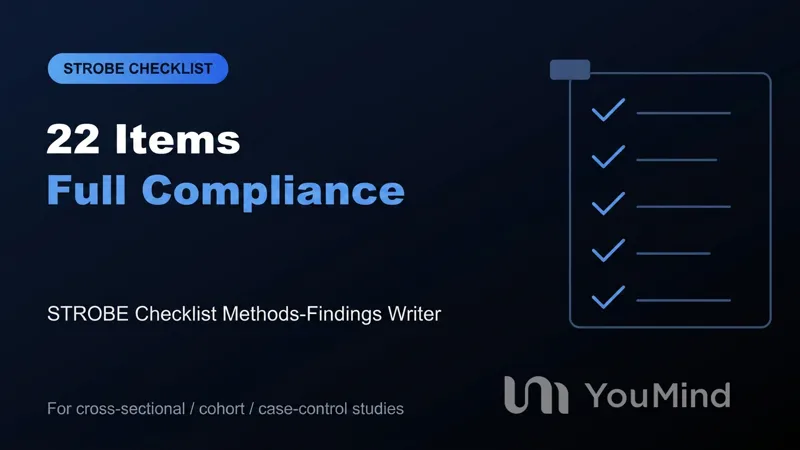
STROBE Checklist Method Writer
Based on your cross-sectional, cohort, or case-control study design, this Skill generates a complete Methods and Results draft when you provide your participant selection methods, variables, sample size rationale, and statistical methods, with implicit reference to the 22 items on the STROBE (Strengthening the Reporting of Observational Studies in Epidemiology) checklist. At the end, it also provides a mapping table showing which paragraph addresses each STROBE item—giving you a ready response to the “fill out the STROBE checklist” request during journal submission. It avoids causal language (because this is an observational study, it uses “is associated with” rather than “causes”) and explicitly discusses sources of bias and confounding. Suitable for academics working in epidemiology, public health, and clinical research.
CONSORT 2010 Report Writer
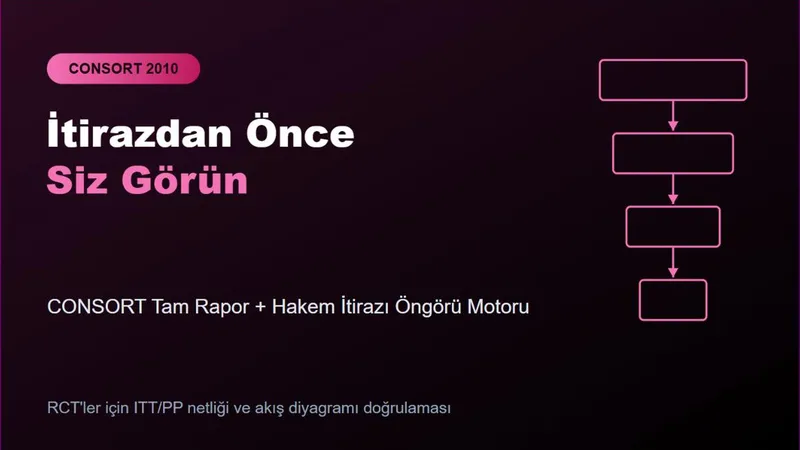
Generates a complete Abstract + Methods + Results draft from your randomized controlled trial (RCT) data—randomization method, blinding status, power analysis, CONSORT flow counts (screened/randomized/allocated/analyzed), and ITT/PP analysis approach—in accordance with CONSORT 2010's 25-item checklist. It never confuses ITT and PP, and checks the consistency of flow diagram counts (randomized ≥ allocated ≥ followed-up ≥ analyzed). It also proactively identifies at least 4 objections that journal reviewers frequently raise (such as "Why was the ITT analysis not reported?", "Was the success of blinding tested?", and "Was there any outcome switching?") and suggests a defense statement for each. Designed for clinical researchers and academics conducting RCTs in medicine, nursing, or pharmacy who want methodological rigor before journal submission.

Qualitative Rigor & COREQ
Based on your qualitative study design, it writes a Methods section aligned with Lincoln & Guba’s trustworthiness criteria, then transparently identifies which COREQ checklist items are missing or weakly reported. Who it’s for: researchers seeking robust reporting before journal submission and graduate students writing theses.
STROBE/CONSORT Writer
Write to the right reporting standard
Description
Produces complete Methods + Results sections using the reporting standard appropriate for your study design (STROBE for observational studies and CONSORT for randomized controlled trials); then transparently checks which checklist items are missing or weakly reported and offers suggestions for completion. Who it’s for: researchers seeking robust reporting before journal submission and graduate students writing theses.
Related Skills
View allSTROBE Checklist Method Writer
Based on your cross-sectional, cohort, or case-control study design, this Skill generates a complete Methods and Results draft when you provide your participant selection methods, variables, sample size rationale, and statistical methods, with implicit reference to the 22 items on the STROBE (Strengthening the Reporting of Observational Studies in Epidemiology) checklist. At the end, it also provides a mapping table showing which paragraph addresses each STROBE item—giving you a ready response to the “fill out the STROBE checklist” request during journal submission. It avoids causal language (because this is an observational study, it uses “is associated with” rather than “causes”) and explicitly discusses sources of bias and confounding. Suitable for academics working in epidemiology, public health, and clinical research.
CONSORT 2010 Report Writer
Generates a complete Abstract + Methods + Results draft from your randomized controlled trial (RCT) data—randomization method, blinding status, power analysis, CONSORT flow counts (screened/randomized/allocated/analyzed), and ITT/PP analysis approach—in accordance with CONSORT 2010's 25-item checklist. It never confuses ITT and PP, and checks the consistency of flow diagram counts (randomized ≥ allocated ≥ followed-up ≥ analyzed). It also proactively identifies at least 4 objections that journal reviewers frequently raise (such as "Why was the ITT analysis not reported?", "Was the success of blinding tested?", and "Was there any outcome switching?") and suggests a defense statement for each. Designed for clinical researchers and academics conducting RCTs in medicine, nursing, or pharmacy who want methodological rigor before journal submission.
Qualitative Rigor & COREQ
Based on your qualitative study design, it writes a Methods section aligned with Lincoln & Guba’s trustworthiness criteria, then transparently identifies which COREQ checklist items are missing or weakly reported. Who it’s for: researchers seeking robust reporting before journal submission and graduate students writing theses.
Find your next favorite skill
Explore more curated AI skills for research, creation, and everyday work.