
Thematic Analysis & Codebook
Build codebooks and theme maps from codes
Description
Builds a systematic codebook and theme map from raw data excerpts or your initial open codes, and recommends codes in a parent-child structure for use in MAXQDA/NVivo. Supports inductive, deductive, and hybrid analysis approaches. Who it's for: Researchers conducting thematic or content analysis.
Related Skills
View all
Interview & Focus Group Guide
Creates a complete semi-structured interview guide or focus group protocol—from warm-up questions through closing—based on your research question and participant profile. Generates non-leading, open-ended questions and suggests a preliminary coding list for use in MAXQDA/NVivo. Who it's for: academics and graduate students conducting qualitative or mixed-methods research.
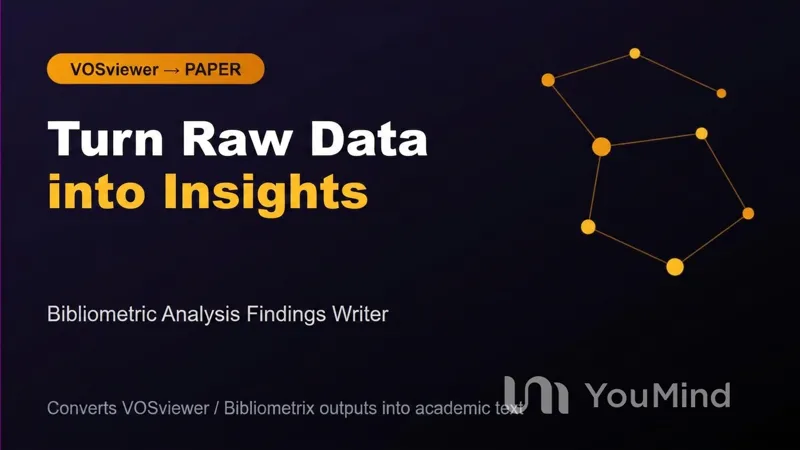
Bibliometric Findings Writer
Transforms the raw numbers from VOSviewer or Biblioshiny (Bibliometrix/R)—including keyword frequencies, citation network clusters, annual publication trends, and country/institution/journal distributions—into interpreted text ready for academic publication. Rather than repeating the numbers, it uses an academic tone to explain how the literature is evolving and avoids speculative causal claims. Suitable for researchers writing theses or articles who need to prepare a bibliometric analysis section but struggle to translate raw data into academic language. Usage: Paste the cluster/keyword list from VOSviewer or the Biblioshiny summary table directly; the skill names and interprets keyword clusters thematically, and evaluates citation networks and country collaboration patterns.
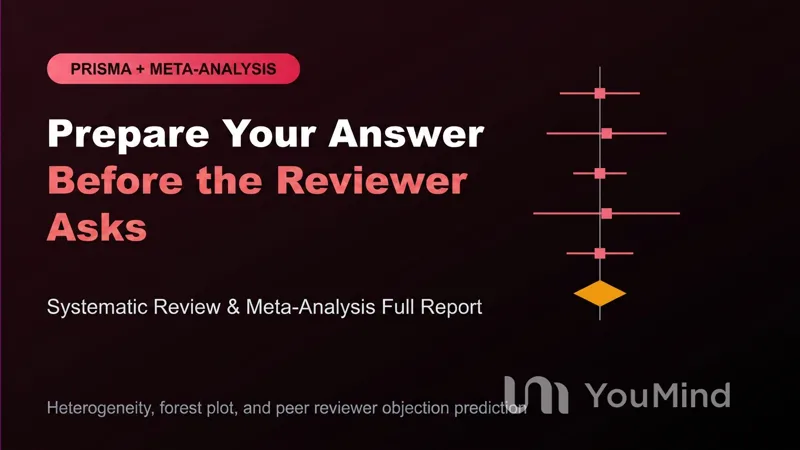
Meta-Analysis Report
Produces a complete Methods + Results + Limitations text from your meta-analysis statistics (pooled effect size, I², Q, τ², and publication bias indicators), aligned with PRISMA 2020 and the Cochrane Handbook. It never misinterprets I², including the percentage of variance explained, and avoids overstated causal language by using cautious phrasing such as “the findings are consistent with...” instead of “the evidence shows that...”. It also provides at least 3 potential questions a reviewer may ask, along with defense statements. Suitable for researchers writing a meta-analysis paper or strengthening the Methods section before journal submission. What it does not do: calculate statistics from raw data (you must already have calculated your results using R/RevMan/CMA); it only converts and interprets your results as academic text.
Thematic Analysis & Codebook
Build codebooks and theme maps from codes
Description
Builds a systematic codebook and theme map from raw data excerpts or your initial open codes, and recommends codes in a parent-child structure for use in MAXQDA/NVivo. Supports inductive, deductive, and hybrid analysis approaches. Who it's for: Researchers conducting thematic or content analysis.
Related Skills
View allInterview & Focus Group Guide
Creates a complete semi-structured interview guide or focus group protocol—from warm-up questions through closing—based on your research question and participant profile. Generates non-leading, open-ended questions and suggests a preliminary coding list for use in MAXQDA/NVivo. Who it's for: academics and graduate students conducting qualitative or mixed-methods research.
Bibliometric Findings Writer
Transforms the raw numbers from VOSviewer or Biblioshiny (Bibliometrix/R)—including keyword frequencies, citation network clusters, annual publication trends, and country/institution/journal distributions—into interpreted text ready for academic publication. Rather than repeating the numbers, it uses an academic tone to explain how the literature is evolving and avoids speculative causal claims. Suitable for researchers writing theses or articles who need to prepare a bibliometric analysis section but struggle to translate raw data into academic language. Usage: Paste the cluster/keyword list from VOSviewer or the Biblioshiny summary table directly; the skill names and interprets keyword clusters thematically, and evaluates citation networks and country collaboration patterns.
Meta-Analysis Report
Produces a complete Methods + Results + Limitations text from your meta-analysis statistics (pooled effect size, I², Q, τ², and publication bias indicators), aligned with PRISMA 2020 and the Cochrane Handbook. It never misinterprets I², including the percentage of variance explained, and avoids overstated causal language by using cautious phrasing such as “the findings are consistent with...” instead of “the evidence shows that...”. It also provides at least 3 potential questions a reviewer may ask, along with defense statements. Suitable for researchers writing a meta-analysis paper or strengthening the Methods section before journal submission. What it does not do: calculate statistics from raw data (you must already have calculated your results using R/RevMan/CMA); it only converts and interprets your results as academic text.
Find your next favorite skill
Explore more curated AI skills for research, creation, and everyday work.