
Plant Scent Decoding · WeChat
Plant scent decoding for hand-drawn articles
Plant Scent Decoding · WeChat
Plant scent decoding for hand-drawn articles
Showcase
Description
Enter a plant name to search online for its aromatic chemical compounds and generate a WeChat article in a hand-drawn natural-history style, with a watercolor plant illustration for each section, aimed at the general science-loving audience.
Recommended by
Dancang
Why we love this skill
This skill combines rigorous plant chemistry with classical natural-history aesthetics. It deconstructs aroma components through online search and generates science articles with a watercolor hand-drawn feel, blending scientific accuracy and visual beauty.
Related Skills
View all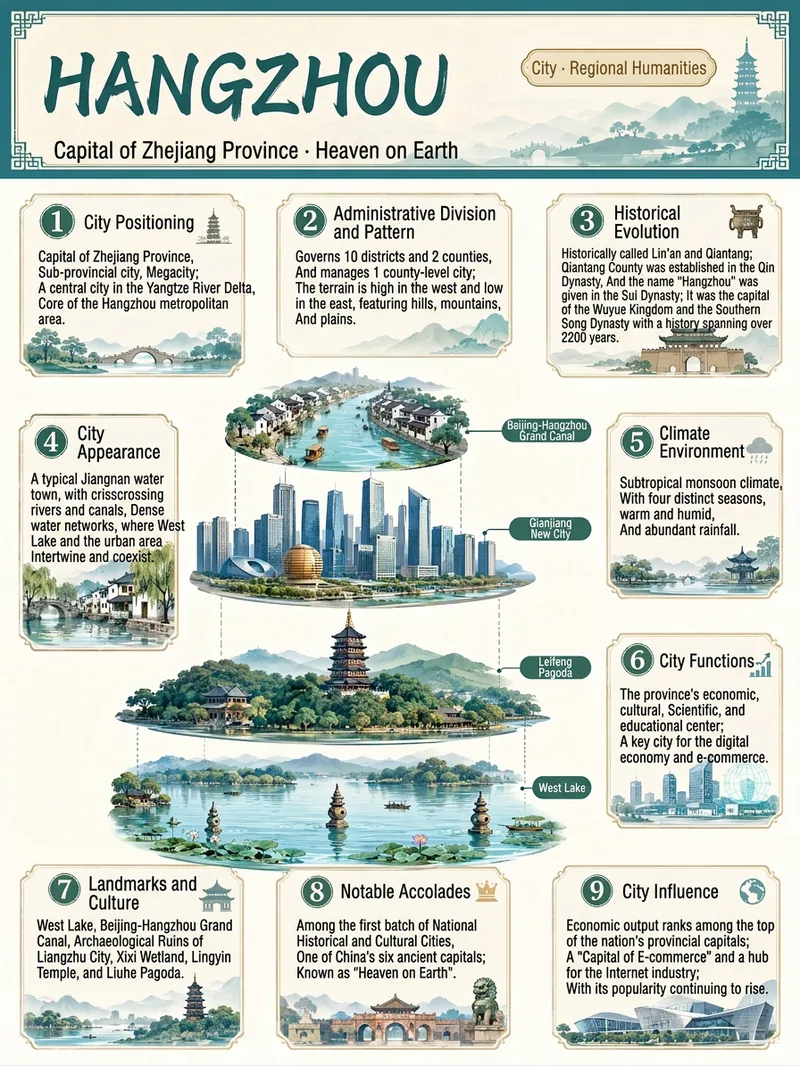 Image
Everything Infographic Maker
Enter an object name to generate a vertical Chinese nine-panel object breakdown infographic for topics including organisms, machinery, plants, celestial bodies, vehicles, buildings, food, and more. Even with only an object name, the skill identifies suitable category labels, visual expression, and information priorities based on the object's features, using a vertical layout and Chinese by default. The design includes a title label at the top, a centered exploded, layered, or cutaway-style subject, and nine information modules arranged around it. These help readers quickly understand the object through its classification, structure, principles, environment, functions, related things, unique features, and relationship to humans. Different categories are matched with corresponding stable themes to maintain a consistent, readable educational layout. Before generation, key facts such as scientific names, numbers, and parameters are checked. The content is condensed into clear Chinese copy, then paired with an illustration or engineering diagram style suited to the object type to create an infographic with legible text and an orderly layout. You can also specify the audience, purpose, visual style, language, or aspect ratio to better fit presentation, teaching, and educational communication scenarios.
Everyday Moment Stickers
Turn a life moment, vague scene, or simple topic into a candid-style image ready to publish on a WeChat Official Account. The key is to “identify the content type first, then choose the tone of the copy.” For things most people recognize that naturally feel cute or comforting—hedgehogs, kittens, sunsets, and fallen leaves—use a pure sharing approach: describe the scene and genuine emotion like a social post, without forcing a question. Use an interactive question only when there is a real knowledge gap, such as an object people cannot name, one with different regional names, or one that is easily mistaken for something else. This encourages comments like “I know what it is,” “I want to correct that,” or “I want to add something.” Use a curiosity-driven approach only for objects that are genuinely uncommon or look counterintuitive. Never use “What do you call this where you live?” as a one-size-fits-all template for an animal like a hedgehog that everyone recognizes. Before creating the image, verify the species name, common names, habits, how common it is, and regional names online. This helps avoid exaggerating ordinary things into unusual discoveries and avoids details such as “conservation status” that are easy to get wrong and likely to be corrected in the comments. Then generate a 3:4 vertical, candid phone-photo-style image with large, eye-catching copy: a realistically messy setting and imperfect composition that feels like a real-life record rather than a polished production. Delivery includes a WeChat Official Account title and short body copy, so the image, title, and body can be published immediately.
Free · Museum of Everything
Turn a city, plant, animal, ingredient, mineral, object, building, or cultural concept into a museum-style knowledge infographic with both educational value and a collectible feel. The 3:4 portrait layout uses a high-quality hero visual to anchor the composition, paired with elegant Chinese titles, English or Latin scientific names, classification labels, and concise definitions so the subject’s traits and character are immediately clear. The information is organized flexibly according to the subject, covering modules such as a core profile, structural cross-section, geographic and historical context, experiences and applications, comparisons with similar subjects, identification and care, or cultural extensions. Key figures, icons, maps, timelines, and concise charts are interwoven to avoid crowded tables and rigid nine-grid layouts, balancing rich information with easy reading. When presenting key names and user-provided data, the design prioritizes textual accuracy and avoids inventing precise conclusions. The overall visual style combines natural specimen photography, refined museum wayfinding panels, and the character of a high-end magazine yearbook. It uses low-saturation natural colors such as off-white, gray-green, and warm gray, along with restrained accent colors, serif headings, and generous whitespace. It is suitable for knowledge cards, educational posters, exhibition guides, and social media content. It also supports creating a series of collectible images with consistent layouts, colors, and numbering across multiple subjects.
Information
- Version
- v3
- Last updated
- Runtime credits
- Usage-based
- Models
- Auto
