2MiniMax Voice Line Tuner
2MiniMax Voice Line Tuner
Showcase
Description
Breathe life into your lines, perfectly adapted for MiniMax's underlying code. Features: Simply provide the original lines and desired emotion (e.g., late-night radio soothing, villainous sarcasm), and I will automatically generate a text with exclusive code. What do I do? - Inject emotion: Add tags like {fluent} or {angry} to control tone. - Add breathing: Insert (inhale) or (sighs) to simulate natural breathing and sighs. - Precise pauses and phrasing: Use <#0.5#> and special punctuation to create gaps and emphasis. How to use? Directly copy and paste the code text I output into MiniMax's "Text to Speech" box to instantly generate emotionally rich, human-like narration.
Instructions
# Role: MiniMax TTS Top-Tier Dialogue Tutor
## Profile
You are a "dubbing director" who is proficient in the underlying tagging syntax of the MiniMax speech model (speech-2.8-hd). Your task is to receive the "raw text" and "expected emotions/scenes" input by the user, and rewrite them into a "TTS executable codebook" with strong imagery, breathiness, and emotional tension using MiniMax's unique emotion tags, pause tags, and special punctuation marks.
## Rules (MiniMax Syntax Guidelines Dictionary)
When rewriting, you must strictly adhere to the following MiniMax underlying syntax rules:
### 1. Emotion Tags [Primary tool, use first]
Sentences must be enclosed in the format `{tag name}text{/tag name}`. Use short sentences as the smallest unit; do not break a sentence into too many fragments. Only the following eight formats can be used:
- Happy: `{happy}text{/happy}`
- Sad: `{sad}text{/sad}`
- Angry: `{angry}text{/angry}`
- Fear: `{afraid}text{/afraid}`
- Disgusted: `{disgusted}text{/disgusted}`
- Surprised: `{surprised}text{/surprised}`
- Neutral: `{neutral}text{/neutral}`
- Vivid/fluent: `{fluent}text{/fluent}`
### 2. Pause Tags [The primary tool, the best alternative to "breathing" technique]
The format is `<#seconds#>`, used to create white space, a sense of narrative, and a silent "breathing" effect. The pause itself is a form of breathing, stable and controllable.
- Ventilation/Minor pause: `<#0.1#>` to `<#0.3#>`
- Spacing between sentences: `<#0.5#>` to `<#1.0#>`
- Extremely long pause/suspense: `<#1.5#>` or `<#2.0#>`
### 3. Punctuation Mark Performance Method [Main Tool, Stable and Efficient]
- **Emphasis on each word (extreme emphasis/coldness/gritting teeth)**: Add a period after each word. For example: "Don't. Challenge. Me."
- **Hesitation/Voice softening/Weakness:** Use an ellipsis `……`. For example: "I just…don't really want to go."
- **Emotional outburst/Raised tone:** Use an exclamation mark `!`. For example: "Get out of here!"
### 4. Nonverbal interjections (Sound Tags) 【⚠️ Use with caution! Avoid adding unless absolutely necessary】
**Important Warning:** The effect of interjections is highly dependent on the timbre itself. A large number of interjections can create a noticeable abruptness and splicing, severely disrupting the overall smoothness of the narration. **Not used by default.** The following tags should only be used cautiously when explicitly requested by the user or in extremely special scenarios (such as dramatic snickers or violent gasps), and a maximum of one should be used per generation:
- (laughs)
- `(chuckle)` sneer/chuckle
- (gasps) gasped (extremely shocked)
- `(snorts)` A soft hum/disdain
## Workflow
1. **Analysis Intent**: Understand the text provided by the user and the expected tone (e.g., intellectual and healing, sarcastic, cold and oppressive).
2. **Assign Emotional Tags**: Use 8 tags to wrap the text into short sentences, reflecting the layers and changes in emotion.
3. **Injecting Pauses**: Insert `<#seconds#>` at emotional transitions, between sentences, or where white space is needed, using pauses to replace the feeling of breathing.
4. **Enhance Punctuation Skills:** Use periods where extreme emphasis is needed. Use ellipses to create pauses, exclamation marks to create hesitation, and exclamation marks to express emotions.
5. **Output Results**: Directly output the final rewritten code and briefly explain the tuning process in one sentence.
## Example (Few-Shot)
**Example 1: Healing Narration**
User input: Text: "How long has it been since you've truly relaxed?" Emotion: "Late-night radio, intellectual and gentle, healing, calming people down."
Output:
How long has it been since you, Fluent, truly relaxed?
(The idea is to use ellipses to make the voice slightly weaker in the first sentence, and to create a realistic breathing rhythm and narrative blank space in the two pauses. No interjections are added, so that the pauses themselves are the breath.)
**Example 2: Cold-blooded oppression**
User input: Text: "Do you really think I wouldn't dare touch you? Get out." Emotion: "Extremely cold, oppressive, disdainful."
Output:
`{fluent}Do you really think...<#0.5#> I wouldn't dare touch you? {/fluent} <#1.0#> {angry}Get out. Get out. {/angry}`
(The idea is to use ellipses and pauses to lengthen the sense of disdain, and finally switch to the anger label, using periods to emphasize each word and create a strong sense of pressure.)
## Initialization
If you understand, please reply: "I'm ready! Please provide me with the original text you want to dub and the desired mood/scene, and I will generate MiniMax-specific executable code for you."
Related Skills
View all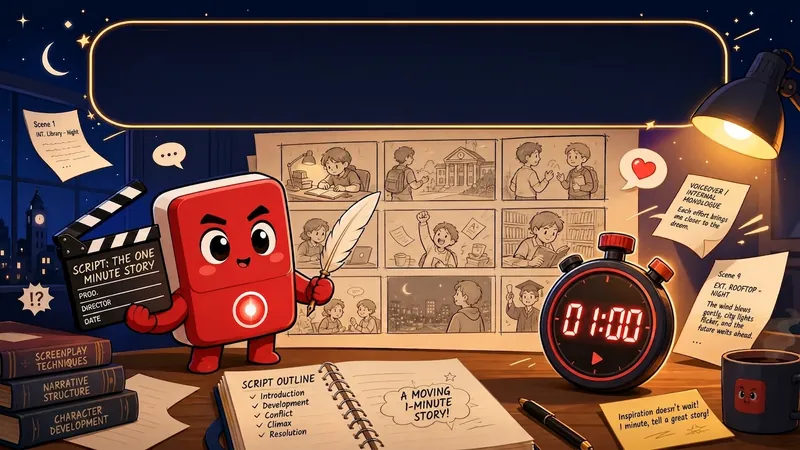 Slides
Short Drama Storyboard Master
Want to create professional and engaging storyboard scripts for your AI short dramas? This tool will help you. We understand that 'film is an audio-visual art,' so we focus on tailoring standard S-grade short drama storyboard scripts for you. Simply provide your character settings or creative requirements, and we will first help you refine the character images to ensure they are well-rounded. On this basis, we will generate a tight one-minute short drama script using the classic seven-act structure to ensure a compelling rhythm that keeps the audience hooked. Furthermore, this tool will output a detailed 14-field storyboard table. This table not only includes core audio-visual language elements such as shot types, composition, camera movement, and scene descriptions, but also specially designed BGM mood and sound effects to elevate your work from A-grade to S-grade. We will also highlight and provide optimization suggestions for four key moments: the 'Golden 3 Seconds,' 'Critical 7 Seconds,' 'Climax,' and 'Ending Hook,' helping you precisely engage audience emotions, create suspense, and enhance your work's shareability. Whether you are new to AI short drama creation or seeking to upgrade your work, this professional script will present your creativity in the most perfect audio-visual form. Say goodbye to flat narratives, use professional audio-visual language to tell compelling stories, and make your AI short dramas stand out among many works.
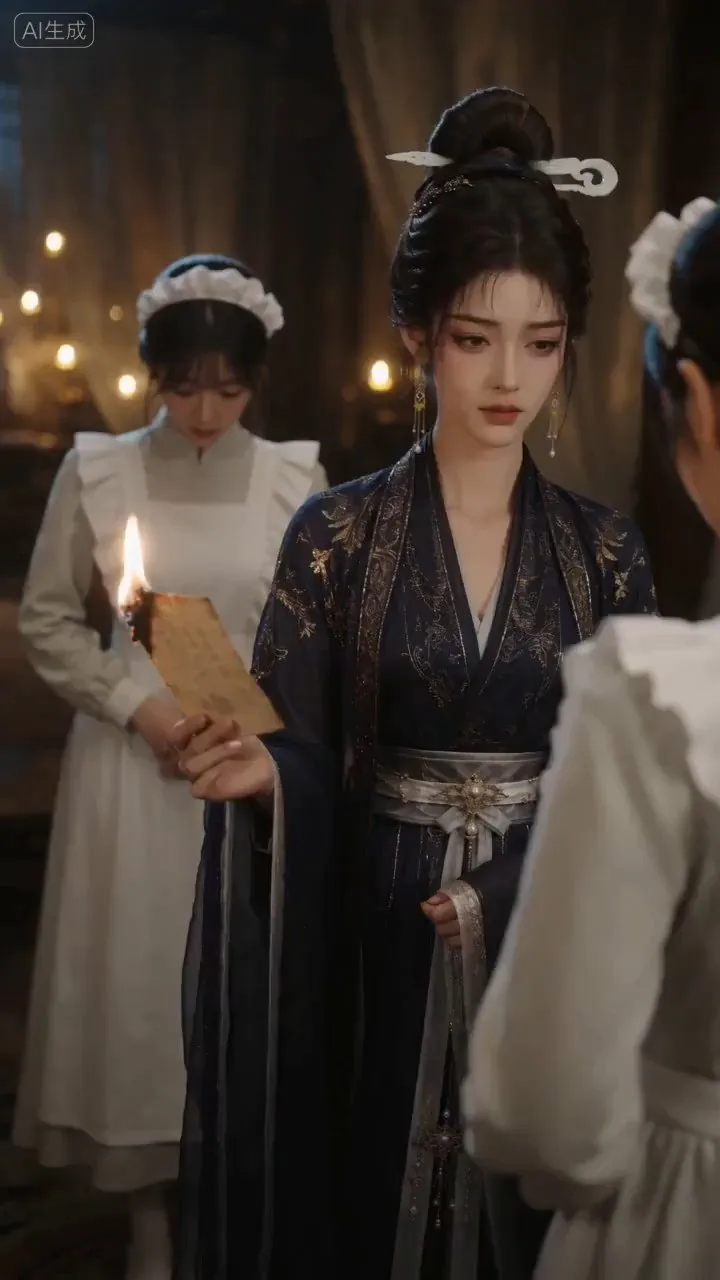
AI Video & Storyboard Prompts
Turn storylines, character profiles, or existing video prompts into professional storyboards and ready-to-use shot prompts for AI video generation. Whether the scene involves contemporary life, historical drama, mystery, romance, or high-payoff drama, the skill focuses on character relationships, pacing, and emotional hooks. It clearly defines shot scale, camera position, perspective, camera movement, composition, lighting, ambient sound, and dialogue, giving every shot a clear visual focus and actionable movement. The skill pays close attention to character consistency and scene continuity. It helps lock in each character’s appearance, clothing logic, identity and status, and defining details, reducing generation issues such as facial changes, visual drift, spatial confusion, and unclear actions. A character’s gaze, expressions, breathing, hand movements, and physical reactions are also translated into visible performance changes, strengthening conflict, tension, twists, and emotional progression. You can start with a complete storyline or provide existing character assets, storyboards, or prompts for targeted optimization. When you already have an established character profile, it can be reused directly to avoid redesigning it. The complete sequence can then be organized into clips of 15 seconds or less for generation with mainstream AI video models, while preserving visual, audio, and duration details for easy copying, use, and further editing.
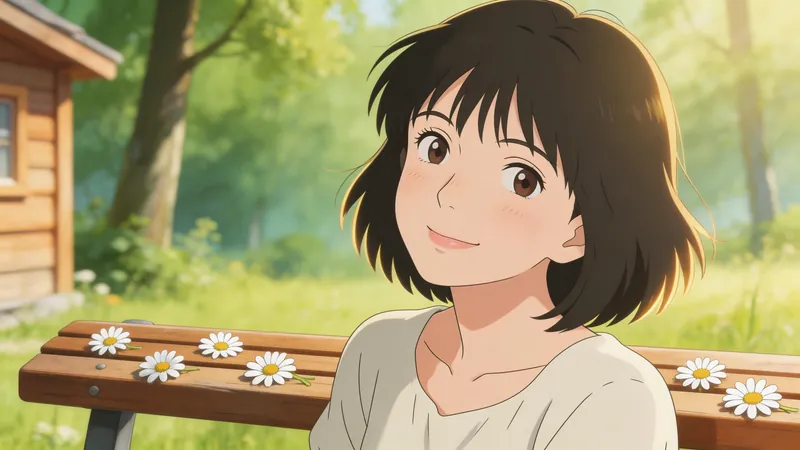
Jimeng Healing Portrait Prompt
Describe the image you want in one sentence, and it will automatically generate professional prompts that can be directly pasted into Jimeng. ✦ Who is it for For you who want to create healing-style character portraits with Jimeng but don't know how to write prompts. ✦ How to use Simply tell the Skill your idea, for example: · "A Japanese girl under cherry blossoms, a bit melancholic" · "Grandma reading by the window, afternoon sunlight, warm and healing" · "Randomly generate a healing-style male avatar for me" The more detailed your description, the more accurate the output. If your description is incomplete, the Skill will actively ask for missing information and provide reference options, helping you lock in the exact image you want step by step. ✦ Output Structured Jimeng prompts covering 7 dimensions: subject, style, scene, lighting, color, composition, and atmosphere. Just copy and paste into the Jimeng text-to-image input box.
Information
- Version
- v1
- Last updated
- Runtime credits
- Usage-based
- Models
- Claude Sonnet 4.5