
Pyramid Principle·Restructure
Restructure any input → SCQA, mindmap, PPT
Pyramid Principle·Restructure
Restructure any input → SCQA, mindmap, PPT
Showcase
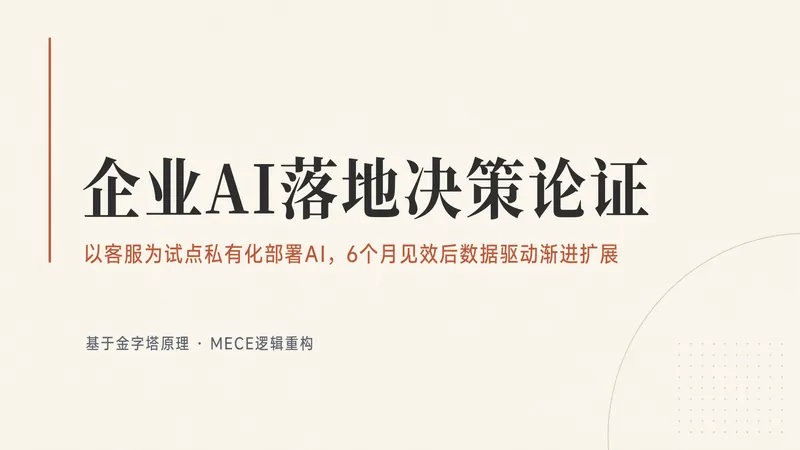
企业引入AI系统建议书
企业AI落地决策论证
企业引入AI系统建议书
企业AI落地决策论证
Description
Input any expression, problem, or proposition. It automatically applies Barbara Minto's Pyramid Principle to diagnose and restructure logic, seamlessly outputting a complete solution: a diagnosis of the original expression with an SCQA preamble, a Mermaid mind map, and a Pyramid Structure PPT. Suitable for professionals, students, and creators who want to improve clarity of thought and persuasiveness.
Related Skills
View all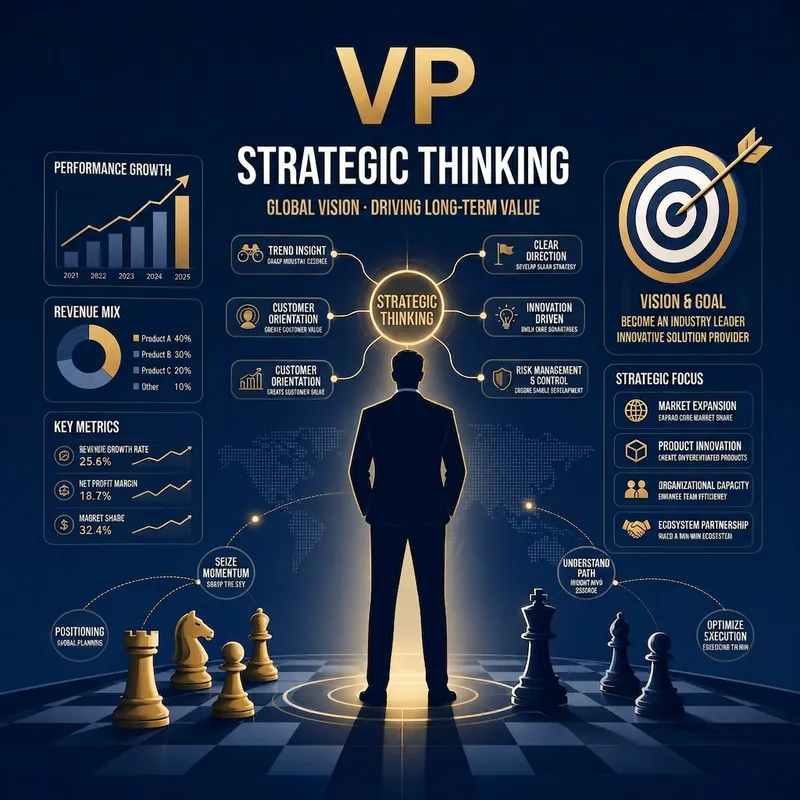
PPT Think Like a VP
Think like a VP Based on the Pyramid Principle and the iron laws of structured thinking, the PPT writing methodology—conclusion first, top-down, categorization, horizontal MECE, input-analysis-organization-output, four-element support, recursive sub-process. Applicable scenarios: presentation PPT, proposal PPT, performance review PPT, project review PPT, etc.
 Research
First-Principles Insight
This skill helps you see through complex surfaces and get back to the most fundamental physical facts and logical origins. Whether you're dealing with a tricky business challenge, an abstruse theoretical concept, or a disruptive innovation that must begin from scratch, it applies rigorous logical deconstruction to help you question assumptions that are taken for granted, identify the key elements that drive a system, and distill penetrating, essential insights. During analysis, it guides you through a complete thinking exercise that moves from deconstruction, to questioning, to reconstruction. By scanning across dimensions such as causality, systems, and value, it precisely distinguishes phenomena from essence, filters out distracting secondary information, and pinpoints the key leverage points of a problem. This approach not only helps uncover root causes, but also frees you from fixed mindsets and allows you to build simpler, more scientific frameworks for understanding. Building on deep essential findings, this skill also offers a systematic strategy for generating innovation. It can leverage multiple thinking modes, such as combinatorial innovation, constraint inversion, and analogy transfer, to tailor diverse solutions for you, from incremental improvements to cross-domain integration. In the end, you'll receive a structured report containing the deconstruction process, core questions, essential insights, and actionable recommendations, giving you a solid logical foundation for decisions in a complex and ever-changing environment.
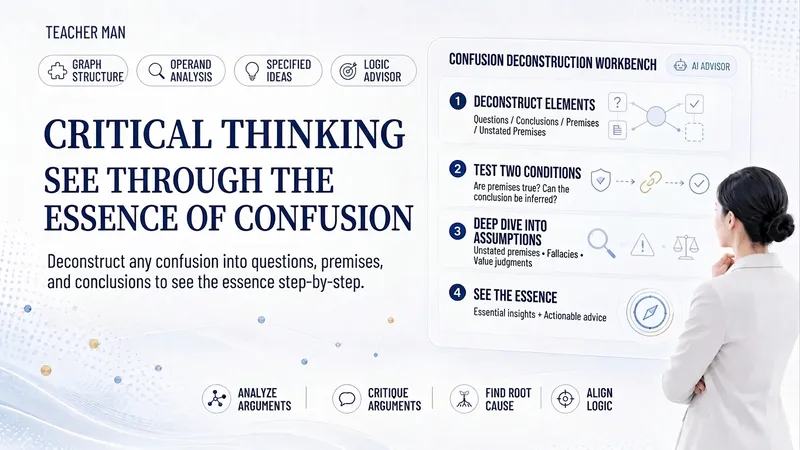
Slow Teacher · Think Clearly
Share any confusion—about work, study, life, relationships, emotions, decisions, or anything else. Using the framework from Tian Hongyun's “General Course in Critical Thinking: Methods for Thinking Correctly,” the Skill breaks it down into “question—premise—conclusion—unstated premise,” then tests it with two questions: “Is the premise true?” and “Can the premise support the conclusion?” It identifies unstated premises and common fallacies, distinguishes factual judgments from value judgments, and ultimately helps you see the essence of the situation and define a practical next step. The tone is equal, gentle, and conversational, with hand-drawn marker-style illustrations added automatically for key steps.
Information
- Version
- v3
- Last updated
- Runtime credits
- Usage-based
- Models
- Auto
