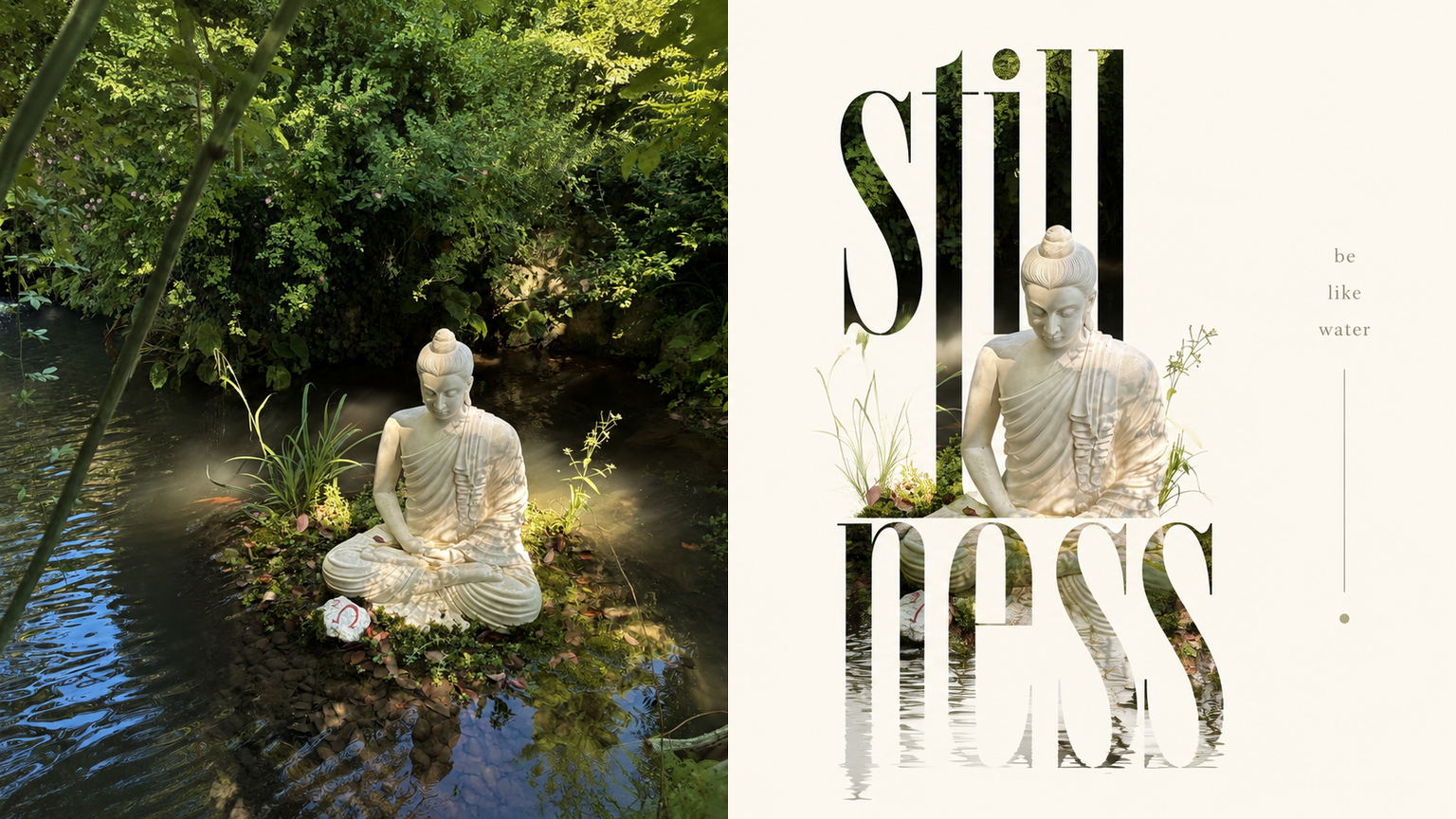
xiaoxiaodong P142 | Type Mask
By xiaoxiaodong
xiaoxiaodong P142 | Type Mask
By xiaoxiaodong
Showcase
Description
Suitable for organizing personal photography, independent publishing, exhibition studies, and lifestyle-oriented visual work. Even when the original composition is ordinary, the background is cluttered, or the subject is too small, you can reestablish a visual focus through subtraction, rearrangement, cropping, and changes in scale—rather than simply applying a filter to the photo. The lower section extracts only the most recognizable subject, outline, structure, pose, and narrative relationships from the photo. It then applies fresh artistic judgment to reconstruct them as a conceptual poster centered on type-as-image, type masks, and type–image fusion. Do not reproduce the photo in full or simply place the entire photo inside the text. Instead, remove most of the background and irrelevant information, retaining only the key visual memories so the subject remains clearly connected to the photo above.
Recommended by
Dancang
Why we love this skill
Using the original image as the sole creative anchor, it fuses real imagery with glyph masks, material texture, and whitespace into a polished two-zone work, following the original brief and supporting flexible layouts and wallpaper output.
Related Skills
View all Image
Imagexiaoxiaodong P143: Visual Poem
Ideal for organizing personal photography, independent publishing, exhibition studies, and lifestyle visual projects. Even when the original photo has an ordinary composition, a cluttered background, or a small subject, its focus can be re-established through reduction, reorganization, cropping, and changes in scale, rather than simply applying a filter. The lower section extracts only the most recognizable subjects, outlines, structures, poses, and narrative relationships from the photo, reconstructing them as a typographic illustration in which “text is image.” Do not copy the photo in full or retain every object. Instead, remove most of the background and unrelated details, using text as points, lines, planes, and grain. Through repetition, scaling, rotation, variations in density, path-based arrangement, and localized layering, reshape the subject’s outline, mass, direction, and defining features so that its correspondence with the photo above is immediately recognizable.
 Image
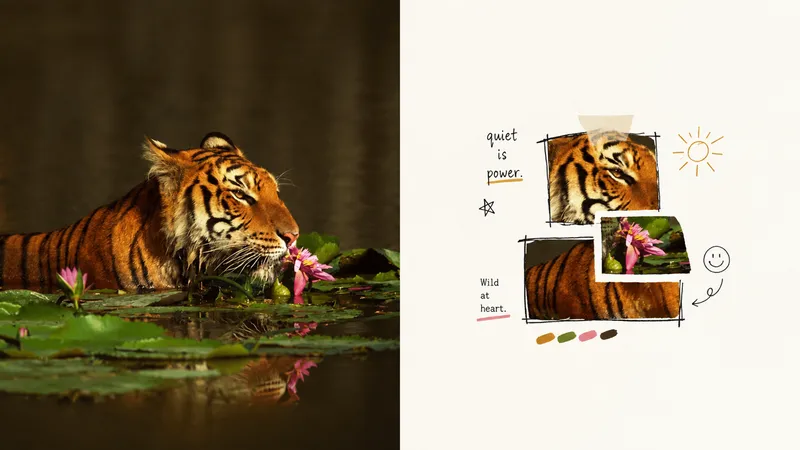
Imagexiaoxiaodong P131 Doodle
Suitable for personal photo organization, independent publishing, exhibition studies, and lifestyle-focused visual creation. Even when the original composition is ordinary, the background is cluttered, or the subject is small, you can reestablish visual focus through reduction, rearrangement, cropping, and changes in scale—instead of simply applying a filter to the photo. The lower section extracts only the most recognizable subjects, contours, structures, poses, and narrative relationships from the photo, reconstructing them as a hand-drawn doodle-style photo collage / Hand-drawn Doodle Photo Collage. Do not copy the photo in full or retain every object and background detail. Remove irrelevant elements and select only a few photo fragments that best represent the original subject and visual memory points. Reexpress them through cropping, scaling, rearrangement, and negative space, so viewers can immediately recognize their correspondence with the photo above.
 Image
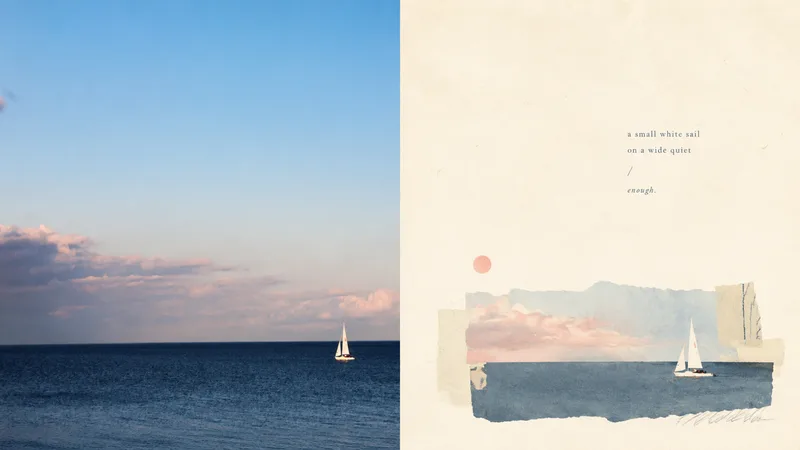
Imagexiaoxiaodong P126 | Collage
Suitable for organizing personal photography, independent publishing, exhibition studies, and lifestyle-oriented visual projects. Even when the original composition is ordinary, the background is cluttered, or the subject is small, you can reestablish the visual focus through reduction, rearrangement, cropping, and changes in scale—instead of simply applying a filter to the photo. The lower section extracts only the most recognizable subjects, outlines, structures, gestures, and narrative relationships from the photo, reconstructing them as Minimalist Poetic Collage Illustration. Do not copy the photo in full, redraw every object literally, or retain all subjects and background elements. Remove irrelevant details and keep only the structures, lines of movement, and visual memory cues that best represent the original. Re-express them through simplification, cropping, scaling, rearrangement, and negative space, so the relationship to the photo above is immediately recognizable.
Information
- Version
- v3
- Last updated
- Runtime credits
- Usage-based
- Models
- Auto