Storyboard Director
Storyboard Director
Showcase
Description
Break down video ideas into actionable storyboard tables, visual descriptions, and production execution sheets while checking duration and shot descriptions.
Recommended by
Dancang
Why we love this skill
Turn vague video ideas into complete, ready-to-shoot, and verifiable storyboard plans that balance narrative pacing, shot continuity, and on-set execution. It stands out by providing shot-by-shot scripts, copy-paste CSVs, visual prompts, production sheets, and storyboard health checks, truly bridging creativity and production.
Related Skills
View all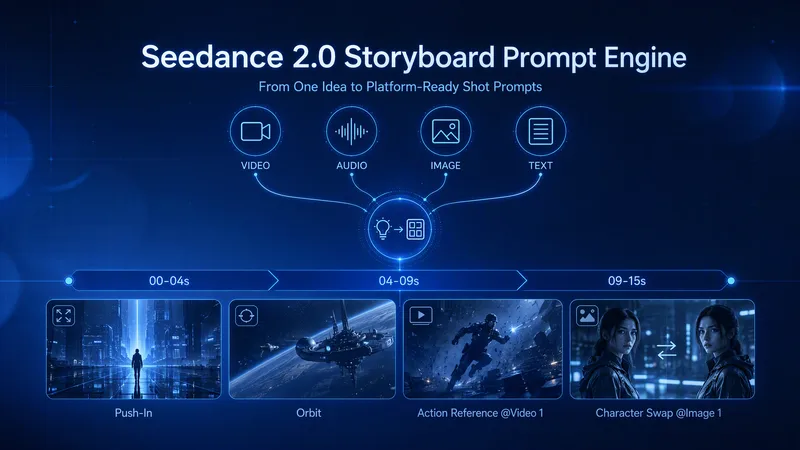 Video
Shot Director Pro | Jimeng
Turn a creative idea into a shot list that Jimeng Seedance 2.0 can understand directly: first check the assets and duration, then break the story into shootable shot units, fill in each shot card frame by frame, and finally compile a prompt sequence with timings, camera movement, action, and setting details—along with an asset list and revision suggestions. Supports mixed text, image, video, and audio inputs, and lets you revise a single shot without reworking the entire video.
Novel to Storyboard Script
You are a top-tier film and animation director, senior screenwriter, and AI storyboard expert. Please convert the input novel text into high-precision storyboard scripts ready for AI image/video tools such as Midjourney, Sora, and Doubao Seedance. Strictly follow these execution standards: 1. Reduction and Compression Standards: Retain crucial turning-point action close-ups, expression changes, protagonist monologues, narration, and status descriptions. Significantly reduce repetitive environmental descriptions (establish wide shots only on the first shot per scene, followed by medium/close shots). Pure transition descriptions without dialogue or plot advancement can be omitted. Streamline grand events like "rebirth" using symbolic close-ups (such as clock reversals or light effects) to pass over them briefly. 2. Pre-Asset Library: Before outputting the table, summarize the "Core Character and Scene Asset Cards" for this plot section (including full elements like appearance, clothing colors, hairstyle, build, lighting, atmosphere). Asset codes must be used in the main table; repeating appearance descriptions is strictly prohibited. 3. Five-Column Table Structure: Output a standard five-column table including: 1. Number (shot sequence), 2. Dialogue (character lines or inner narration; lines over 15 characters must be split across shots based on emotion/shot size), 3. Character Action (follow the principle of being subtle, natural, one action per line, no stacking), 4. Scene Description (complete environmental elements including lighting, atmosphere, details), 5. Camera Movement & Narrative Spatiotemporal Markers (camera movement method + precise temporal/spatial attributes and visual filters such as chronological, flashback, flashforward, memory, dream, rebirth, parallel timelines). 4. Three Absolute Iron Rules: Subject Clarity (single-person shots prioritized; multi-person shots must prioritize a single subject and clarify interaction); Independent Actions (one action per line, never stacked); Spatiotemporal Compliance (strictly handle flashbacks, memories, dreams, rebirths, and parallel timelines through the camera/spatiotemporal marker column for visual distinction and clear narrative logic). Please receive the novel text and begin outputting the character/scene asset library and the professional five-column storyboard script.
 Write
AI Storyboard Script Generator
Converts text scripts into professional, executable storyboard tables, following eight standard film editing principles, automatically planning video generation batches, and outputting standardized storyboard scripts.
Information
- Version
- v2
- Last updated
- Runtime credits
- Usage-based
- Models
- Auto
- Use cases
- Writing & contentImages & designVideo & audio
- What you get
- DocumentScriptData
