A highly structured prompt for creating premium vertical retro screen-print posters with a travel or cultural aesthetic, featuring stippled textures and bold typography.
Istruzione
Create a premium 4:5 vertical retro screen-print poster illustration centered on [SUBJECT / LANDMARK / CITY / ERA]. The composition should feel like a refined vintage travel or cultural print, while remaining adaptable to any location, historical period, landmark, or subject. TYPOGRAPHY: Place the primary title "[MAIN TITLE]" in a bold, condensed uppercase sans-serif, positioned within a balanced area of negative space. Add a smaller supporting line "[SECONDARY HEADLINE / LOCATION / DATE]" beneath it. Maintain strong typographic hierarchy, restrained spacing, and an authentic archival-poster character. MAIN SUBJECT: Feature [PRIMARY SUBJECT] as the dominant visual element, positioned within the lower or side third of the composition. Use a distinctive pose, silhouette, or profile that communicates the character of the subject. Include carefully rendered defining details, natural contours, expressive features, clothing or architectural details, and subtle highlights without making the artwork photorealistic. GEOMETRIC ANCHOR: Introduce one bold, simple geometric shape behind or around the main subject to create visual separation and establish a strong graphic focal point. BACKGROUND: Construct the environment as several flat, layered graphic planes rather than a conventional realistic scene. Use recognizable elements associated with [LOCATION / SUBJECT] — distant silhouettes, architectural forms, structural details, vegetation, terrain, atmospheric elements, or cultural motifs. Avoid a strong vanishing point. Build depth through overlapping shapes, scale, linework, and tonal density. Render clouds, smoke, mist, foliage, or atmospheric details as controlled stippled clusters where appropriate. RENDERING STYLE: Authentic vintage screen-print / silkscreen poster aesthetic. Create all tonal modeling exclusively through stippling, halftone patterns, and varying dot density — concentrated dots for shadows and sparse dots for highlights. No smooth gradients, airbrushing, photorealistic shading, or digital 3D rendering. Use crisp contour lines with consistent visual weight, subtle riso-style registration shifts, imperfect ink edges, natural paper grain, and faint woven-print texture. The result should feel physically printed rather than digitally rendered. COLOR SYSTEM: Use exactly four carefully selected high-contrast colors appropriate to the subject: [COLOR 1], [COLOR 2], [COLOR 3], [COLOR 4]. Do not introduce additional hues. Generate intermediate tonal values exclusively through stipple density, halftone overlap, and ink coverage, never by adding new colors. COMPOSITION: Strong editorial balance, clear focal hierarchy, generous negative space, layered depth, bold silhouette design, authentic vintage graphic-design proportions, and carefully controlled visual density. Keep the artwork sophisticated, collectible, and suitable for a premium travel or cultural poster. OUTPUT: 4
Come usare questo prompt
1
Copia il prompt completo qui sopra.
2
Apri una piattaforma che supporta GPT Image 2, come YouMind, e incolla il prompt.
3
Cambia soggetto, stile o dettagli in base alla tua idea, poi genera.
Questo è un prompt IA gratuito della libreria di prompt di YouMind. Esplora altre migliaia di prompt immagine, tutti liberi da copiare e adattare.
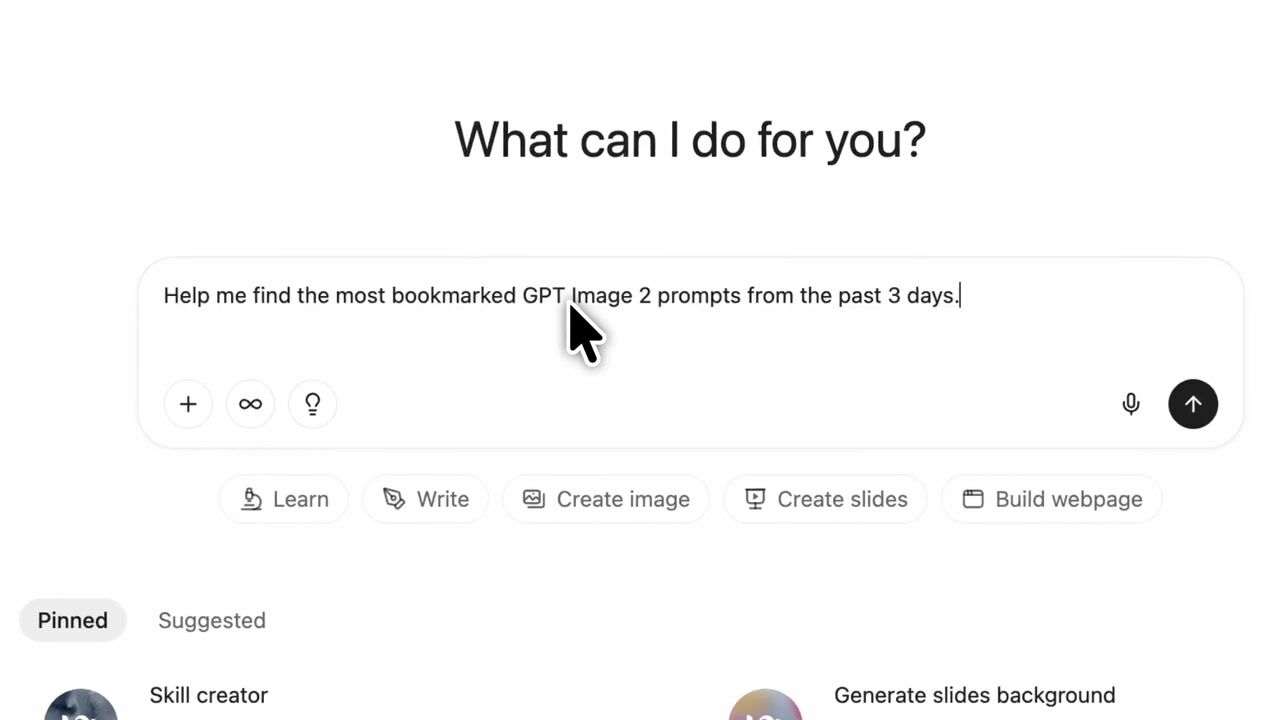
Lascia che l'IA cerchi tra decine di migliaia di prompt. Filtra per modello, intervallo di date e parole chiave e ordina per interazione: visualizzazioni, preferiti, condivisioni e altro.
Trasforma qualsiasi foto in un prompt di immagine AI dettagliato. Il convertitore gratuito da immagine a prompt analizza composizione, stile e luce per ricreare ogni look in pochi secondi.