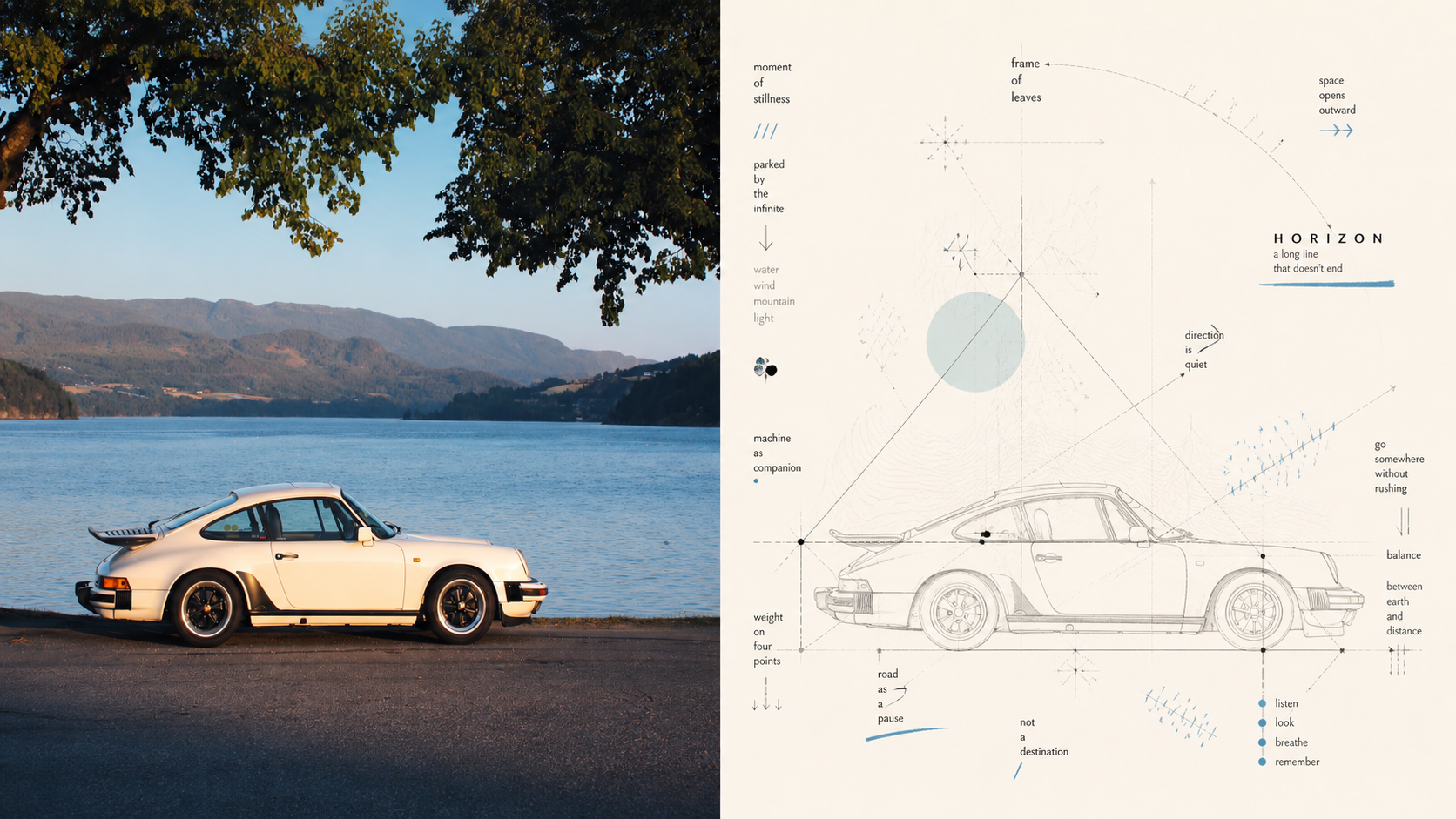
Xiaoxiaodong × Visual Concept Maps × P090
Created by Xiaoxiaodong
Description
Recommended by
淡苍
Why we love this skill
Uses the original creative brief as the sole aesthetic authority, protecting its visual intent while supporting portrait, landscape, design-only, and multi-device wallpaper outputs, with careful checks for text, dimensions, batch inputs, and final quality.
Panel 090 treats a photo as the center of a concept, breaking down movement, direction, space, emotion, relationships, and metaphor into text, nodes, paths, regions, arrows, and connections. Textual meaning, geometric relationships, and handmade mark-making come together to form an artistic map between painting, diagram, and visual notes. Ideal for Expressing the thinking behind a photo: Organize movement, direction, relationships, and emotion into a conceptual center and visual paths. Creating artistic diagrams rather than scientific charts: Use triangular structures, zigzag lines, intersecting axes, radiating lines, contour lines, and field paths. Balancing rational structure with a sense of physical presence: Layer a clear geometric framework with repeated short strokes, ticks, symbols, dots, and subtle handwritten shifts. Needing flexible delivery: Supports vertical, horizontal, design-only, multiple aspect ratios, and four-sided wallpapers, and can also process image directories in batches.
Related Skills
View all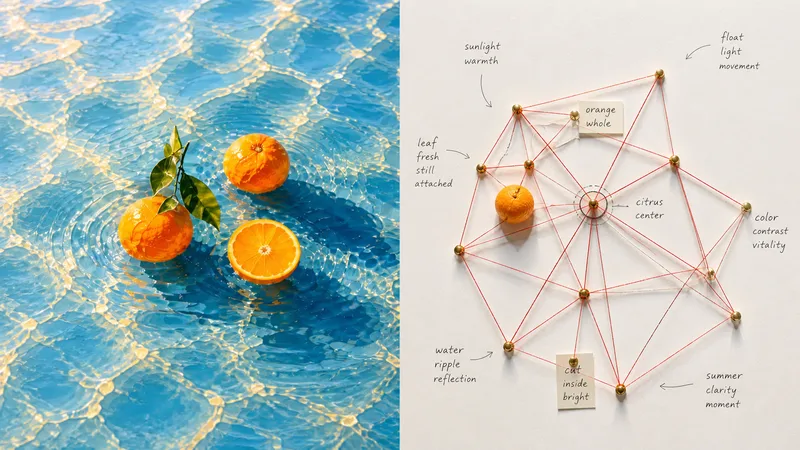
Xiaoxiaodong x String Map P087
Turning a photo directly into a conventional flowchart loses the real spatial relationships between its subjects; random red strings and a wall of nodes can also become a cheap detective board or digital network UI. Panel 087 extracts subjects, outlines, structures, poses, and narrative relationships from a photo, breaks them into a small number of meaningful pushpin nodes, and reconnects them with real string to create a tactile system map. Relationships are denser at the center and gradually loosen toward the edges; vermilion or coral-red string forms emergent geometry on natural white cardstock, while preserving pin shadows, overlapping intersections, handwritten labels, and authentic handmade imperfections. Ideal for these situations Want to understand relationships between subjects: Turn movement directions, spatial positions, structural transitions, and environmental clues into nodes and connections. Need a realistic installation feel: Use pushpins, cotton string, paper labels, pin shadows, variations in tension, and slight occlusion instead of a computer-drawn network diagram. Want a complex yet orderly composition: Use a central node or relationship as the hub, keeping the center dense and the edges sparse while preserving ample negative space. Need flexible delivery: Supports vertical, horizontal, design-only, multiple aspect ratios, and four-edge wallpapers, as well as batch processing for image folders.
 Image
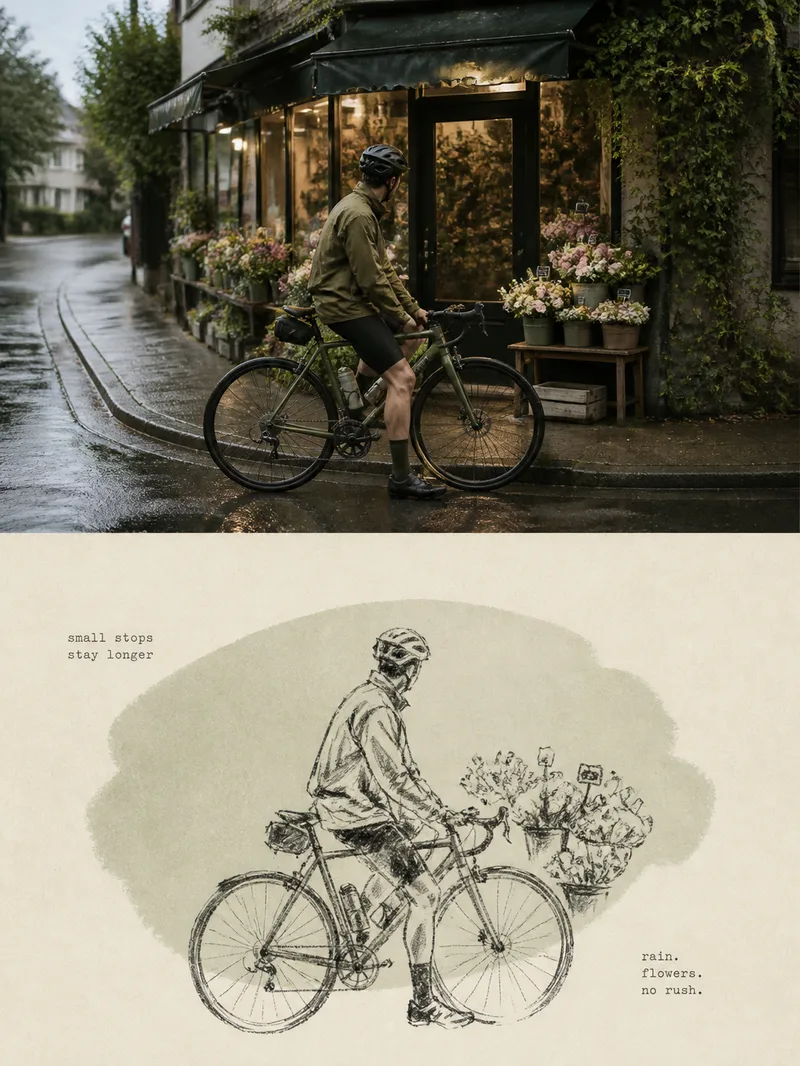
ImageXiaoxiaodong Crayon Sketch P075
Panel 075 preserves the subject’s most important proportions, direction, structure, and pose, then redraws them with loose, slightly corrected dark crayon lines. A low-saturation, irregular color field grown from the original image’s overall tones provides restrained support, while warm white handmade paper and generous blank space convey mood, distance, and time. A few tiny typewriter-style words resemble private notes without interrupting the image’s breathing room. Works well for Tired of formulaic vintage filters: The paper, grain, and imperfect lines all contribute to the narrative rather than acting as a uniform effect layered over a photo. Want to draw less while staying accurate: Details can remain unfinished, but the subject’s key proportions, direction, structure, and pose must remain recognizable. Prefer a quiet independent-publishing aesthetic: A soft monochrome color field, Risograph grain, generous negative space, and small typewriter text create a restrained layout. Need flexible delivery: Supports top-and-bottom, left-and-right, design-only, multiple aspect ratios, and four-sided wallpapers, as well as batch processing for image directories.
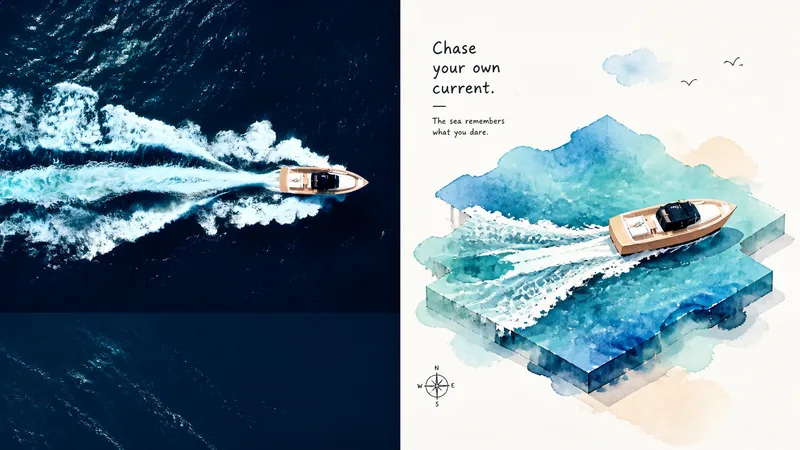
Xiaoxiaodong x Watercolor P082
Panel 082 compresses the original image into broad, irregular watercolor shapes, then lets the sole central subject “stand up” from the color field with a naïve, wonky hand-drawn outline and an isometric/2.5D structure. Layered planes, overlaps, and subtle height differences create a sense of space, while vivid watercolor brings out the original image’s vitality. Generous warm-white negative space preserves a feeling of airiness and playfulness. Good for these situations Want the subject to leap out of a watercolor field: Use irregular watercolor shapes to carry the atmosphere and terrain, then use an isometric/2.5D structure to support the sole central subject. Need a playful feel without losing spatial logic: Preserve the handmade imperfections of naïve + wonky styling while keeping the isometric directions, layering, and overlaps clear. Complex photos need deliberate simplification: Remove irrelevant surroundings, keeping only identifying features, visual metaphors, and the most vibrant colors from the original image. Need flexible delivery: Supports top-to-bottom, left-to-right, pure design, multiple aspect ratios, and four-end wallpapers, and can also process image directories in batches.
Xiaoxiaodong × Visual Concept Maps × P090
Created by Xiaoxiaodong
Description
Recommended by
淡苍
Why we love this skill
Uses the original creative brief as the sole aesthetic authority, protecting its visual intent while supporting portrait, landscape, design-only, and multi-device wallpaper outputs, with careful checks for text, dimensions, batch inputs, and final quality.
Panel 090 treats a photo as the center of a concept, breaking down movement, direction, space, emotion, relationships, and metaphor into text, nodes, paths, regions, arrows, and connections. Textual meaning, geometric relationships, and handmade mark-making come together to form an artistic map between painting, diagram, and visual notes. Ideal for Expressing the thinking behind a photo: Organize movement, direction, relationships, and emotion into a conceptual center and visual paths. Creating artistic diagrams rather than scientific charts: Use triangular structures, zigzag lines, intersecting axes, radiating lines, contour lines, and field paths. Balancing rational structure with a sense of physical presence: Layer a clear geometric framework with repeated short strokes, ticks, symbols, dots, and subtle handwritten shifts. Needing flexible delivery: Supports vertical, horizontal, design-only, multiple aspect ratios, and four-sided wallpapers, and can also process image directories in batches.
Related Skills
View allXiaoxiaodong x String Map P087
Turning a photo directly into a conventional flowchart loses the real spatial relationships between its subjects; random red strings and a wall of nodes can also become a cheap detective board or digital network UI. Panel 087 extracts subjects, outlines, structures, poses, and narrative relationships from a photo, breaks them into a small number of meaningful pushpin nodes, and reconnects them with real string to create a tactile system map. Relationships are denser at the center and gradually loosen toward the edges; vermilion or coral-red string forms emergent geometry on natural white cardstock, while preserving pin shadows, overlapping intersections, handwritten labels, and authentic handmade imperfections. Ideal for these situations Want to understand relationships between subjects: Turn movement directions, spatial positions, structural transitions, and environmental clues into nodes and connections. Need a realistic installation feel: Use pushpins, cotton string, paper labels, pin shadows, variations in tension, and slight occlusion instead of a computer-drawn network diagram. Want a complex yet orderly composition: Use a central node or relationship as the hub, keeping the center dense and the edges sparse while preserving ample negative space. Need flexible delivery: Supports vertical, horizontal, design-only, multiple aspect ratios, and four-edge wallpapers, as well as batch processing for image folders.
ImageXiaoxiaodong Crayon Sketch P075
Panel 075 preserves the subject’s most important proportions, direction, structure, and pose, then redraws them with loose, slightly corrected dark crayon lines. A low-saturation, irregular color field grown from the original image’s overall tones provides restrained support, while warm white handmade paper and generous blank space convey mood, distance, and time. A few tiny typewriter-style words resemble private notes without interrupting the image’s breathing room. Works well for Tired of formulaic vintage filters: The paper, grain, and imperfect lines all contribute to the narrative rather than acting as a uniform effect layered over a photo. Want to draw less while staying accurate: Details can remain unfinished, but the subject’s key proportions, direction, structure, and pose must remain recognizable. Prefer a quiet independent-publishing aesthetic: A soft monochrome color field, Risograph grain, generous negative space, and small typewriter text create a restrained layout. Need flexible delivery: Supports top-and-bottom, left-and-right, design-only, multiple aspect ratios, and four-sided wallpapers, as well as batch processing for image directories.
Xiaoxiaodong x Watercolor P082
Panel 082 compresses the original image into broad, irregular watercolor shapes, then lets the sole central subject “stand up” from the color field with a naïve, wonky hand-drawn outline and an isometric/2.5D structure. Layered planes, overlaps, and subtle height differences create a sense of space, while vivid watercolor brings out the original image’s vitality. Generous warm-white negative space preserves a feeling of airiness and playfulness. Good for these situations Want the subject to leap out of a watercolor field: Use irregular watercolor shapes to carry the atmosphere and terrain, then use an isometric/2.5D structure to support the sole central subject. Need a playful feel without losing spatial logic: Preserve the handmade imperfections of naïve + wonky styling while keeping the isometric directions, layering, and overlaps clear. Complex photos need deliberate simplification: Remove irrelevant surroundings, keeping only identifying features, visual metaphors, and the most vibrant colors from the original image. Need flexible delivery: Supports top-to-bottom, left-to-right, pure design, multiple aspect ratios, and four-end wallpapers, and can also process image directories in batches.
Find your next favorite skill
Explore more curated AI skills for research, creation, and everyday work.