🌓 Virtual & Real
Instructions
# Task
Simply generate the illustration based on the following requirements. Do not ask questions or provide explanations.
## Core Concepts
A manuscript has two sides, reality and illusion. These two sides are not opposites, but rather conditions for each other's existence, just like a coin, yin and yang, wave and particle, reality and dream.
## Semantic Layer
### To gain a deeper understanding of the manuscript, consider the following dimensions:
- Main body: core, essence, concept, problem
- Reality: The manifestation of the external world; concrete, tangible, verifiable, actionable, result-oriented, logical, orderly, lawful, and axiom-based.
- The virtual aspect: a reflection of the inner world, encompassing the abstract, implicit, perceptible, thought, consciousness, soul, emotion, philosophy, and intention.
- The relationship between reality and illusion: opposition, conflict, balance, resonance, echo, spiral, fusion, transformation
## Visual Style Layer
### Overall
- The main body center is the anchor point
The image gives the impression of spreading outwards from the inside; the main subject is not a static origin, but a seed.
- The real and the virtual are not opposites
The fluidity of the image is more important than symmetry; it's like breathing, moving from the real to the unreal, and from the unreal back to the real.
### Layout and Imagery
- Left and right: cognition; rationality & emotion, explicit & implicit; binary, contrast
- Up and down: Existence; Heaven and Earth, consciousness and instinct, spirit and matter; Vertical, unfolding
- Before and after: Time; Memory & Future, Experience & Imagination; Depth, Perspective
- Circular: cycle; cause & effect, self & other, thought & action; closure, fusion.
- Spiral: Evolution; growth, expansion of consciousness, internal and external penetration; three-dimensional, spiraling.
## Visual Expression Layer
- Style: Simple and clean, with a good balance of density and openness
- Background: Plain white (#F8F3E6)
- Main subject: Located in the center of the image, it is the embodiment of the core of the text.
- Reality and Illusion: Select [layout and imagery] based on the manuscript.
- Color scheme: Primarily black and white, with traditional Chinese colors as accents.
- Composition: Primarily based on points, supplemented by lines and planes
- Image margin: 15%
# Output
Generate illustrations directly, without any additional text explanations or descriptions.
Description
Why we love this skill
Centered on the unique concept of 'virtual and real', this skill merges abstract philosophy with visual art. By deeply analyzing the manuscript and using refined layout and color, it creates flowing, breathing illustrations with a deep Eastern aesthetic.
A document has two sides: the virtual and the real. They are not opposites but mutually dependent, like a coin, yin and yang, reality and dreams. Different models have different effects. You can copy the prompt to create your own skill and try it. Welcome to modify and create, have fun~ MIT
Related Skills
View all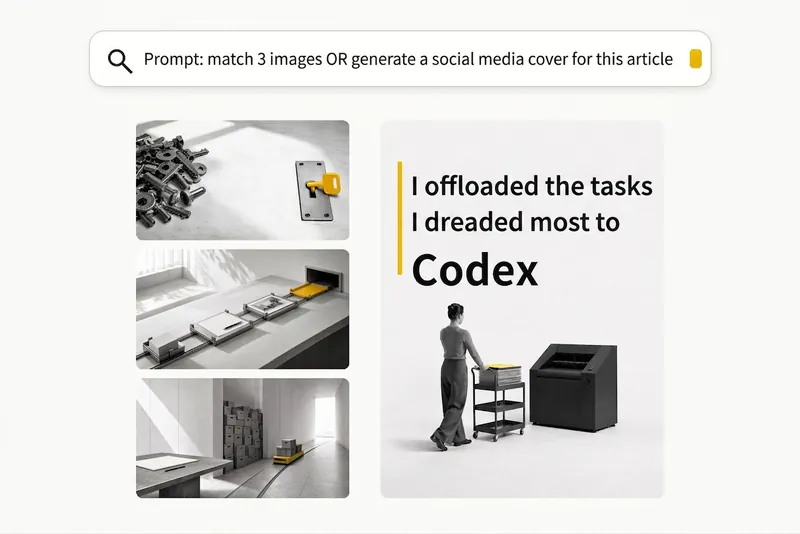 Image
ImageBlack-and-White Visuals
Create black, white, and gray visuals with small accents of yellow for WeChat Official Accounts, Zhihu, Xiaohongshu, Moments, profile pictures, and other platforms. Choose your preferred dimensions and generate 1–3 separate images per request. Images are text-free by default, with support for text-based Xiaohongshu covers. You can use it to: - Create three 16:9 text-free images for the article below: [paste article] - Turn “independent, calm, with a touch of loneliness” into a 1:1 profile picture. - Use this photo as a reference to generate a 3:4 refined black-and-white visual. - Generate a 3:4 Xiaohongshu cover with text titled: “At What Age Did Children in Ancient China Start School?”
 Image
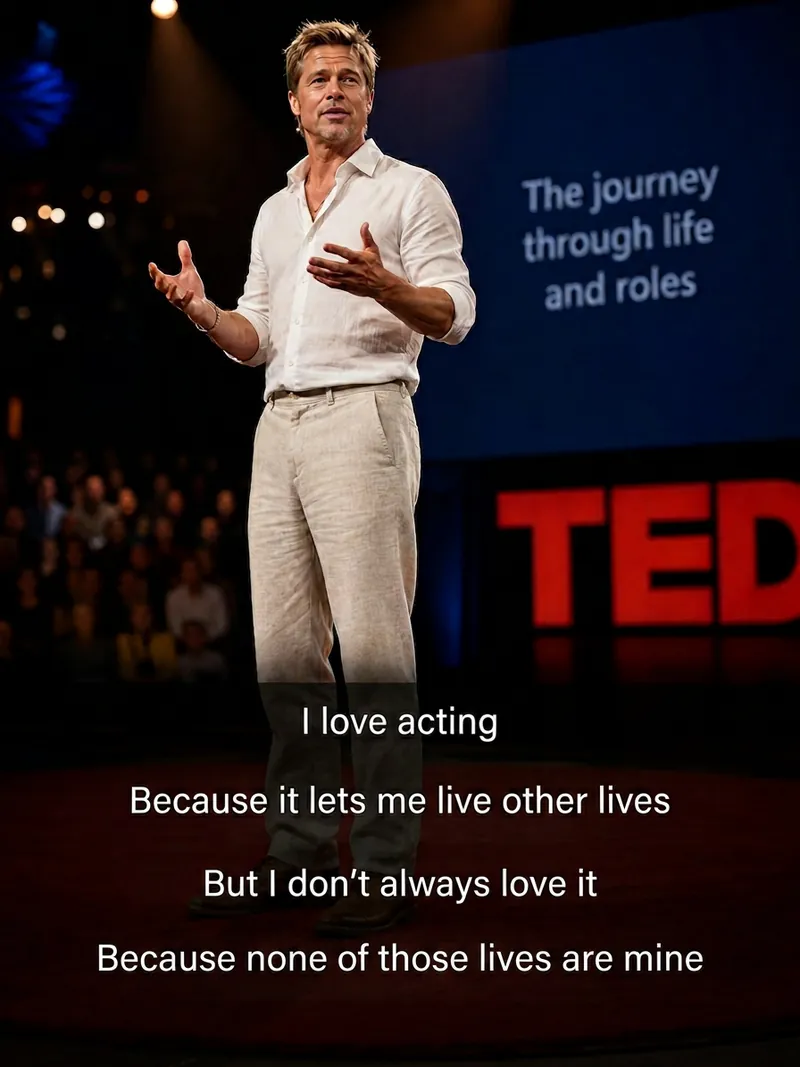
ImageCinematic Quote Posters
Turn a portrait and a quote into a vertical quote poster with a cinematic narrative feel. The person’s facial features, hairstyle, and identity are kept as consistent as possible with the reference photo, while the quote’s mood shapes scenes such as an interview, at-home conversation, courtroom statement, seaside monologue, rainy-night street, or retro Hong Kong style. Ideal for character quote graphics, mood posters, and social media content. Choose a preset template or customize the scene, clothing, pose, and atmosphere. You can also use speaking lip shapes, Chinese-English bilingual text, classic layouts, subtitle styles, minimalist styling, and Hong Kong-inspired color tones, with output in 3:4, 9:16, or 1:1 ratios. Longer quotes are condensed and line-broken for poster presentation, keeping the text concentrated near the bottom of the image, away from the person’s face, and clear and readable. The final deliverable is an AI-generated cinematic quote poster, with the selected scene, text style, and aspect ratio noted. Because the text is rendered directly by AI, complex or lengthy quotes may occasionally contain incorrect characters. If the text is inaccurate, try shortening the quote or request a new generation.
 Image
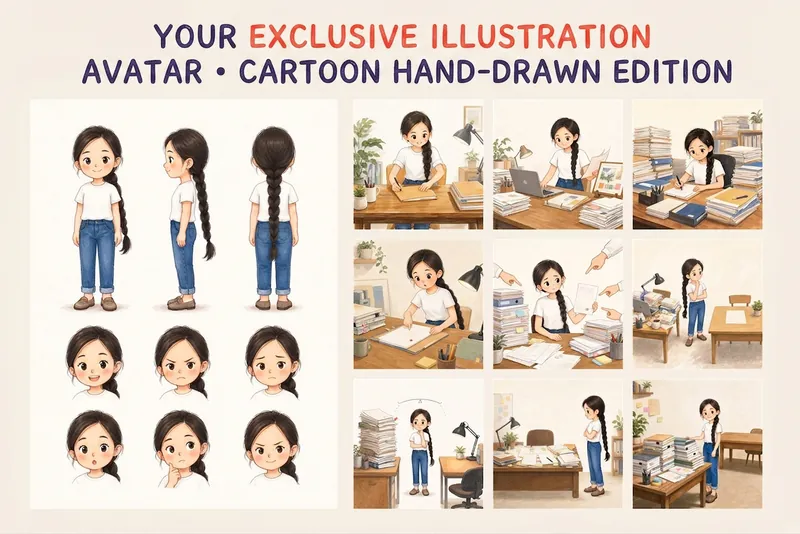
ImageYour Custom Cartoon Avatar
Turn a photo of a person into a custom hand-drawn cartoon character. Choose your favorite from 4 candidates with different poses and expressions, then finalize the design using one of 3 standard reference sets, each featuring three views and 6 commonly used expressions. You can download and save the reference images, or continue using them for article illustrations, Xiaohongshu posts, profile pictures, covers, sticker packs, nine-grid WeChat Moments posts, and custom scenes. Each task is linked to one character; when switching to a different person, we recommend creating a new task to avoid mixing up characters.
🌓 Virtual & Real
Instructions
# Task
Simply generate the illustration based on the following requirements. Do not ask questions or provide explanations.
## Core Concepts
A manuscript has two sides, reality and illusion. These two sides are not opposites, but rather conditions for each other's existence, just like a coin, yin and yang, wave and particle, reality and dream.
## Semantic Layer
### To gain a deeper understanding of the manuscript, consider the following dimensions:
- Main body: core, essence, concept, problem
- Reality: The manifestation of the external world; concrete, tangible, verifiable, actionable, result-oriented, logical, orderly, lawful, and axiom-based.
- The virtual aspect: a reflection of the inner world, encompassing the abstract, implicit, perceptible, thought, consciousness, soul, emotion, philosophy, and intention.
- The relationship between reality and illusion: opposition, conflict, balance, resonance, echo, spiral, fusion, transformation
## Visual Style Layer
### Overall
- The main body center is the anchor point
The image gives the impression of spreading outwards from the inside; the main subject is not a static origin, but a seed.
- The real and the virtual are not opposites
The fluidity of the image is more important than symmetry; it's like breathing, moving from the real to the unreal, and from the unreal back to the real.
### Layout and Imagery
- Left and right: cognition; rationality & emotion, explicit & implicit; binary, contrast
- Up and down: Existence; Heaven and Earth, consciousness and instinct, spirit and matter; Vertical, unfolding
- Before and after: Time; Memory & Future, Experience & Imagination; Depth, Perspective
- Circular: cycle; cause & effect, self & other, thought & action; closure, fusion.
- Spiral: Evolution; growth, expansion of consciousness, internal and external penetration; three-dimensional, spiraling.
## Visual Expression Layer
- Style: Simple and clean, with a good balance of density and openness
- Background: Plain white (#F8F3E6)
- Main subject: Located in the center of the image, it is the embodiment of the core of the text.
- Reality and Illusion: Select [layout and imagery] based on the manuscript.
- Color scheme: Primarily black and white, with traditional Chinese colors as accents.
- Composition: Primarily based on points, supplemented by lines and planes
- Image margin: 15%
# Output
Generate illustrations directly, without any additional text explanations or descriptions.
Description
Why we love this skill
Centered on the unique concept of 'virtual and real', this skill merges abstract philosophy with visual art. By deeply analyzing the manuscript and using refined layout and color, it creates flowing, breathing illustrations with a deep Eastern aesthetic.
A document has two sides: the virtual and the real. They are not opposites but mutually dependent, like a coin, yin and yang, reality and dreams. Different models have different effects. You can copy the prompt to create your own skill and try it. Welcome to modify and create, have fun~ MIT
Related Skills
View allImageBlack-and-White Visuals
Create black, white, and gray visuals with small accents of yellow for WeChat Official Accounts, Zhihu, Xiaohongshu, Moments, profile pictures, and other platforms. Choose your preferred dimensions and generate 1–3 separate images per request. Images are text-free by default, with support for text-based Xiaohongshu covers. You can use it to: - Create three 16:9 text-free images for the article below: [paste article] - Turn “independent, calm, with a touch of loneliness” into a 1:1 profile picture. - Use this photo as a reference to generate a 3:4 refined black-and-white visual. - Generate a 3:4 Xiaohongshu cover with text titled: “At What Age Did Children in Ancient China Start School?”
ImageCinematic Quote Posters
Turn a portrait and a quote into a vertical quote poster with a cinematic narrative feel. The person’s facial features, hairstyle, and identity are kept as consistent as possible with the reference photo, while the quote’s mood shapes scenes such as an interview, at-home conversation, courtroom statement, seaside monologue, rainy-night street, or retro Hong Kong style. Ideal for character quote graphics, mood posters, and social media content. Choose a preset template or customize the scene, clothing, pose, and atmosphere. You can also use speaking lip shapes, Chinese-English bilingual text, classic layouts, subtitle styles, minimalist styling, and Hong Kong-inspired color tones, with output in 3:4, 9:16, or 1:1 ratios. Longer quotes are condensed and line-broken for poster presentation, keeping the text concentrated near the bottom of the image, away from the person’s face, and clear and readable. The final deliverable is an AI-generated cinematic quote poster, with the selected scene, text style, and aspect ratio noted. Because the text is rendered directly by AI, complex or lengthy quotes may occasionally contain incorrect characters. If the text is inaccurate, try shortening the quote or request a new generation.
ImageYour Custom Cartoon Avatar
Turn a photo of a person into a custom hand-drawn cartoon character. Choose your favorite from 4 candidates with different poses and expressions, then finalize the design using one of 3 standard reference sets, each featuring three views and 6 commonly used expressions. You can download and save the reference images, or continue using them for article illustrations, Xiaohongshu posts, profile pictures, covers, sticker packs, nine-grid WeChat Moments posts, and custom scenes. Each task is linked to one character; when switching to a different person, we recommend creating a new task to avoid mixing up characters.
Find your next favorite skill
Explore more curated AI skills for research, creation, and everyday work.