A complex prompt for creating a 20-second 4:3 film with pixel art objects, heat-map silhouettes, and synchronized captions using Opus 5.5, including detailed direction and structure.
المطالبة
<inputs>
Ask me for: a voiceover or song with a spoken line (the audio file) and its transcript, 10-12 small objects that sum up my life, two silhouettes to light like a heat camera (a head in profile and a raised hand), and the 3 words I want to land hardest. If I skip any, use the defaults: vinyl, book, camera, cat, coin, game controller, cap, heart, money, plant, clapperboard, skateboard; free CC0 silhouettes from Openverse; action, intention, curiosity.
</inputs>
<direction>
A 20 second 4:3 film, 1440x1080 at 60fps, cut to the voice. Off-white paper, black, one red, one yellow, Geist for every word. Film grain on everything, a soft vignette, and a camera that never rests: a slow handheld float under everything plus a slow push inside every scene.
No scene cuts to the next: each handoff starts on the exact last frame of the scene before. The only hard cuts are the beat flips on the last word.
Every object is pixel art you draw yourself: a 16x16 grid per object, every cell a hand-placed colour, rendered as a 3D block (a darker extrusion down-right, a thin bevel on every cell) with a soft contact shadow.
The silhouettes are lit like a heat camera: the heat comes from how thick the body is at each point, so the nose, the hair and the fingertips run cooler, plus one hotspot and a slow moving noise, mapped through a black > red > orange > cream ramp. The edge stays razor sharp, with a soft glow outside it.
Motion rules: nothing pops in (eased glides of about 0.5s with a soft start), fast moves get real motion blur instead of ghost copies, and captions type with the voice behind a block cursor.
Banned: stock footage, AI video, 3D camera moves, particles, glitch.
</direction>
<structure>
Hang every scene on the transcript's word timings (measure them with faster-whisper word timestamps, one short chunk at a time):
1. The first word fills a yellow card. The card wipes off to the left and the question types underneath on two centred lines that glide to stay centred as they grow, the key word underlined in red as it's spoken.
2. The objects streak past in lanes above and below the words, a cyan four-point flare sweeps in, then the page burns away: black closes in from the edges onto the head, behind a hot red edge.
3. The head heats up on black while the answer types low on the left. A thin white orbit draws itself around the head, its far half passing behind it. On the last word, paper blooms out from inside the head with the objects in it, and the camera falls through: the head rushes past the lens until the paper is all we see.
4. The objects sit on a tilted ring seen in perspective (the front ones bigger and lower, drawn last), slowly turning, each one bobbing; the coin flips and lands with sparks.
5. On each of the 3 words, that object flies out of the ring to the left and grows, the page floods black from it, and the word types beside it (camera: a red shutter star; book: a red ribbon sweep; record: two white orbits and red notes). Then the flood drains back into the object as it flies home, and the camera dives closer into the ring. Put each hero object in the slot that is front-left when its word lands.
6. The ring pulls in a touch, bursts outward, every object turns to ink, and ink blots grow and swallow the page.
7. The hand rises into frame, hot, with the line split either side of it. The heart drops into its palm, then lifts to the centre at the size the next scene holds it.
8. The last word, one letter per beat, the background flipping paper / black / red, the heart holding its place across the cut, the centre object morphing pixel by pixel into the next one.
9. Thin brush strokes sweep through, the letters drift apart and float, then settle back into the word with the heart above it. The camera keeps pushing through the hold.
</structure>
<build>
1. One HTML canvas. Every frame is a pure function of time inside seek(t).
2. Bake each pixel sprite once to an offscreen canvas (the extrusion layers, then the face), then draw it scaled and rotated.
3. The heat: precompute each silhouette's base heat once (a distance transform of the mask, held at the edge value outside it so nothing dark bleeds in when it is upscaled). Every frame, add the hotspot and two octaves of value noise at quarter resolution, map it through a 256-step lookup, upscale it, and cut it with the full-resolution mask.
4. The fall through the head: draw the ring scene into an offscreen layer, mask it with the head scaled up about a point inside the skull, and grow that scale on a cubed curve until the head covers the frame. The ring inside zooms less than the head does, so it reads as depth.
5. The pixel morph: pair every cell of object A with a cell of object B and glide each one's position and colour, with a small random delay per cell.
6. Render with Playwright at 60fps with 8 motion-blur subframes, then lay the original audio back on with ffmpeg.
</build>
<gotchas>
A mask PNG with no alpha channel fills the whole box with heat, so put the silhouette in the alpha. A limb cut by the photo's border shows as a straight edge, so extend the mask past the frame. A handoff only reads as smooth when the last frame of one scene is the first frame of the next: draw the outgoing scene under the transition, and give scenes that show the same ring one shared zoom function. A flood that's still retreating when the next scene starts reads as a hard cut, so let it finish first. A fast ease-out flood reads as a jump; use a soft start.
</gotchas>
<start>
Ask me for the inputs, measure the word timings, then show me 8 stills before you render.
</start>
كيفية استخدام هذه المطالبة
1
انسخ المطالبة الكاملة أعلاه.
2
افتح منصة تدعم Claude Opus 5.5 مثل YouMind، ثم الصق المطالبة.
3
غيّر الموضوع أو النمط أو التفاصيل لتناسب فكرتك، ثم ابدأ الإنشاء.
هذه مطالبة مجانية للذكاء الاصطناعي من مكتبة YouMind. استكشف آلاف المطالبات الأخرى لنوع فيديو، وكلها مجانية للنسخ والتعديل.
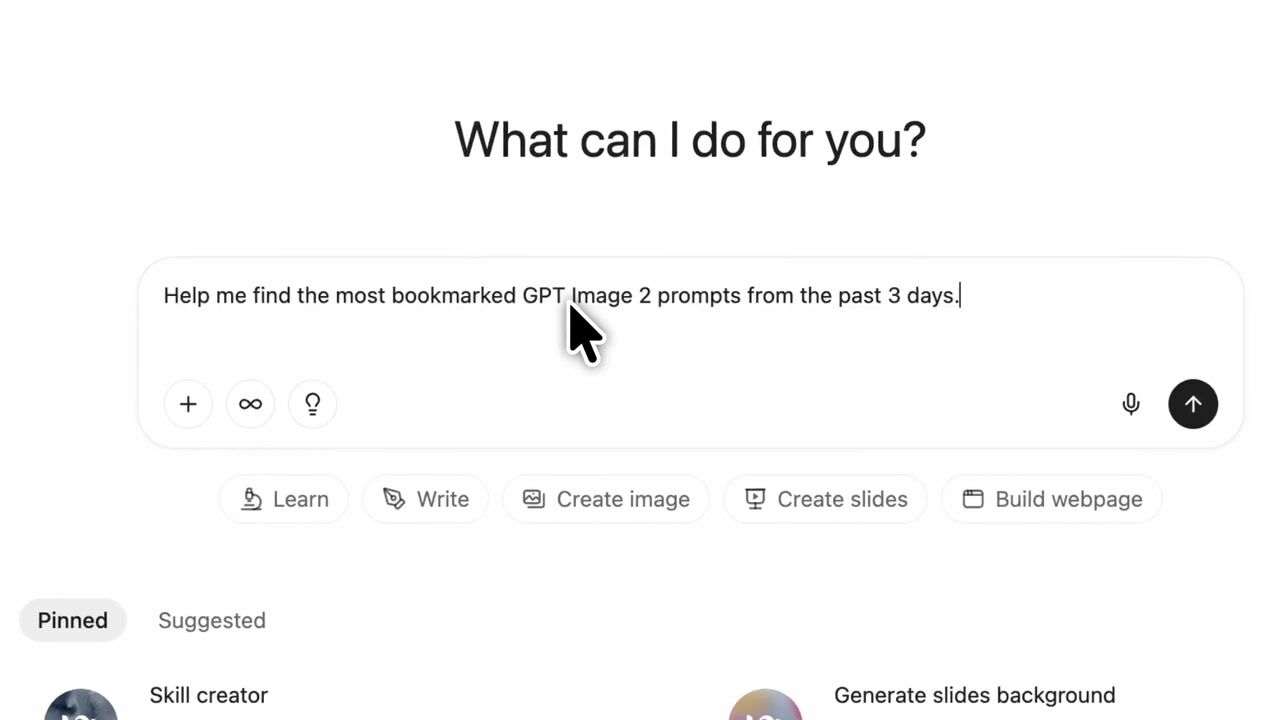
دع الذكاء الاصطناعي يبحث بين عشرات الآلاف من المطالبات. صفِّ حسب النموذج والنطاق الزمني والكلمات المفتاحية، ورتّب حسب التفاعل مثل المشاهدات والإشارات المرجعية وإعادات النشر وغيرها.