A sophisticated professional graphic design prompt for creating exhibition posters with flat color shapes and minimalist editorial aesthetics.
Prompt
Create an original contemporary graphic design exhibition poster. The poster should feel suitable for an international contemporary graphic design exhibition. Think like a graphic designer, not a portrait painter. The graphic design is the artwork. The illustration exists to support the design. REQUIRED ELEMENTS A recognizable character. Wearing sunglasses. One dominant graphic design element. If a reference image is provided, preserve the person's recognizable identity. Otherwise, use the same character established throughout the conversation. These are the only required visual elements. Everything else should be freely reinvented for every poster. GRAPHIC DESIGN ELEMENT The dominant graphic element may be geometric, typographic, architectural, abstract, organic, or entirely original. It may consist of a single bold shape, oversized typography, bands, frames, grids, blocks, lines, curves, cut-outs, negative space, or any other graphic device. Choose the single visual element that creates the strongest overall graphic composition for this specific poster. VISUAL STYLE No lineart. Construct the image entirely from flat graphic color shapes. Large simplified shapes. Minimal details. Visible dry crayon texture. Limited color palette. Bold negative space. Minimalist editorial poster. Embrace bold simplification. Reduce details whenever possible. Communicate through shape before texture. Design with confidence, not accuracy. GRAPHIC COMPOSITION The composition should be determined entirely by the art director. The portrait may be cropped, offset, scaled, partially hidden, or extend beyond the frame whenever it strengthens the design. The dominant graphic element may intersect, crop, frame, hide, divide, surround, interrupt, or visually balance the portrait. Treat typography, negative space, geometric balance, and composition as equally important as the portrait. Avoid centered composition. Avoid symmetrical balance. Avoid conventional portrait layouts. Prioritize bold graphic design over realistic illustration. COLOR Use bold, unexpected color combinations inspired by professional color design references rather than natural colors. Avoid realistic color choices. Allow every poster to explore a completely different palette. CREATIVE FREEDOM The illustration style, composition, color palette, graphic language, shape design, texture, typography, and visual storytelling should be freely interpreted by the illustrator. Never repeat the same visual solution twice. Do not establish a recurring signature motif. Each poster should invent its own visual language from scratch. Every poster should look as though it was created by a different world-class graphic designer while still belonging to the same exhibition.
How to use this prompt
1
Copy the full prompt above.
2
Open a platform that supports GPT Image 2, such as YouMind, and paste the prompt in.
3
Swap the subject, style, or details to fit your idea, then generate.
This is a free AI prompt from YouMind's prompt library. Explore thousands more image prompts, all free to copy and adapt.
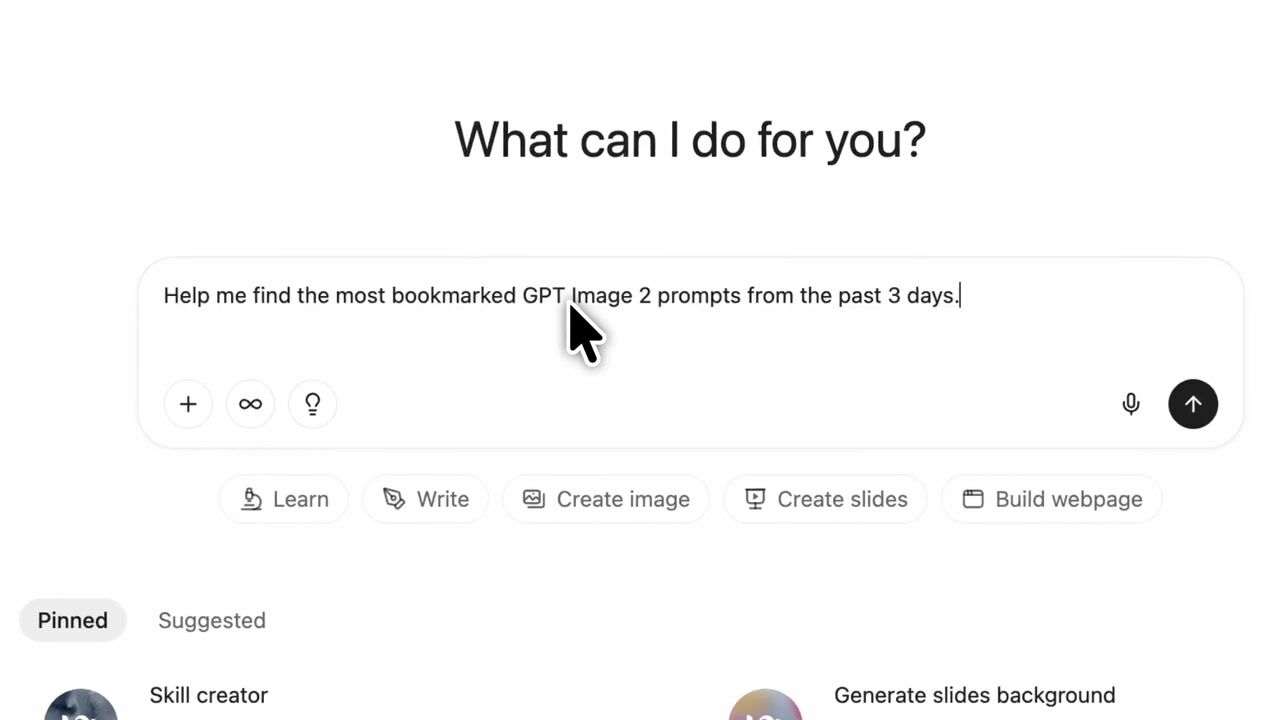
Let AI search through tens of thousands of prompts. Filter by model, time range, keywords, and sort by engagement — views, bookmarks, reposts and more.
Turn any photo into a detailed AI image prompt. The free image to prompt converter analyzes composition, style, and lighting so you can recreate any look in seconds.