A creative prompt for gpt-image-2 that redesigns photos into modern collage posters. It uses a dual-layer layout where the bottom half decomposes the photo's core subject into geometric blocks and architectural mosaic patterns with a warm, artist-inspired color palette.
Prompt
Create an independent high-end design poster for each photo I upload, outputting each photo separately without collaging. The overall layout uses a 3:4 vertical composition, following a dual-layer logic: the top half is realistic photography, while the bottom half is a geometric reconstruction of the original's core imagery, creating an echo between reality and memory.
The top half retains the original photo, maintaining the identity, structure, posture, real texture, natural light, and original color atmosphere of the subject. Apply only a slight professional color grade to give it the feel of an art magazine or exhibition photography. The background can be naturally extended to fit the frame, but without distorting the subject.
The bottom half extracts the most recognizable **subject, outline, posture, and narrative relationships**. Identify the core theme, visual metaphor, or aesthetic relationship of the original image, retaining only this most memorable layer for recreation. Do not fully replicate the scene or aim for realistic depiction; do not convert every object into an illustration. Actively remove irrelevant environments and fragmented information, leaving only a core subject and a minimal number of narrative-participating relationships.
The style logic uses **geometric composition + intelligent mosaic reorganization**. Compress the subject and space into clear geometric facets, rectangular units, fine-line frames, and layered grids. Reconstruct the image in a modular, architectural, or pixelated way that is carefully designed. This is not random pixelation, but intelligent induction based on the subject's structure: large shapes maintain clear outlines, while small details are translated into orderly color blocks, grid points, slices, stepped edges, and local splicing, giving the image a sense of rational decomposition like a mosaic while remaining recognizable. Axes, alignment lines, bounding boxes, and negative space partitions can be added for a high-end editorial and architectural diagram look.
The bottom half uses an **extremely light background and large areas of negative space**. The background color should match the original image's color temperature and emotion, resulting in a near-white shade that is quiet and clean. The blank space itself conveys air, distance, and breathability, making the geometric subject stand out.
The composition emphasizes **visual center of gravity, proportional relationships, negative space, modular rhythm, alignment order, and incomplete symmetry**. The subject can be offset, suspended, or placed in a low gravity area. If the most moving part of the original is a relationship—such as the scale between a person and architecture or the juxtaposition of an object and its environment—prioritize this and reinforce it with geometric blocks and mosaic structures rather than filling the frame evenly.
The color scheme follows a logic of extracting the overall color temperature and vital colors from the original, translating them into a **warm, bright, and slightly naive artist's palette**. Use warm blocks like cream yellow, apricot, coral pink, and old rose against cool colors like sky blue and mint green for a relaxed contrast. Allow minimal visual anchors like brick red or dark green. Colors don't have to follow reality and can be swapped for rhythm, as long as the harmony is maintained. Color blocks should be flat, clean, and restrained.
Text is not preset; freely generate a tiny amount of meaningful text based on the theme, movement, or emotion of the original. Use thin, restrained, and spacious typography that echoes the geometric structure. Keep it small and quiet.
The overall temperament should be a mix of **architectural diagrams, art maps, modern collage posters, and high-end editorial design**: quiet, rational, exquisite, and modern, while retaining memory-driven refinement and color warmth. Avoid full scene replication, random pixelation, sticker logic, complex textures, smooth 3D, or cartoon templates.
How to use this prompt
1
Copy the full prompt above.
2
Open a platform that supports GPT Image 2, such as YouMind, and paste the prompt in.
3
Swap the subject, style, or details to fit your idea, then generate.
This is a free AI prompt from YouMind's prompt library. Explore thousands more image prompts, all free to copy and adapt.
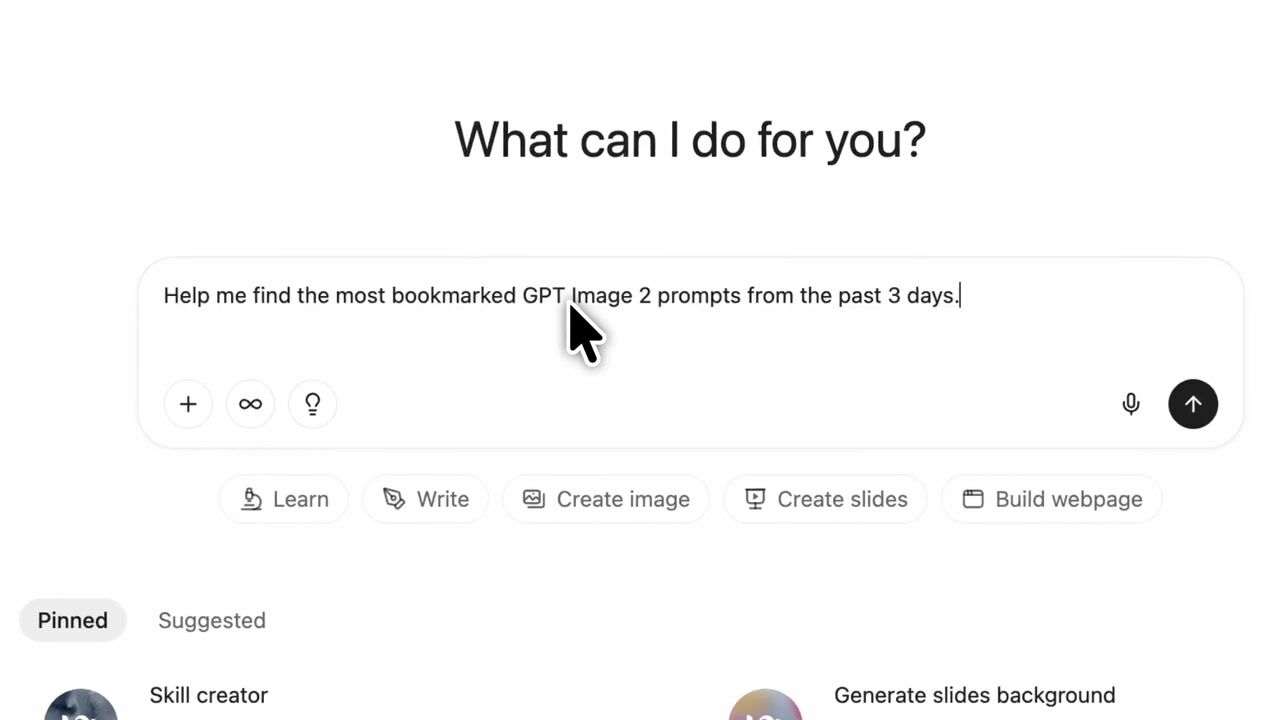
Let AI search through tens of thousands of prompts. Filter by model, time range, keywords, and sort by engagement — views, bookmarks, reposts and more.
Turn any photo into a detailed AI image prompt. The free image to prompt converter analyzes composition, style, and lighting so you can recreate any look in seconds.