A sophisticated prompt for generating editorial design posters with a split-screen composition that uses a transition element to show causality or transformation.
Prompt
Generate a bifold poster with mature editorial design and exhibition visual quality.
Instead of simply cutting the frame into two columns, let the left and right visual areas express different states of the same theme, and let the "middle boundary" be where the change actually happens.
The left and right areas use an unequal layout (40:60, 45:55, 55:45) based on the weight of the subject, rather than a mechanical 50:50. The left side is responsible for establishing the starting point or original state, and the right side is responsible for showing the transformed result, for example:
Front of a work → structural and production path behind it;
Design sketch → real space after completion;
Sound source subject → vibration and sound field diffusing outward;
Real entity → rubbings, traces, or images on paper.
The most important part is the central axis translation. Do not use an obvious vertical line, but choose a core element to pass through the left and right areas and undergo continuous changes as it crosses the axis.
For example: petals gradually turning into stitches and threads; architectural line drawings gradually turning into real walls; object vibrations gradually diffusing into voiceprints; stone carvings gradually flattened into black ink rubbings.
This change must be continuous and natural, allowing viewers to immediately understand the causal, process, or translation relationship between the two sides, rather than two unrelated images spliced together.
Typography also participates in the left-right relationship, but all text must belong to the work itself. Use real titles, subtitles, short sentences, and exhibition info; avoid template placeholder text like "left-right composition" or "design case."
Reduce info on the visually heavier side; the emptier side can carry more titles and text, achieving visual balance through font size, density, and position.
Control colors within 2–4 main palettes. The two sides can have distinct brightness, temperature, or material differences, but at least one color, texture, or visual element must cross the axis to ensure unity.
Reading order: first see the two visually distinct states; second, discover the connection and change at the axis; third, understand "why the left becomes the right"; finally, read the title and information.
Overall requirements: two visual domains with their own roles, a clear translation process in the middle, visually balanced despite being unequal, with both content logic and a sense of a mature work.
How to use this prompt
1
Copy the full prompt above.
2
Open a platform that supports GPT Image 2, such as YouMind, and paste the prompt in.
3
Swap the subject, style, or details to fit your idea, then generate.
This is a free AI prompt from YouMind's prompt library. Explore thousands more image prompts, all free to copy and adapt.
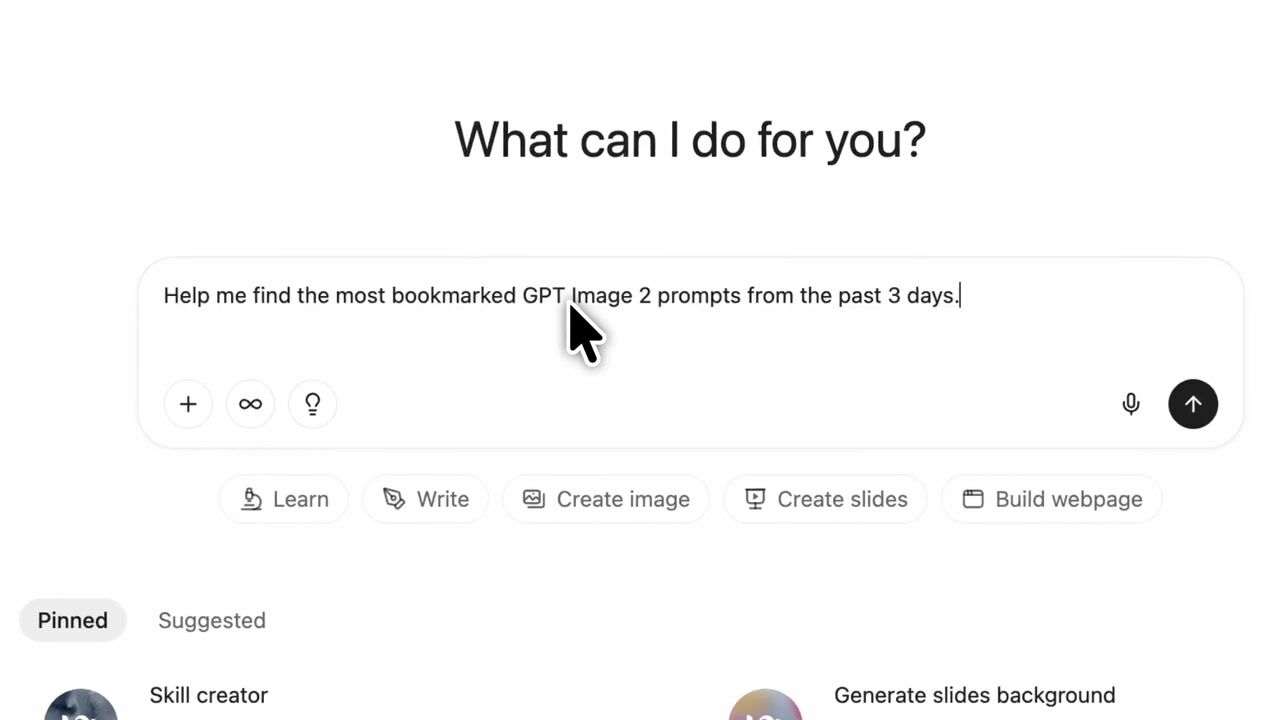
Let AI search through tens of thousands of prompts. Filter by model, time range, keywords, and sort by engagement — views, bookmarks, reposts and more.
Turn any photo into a detailed AI image prompt. The free image to prompt converter analyzes composition, style, and lighting so you can recreate any look in seconds.